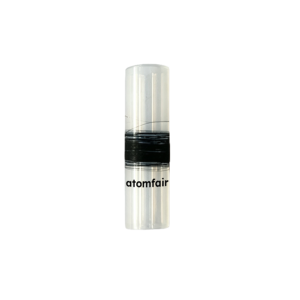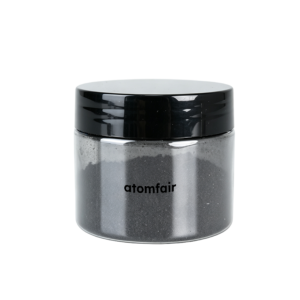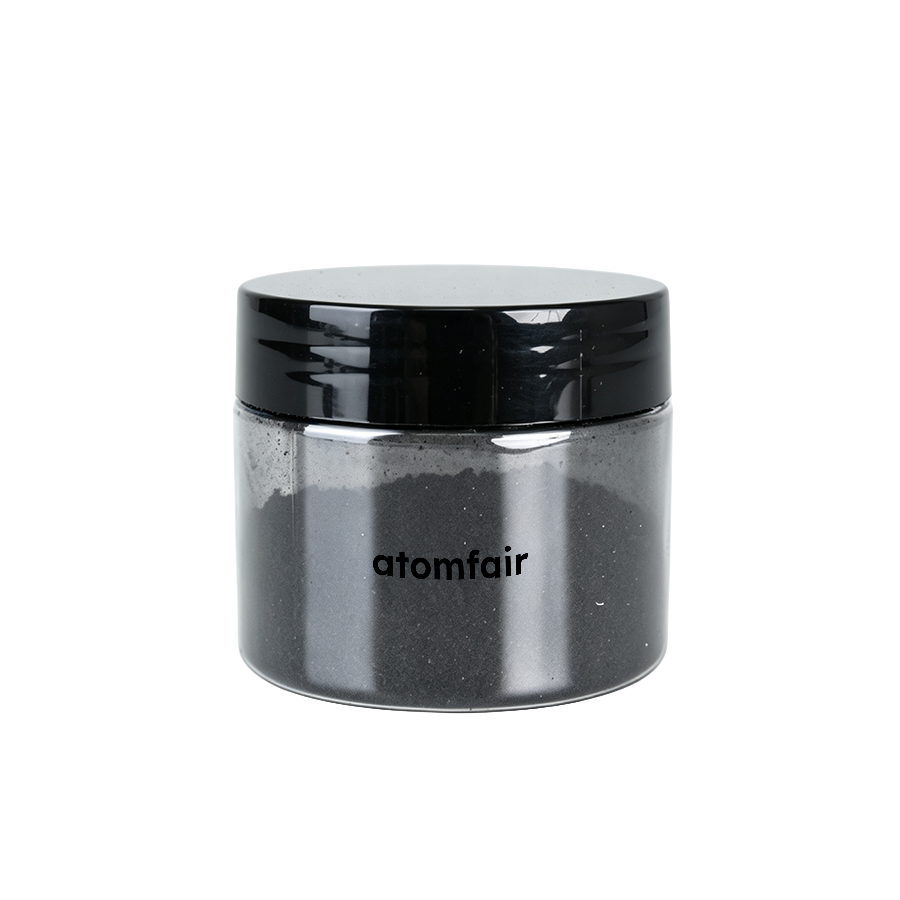
Short Single-walled Carbon Nanotubes, OD 1-2 nm,, length 1-3um, purity >60%Product Type: Single-walled carbon nanotube material
Research-grade laboratory product
|
|||||||||||||||||||
|
|||||||||||||||||||
|
LABORATORY PROCUREMENT SUPPORT
For model selection, material specification matching, application fit or quotation confirmation, contact our technical sales team.
E-MAIL: inquiry@atomfair.com
|
|||||||||||||||||||
|
Supplier: Atomfair
Brand: ATOMFAIR®
|
Manufacturer: Atomfair LLC
Brand: ATOMFAIR®
This material may generate aerosolized respirable fibers if disturbed, requiring containment during handling. Aggregation behavior varies with surface energy and can alter effective aspect ratio in dispersion.
- Aerosol containment: Handle only in a well-ventilated fume hood or glovebox to prevent inhalation of airborne particulates.
- Environmental sensitivity: Moisture uptake can promote bundling and reduce dispersibility in non-aqueous solvents.
- Electrostatic discharge risk: Dry powder form can accumulate static charge, requiring grounded containers and antistatic tools during transfer.
These steps assume use of a tip sonicator inside a fume hood with the powder contained prior to wetting. Proper probe immersion and pulse settings minimize tube breakage and solvent heating.
Required Equipment: Tip sonicator with tapered microtip (3 mm diameter), Glass scintillation vial or round-bottom flask with septum, Tared stainless steel spatula, Antistatic grounding wrist strap
- Weigh powder under inert atmosphere
Transfer the required mass of AF-SWCNT-S11 into the vial inside a glovebox or under a gentle argon stream to avoid moisture adsorption. - Close vial before removing from glovebox
Seal the vial with a PTFE-lined cap immediately after weighing to prevent airborne contamination and static loss. - Add solvent and pre-wet the powder
Inject degassed solvent through the septum or quickly add it under fume hood conditions, then swirl gently until no dry powder remains on the walls. - Sonicate using pulsed mode
Submerge the sonicator tip 5 mm below the liquid surface and sonicate at 30% amplitude, 10 s on / 5 s off, for a total of 5 minutes of on-time. - Cool the dispersion in an ice bath
Place the vial in an ice-water bath during sonication and allow static cooling for 2 minutes after the last pulse to prevent thermal degradation.
What is the trade-off between the >60% purity of these Short Single-walled Carbon Nanotubes (OD 1-2 nm, length 1-3 um) and the availability of higher purity grades for demanding electronic applications?
The product is specified with a minimum purity of >60%. The source states that during quotation, higher purity grades, including pristine, hydroxylated, carboxylated, amino-modified, graphitized, doped, and coated grades, can be matched to the required workflow. This indicates that the >60% purity is a baseline grade, and users requiring higher electrical performance can request an alternative grade through the quotation process.
How do the outer diameter (1-2 nm) and length (1-3 um) of these Short Single-walled Carbon Nanotubes constrain their integration into polymer composite or electrode formulations?
The dimensions of 1-2 nm outer diameter and 1-3 um length are typical for SWCNTs and are intended for dispersion, composite, film, electrode, and conductivity workflows, as stated in the selection notes. The source emphasizes that the model must be matched to the intended application, and the user should confirm the dimensional specification before quotation to ensure compatibility with the formulation requirements.
What specific handling or storage requirements are provided for this Short Single-walled Carbon Nanotubes product (AF-SWCNT-S11) as a research-grade CNT powder?
The source does not provide explicit handling or storage instructions. It identifies the product as a CNT powder in the specification confirmation section and directs users to contact technical sales at inquiry@atomfair.com for model selection and application fit. The product is a research-grade laboratory material, and the quotation process includes confirmation of package size and quantity.
This short single-walled carbon nanotube material (OD 1-2 nm, length 1-3 µm, purity >60%) is evaluated for research applications requiring small-diameter, high-aspect-ratio nanocarbon for dispersion, composite, electrode, or conductivity workflows. The specified dimensional range and moderate purity level define its suitability for exploratory formulation rather than high-purity device integration.
Positive
- Small outer diameter range: The 1-2 nm outer diameter provides a high surface-to-volume ratio and strong quantum confinement effects, advantageous for nanoscale dispersion and composite reinforcement studies.
- Short length for processing: The 1-3 µm length facilitates easier dispersion in solvents and polymer matrices compared to longer nanotubes, reducing sonication time and aggregation risk in laboratory formulations.
Trade-offs
- Moderate purity constraint: Purity >60% indicates the presence of amorphous carbon and catalyst residues, which may interfere with electronic or electrochemical measurements and require additional purification steps for sensitive applications.
- Handling and dispersion sensitivity: Single-walled carbon nanotubes at this aspect ratio are prone to bundling and require optimized surfactant or solvent systems to achieve stable dispersions, increasing process development time.
Every advanced material, component, equipment, and instrument in our catalog is backed by rigorous testing. We maintain strict internal quality management frameworks and align with CE conformity metrics to deliver transparent, reproducible performance data via our public open-science repository.
To request raw batch performance data, submit formal vendor registration paperwork, or execute a fast-turnaround R&D manufacturing loop, contact us at inquiry@atomfair.com.
Item is dispatched under the Atomfair Shipping & Delivery Framework (Free worldwide shipping on orders over $59 USD excl. heavy equipment). Return is governed by the Atomfair Return & Refund Policy (7-day technical return window).