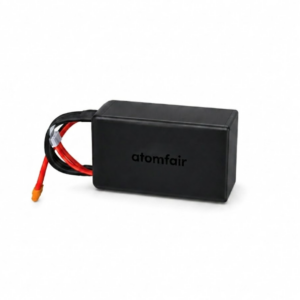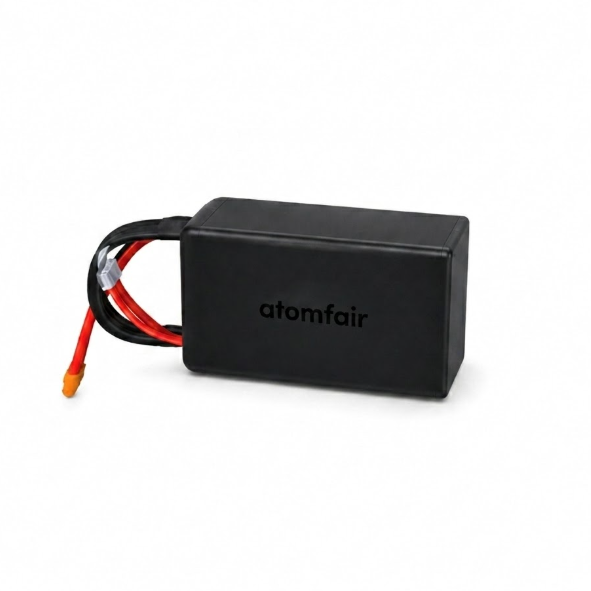
Description
Electric Motorcycle Semi-Solid Battery Series | ATOMFAIRCOMMERCIAL GRADE · PRODUCTION
|
||||||||||||||||||||||||||||||||||||||||||||||||||||
|
||||||||||||||||||||||||||||||||||||||||||||||||||||
|
TAILORED SOLUTIONS FOR RESEARCH
Contact our engineering team for technical support or official institutional quotations.
EMAIL: inquiry@atomfair.com
|
||||||||||||||||||||||||||||||||||||||||||||||||||||
|
Manufacturer: Atomfair LLC
Brand: ATOMFAIR®
|
||||||||||||||||||||||||||||||||||||||||||||||||||||
This battery requires storage in a dry, cool environment with anti-static protection. Always use a compatible BMS and avoid prolonged exposure to temperatures above 70°C.
- Storage Environment: Store in moisture-proof packaging with anti-static shielding at room temperature.
- Temperature Limits: Do not expose the battery to temperatures exceeding 70°C for extended periods.
- BMS Requirement: Always use a compatible BMS with over-discharge, over-current, and cell balancing protection.
- Charging Voltage: Charge only within the recommended voltage range as specified in the datasheet.
- Pre-conditioning: Pre-condition new batteries at room temperature before the first full cycle.
Follow these steps to safely initialize and deploy the battery for first use. Proper pre-conditioning and BMS integration ensure optimal performance and safety.
Required Equipment: Compatible Battery Management System (BMS), Charger with correct voltage range
- Inspect Packaging
Inspect the battery packaging for any damage or moisture ingress before opening. - Verify BMS Compatibility
Verify that the BMS is compatible with the battery's voltage and current specifications. - Pre-condition Battery
Pre-condition the battery by allowing it to reach room temperature before the first charge cycle. - Connect Charger
Connect the battery to a charger set within the recommended voltage range. - Monitor Charging
Monitor the charging process to ensure no over-current or over-voltage conditions occur.
How does the continuous discharge current scale across the Rock Solid series, and what are the trade-offs in weight and form factor between the 50Ah and 100Ah models?
The 100Ah model (AFEMS72100) supports a maximum continuous discharge of 120A (1.2C), while the 50Ah, 52Ah, and 76Ah models are limited to 80A. This higher discharge capability comes at a weight penalty of 43 kg versus 24 kg for the 50Ah model, and a significantly larger footprint (510×216×183 mm vs. 230×170×309 mm), which may affect chassis integration and overall vehicle weight distribution.
Can the 100Ah model be used as a direct drop-in replacement for the 50Ah model in an electric motorcycle chassis, or does it require structural modification?
No, the 100Ah model (AFEMS72100) is not a direct drop-in replacement for the 50Ah model (AFEMS7250) due to substantially different dimensions: 510×216×183 mm vs. 230×170×309 mm. The mounting footprint, height, and width all differ, so chassis modification or a custom battery tray is required to accommodate the larger unit.
What BMS specifications and preconditioning steps are mandatory for safe operation of the semi-solid electrolyte batteries in the Rock Solid series?
A compatible BMS must provide over-discharge protection, over-current protection, and cell balancing. The battery must be charged within the recommended voltage range (consult the datasheet). Avoid prolonged exposure above 70°C. Before the first full cycle, precondition new batteries at room temperature. These steps are critical to prevent damage and ensure safe operation of the semi-solid electrolyte cells.
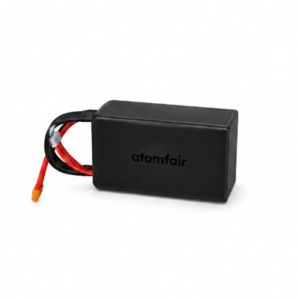
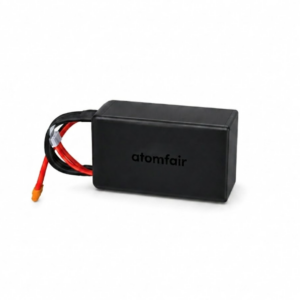
The ATOMFAIR Rock Solid Series semi-solid state batteries for electric motorcycles combine semi-solid electrolyte safety with a wide operating temperature range of -25°C to +70°C, supporting continuous discharge up to 120A, but require a compatible external BMS and exposure limits above 70°C for reliable long-term operation.
Positive
- Semi-solid electrolyte safety: The semi-solid electrolyte construction provides leak-proof operation and enhanced thermal stability compared to conventional liquid electrolyte cells, reducing the risk of thermal runaway.
- Wide operating temperature range: Reliable discharge from -25°C to +70°C (with one variant rated to +65°C) enables use in extreme climates and hot motor compartments without performance degradation.
Trade-offs
- Requires external BMS: The battery must be used with a compatible Battery Management System providing over-discharge, over-current, and cell balancing protection; standalone operation is not recommended.
- Temperature exposure limits above 70°C: Prolonged exposure to temperatures exceeding 70°C (or 65°C for the AFEMS7280 variant) can damage cells; charging must be within the recommended voltage range per the datasheet.
Every advanced material, component, equipment, and instrument in our catalog is backed by rigorous testing. We maintain strict internal quality management frameworks and align with CE conformity metrics to deliver transparent, reproducible performance data via our public open-science repository.
To request raw batch performance data, submit formal vendor registration paperwork, or execute a fast-turnaround R&D manufacturing loop, contact us at inquiry@atomfair.com.
Item is dispatched under the Atomfair Shipping & Delivery Framework (Free worldwide shipping on orders over $59 USD excl. heavy equipment). Return is governed by the Atomfair Return & Refund Policy (7-day technical return window).