Description
3.95V 290Wh/kg Semi-Solid Battery 50Ah Series | ATOMFAIRCOMMERCIAL GRADE · PRODUCTION
|
||||||||||||||||||||||||||||||||||||||||||||||||||||||||||||||
|
||||||||||||||||||||||||||||||||||||||||||||||||||||||||||||||
|
TAILORED SOLUTIONS FOR RESEARCH
Contact our engineering team for technical support or official institutional quotations.
EMAIL: inquiry@atomfair.com
|
||||||||||||||||||||||||||||||||||||||||||||||||||||||||||||||
|
Manufacturer: Atomfair LLC
Brand: ATOMFAIR®
|
This document outlines the environmental and safety constraints for handling and storing the ATOMFAIR semi-solid battery. Adherence to these constraints is critical for safe operation and to prevent degradation or failure.
- BMS Protection: The battery must always be used with a compatible Battery Management System (BMS) providing over-discharge, over-current, and cell balancing protection.
- Temperature Limits: Avoid exposing the cells to excessive temperatures for extended periods to prevent thermal runaway.
- Moisture Sensitivity: The cells are packaged in moisture-barrier vacuum-sealed aluminum foil bags and must remain sealed until use to prevent moisture ingress.
- Pre-Conditioning: New cells must be pre-conditioned at a suitable temperature before initial use.
- Disposal: Dispose of cells in accordance with local regulations for lithium-based batteries.
Follow these steps to safely initialize and handle the semi-solid battery pack. Proper procedure minimizes risk of electrical hazard or chemical leakage.
Required Equipment: Battery Management System (BMS) with over-discharge and cell balancing protection
- Inspect Packaging
Inspect the moisture-barrier packaging for any damage or punctures before opening. - Verify BMS Compatibility
Verify that the Battery Management System is compatible with the nominal voltage and provides over-discharge, over-current, and cell balancing protection. - Pre-Condition Cells
Pre-condition new cells at the manufacturer's recommended temperature for a duration sufficient to stabilize internal chemistry. - Connect to BMS
Connect the battery pack leads to the BMS terminals ensuring correct polarity and secure connections. - Charge at Recommended Rate
Charge the battery at a rate not exceeding 1C using a compatible charger within the specified voltage range. - Monitor During Discharge
Do not exceed the 3C continuous discharge rate or 5C peak discharge duration to prevent damage. - Store Appropriately
Store the battery in a cool dry place away from flammable materials when not in use.
How does the semi-solid electrolyte in the 3.95V 290Wh/kg 50Ah battery series affect the trade-off between energy density and rate capability?
The semi-solid electrolyte enables both ultra-high energy density (290Wh/kg) and high rate capability (1C charge, 3C continuous discharge, 5C peak discharge) by providing improved thermal stability and reduced leakage risk. This allows stable power output under demanding conditions without compromising safety or performance.
What BMS specifications are required for integrating the 3.95V 50Ah semi-solid battery series into a drone or robotic system?
A compatible BMS must provide over-discharge, over-current, and cell balancing protection. The BMS must be rated for the specific series configuration voltage (e.g., 23.7V for 6S, 31.6V for 8S, 47.4V for 12S, or 71.1V for 18S) and support 1C charge (50A) and 3C continuous discharge (150A) currents.
What are the recommended storage and pre-conditioning procedures for the ATOMFAIR semi-solid battery cells before first use?
Cells should be pre-conditioned at a suitable temperature before first use. They are packaged in moisture-barrier vacuum-sealed aluminum foil bags to prevent moisture ingress. Avoid exposing cells to excessive temperatures for extended periods, and dispose of cells in accordance with local regulations.
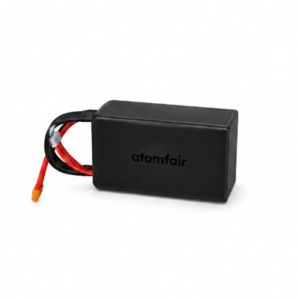
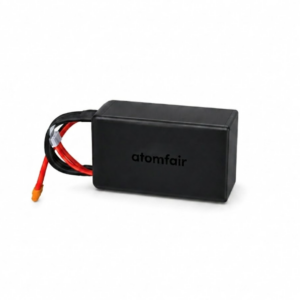
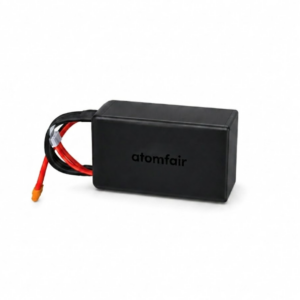
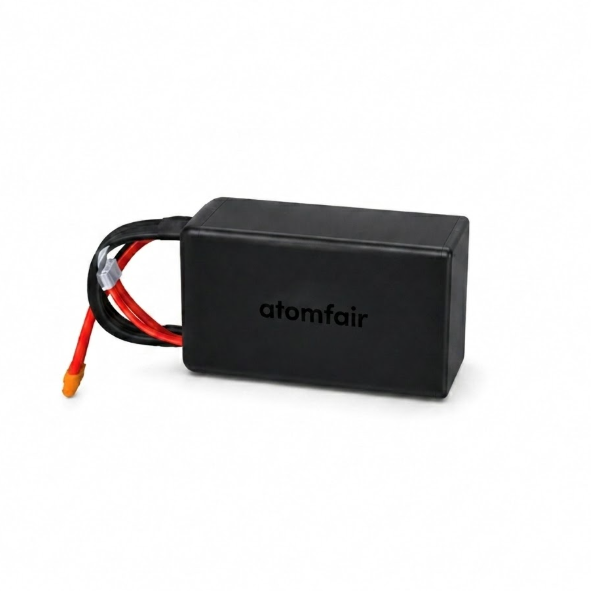
The ATOMFAIR 3.95V 290Wh/kg Semi-Solid Battery 50Ah Series is a variable-configuration pouch cell line (6S/8S/12S/18S) offering ultra-high energy density with semi-solid electrolyte technology. Rated at 1C charge, 3C continuous discharge, and 5C peak, it is engineered for weight-sensitive, high-rate applications such as UAVs, robotics, and portable power stations.
Positive
- Ultra-high energy density (290 Wh/kg): Enables extreme lightweight system design for UAVs and portable devices, directly reducing payload and extending runtime without sacrificing capacity.
- Semi-solid electrolyte safety: Reduced leakage risk and improved thermal stability compared to conventional liquid electrolytes, enhancing operational safety in demanding environments.
Trade-offs
- Requires compatible BMS: A BMS with over-discharge, over-current, and cell balancing protection is mandatory to prevent damage, adding integration complexity and cost.
- Temperature and preconditioning sensitivity: Cells must be pre-conditioned at a suitable temperature before first use and should not be exposed to excessive temperatures for extended periods, limiting operational flexibility in uncontrolled thermal environments.
Every advanced material, component, equipment, and instrument in our catalog is backed by rigorous testing. We maintain strict internal quality management frameworks and align with CE conformity metrics to deliver transparent, reproducible performance data via our public open-science repository.
To request raw batch performance data, submit formal vendor registration paperwork, or execute a fast-turnaround R&D manufacturing loop, contact us at inquiry@atomfair.com.
Item is dispatched under the Atomfair Shipping & Delivery Framework (Free worldwide shipping on orders over $59 USD excl. heavy equipment). Return is governed by the Atomfair Return & Refund Policy (7-day technical return window).