Description
ATOMFAIR® NI90-S02 HIGH-NICKEL NICKEL-COBALT-MANGANESE LITHIUM OXIDE (NI90) ELECTRODE SHEETRESEARCH GRADE MATERIAL
|
||||||||||||||||||||||||||||||||||||||||||||||
|
||||||||||||||||||||||||||||||||||||||||||||||
|
|||
|
TAILORED SOLUTIONS FOR RESEARCH
Contact our engineering team for technical support or official institutional quotations.
EMAIL: inquiry@atomfair.com
|
|||
|
Manufacturer: ATOMFAIR LLC
Brand: ATOMFAIR®
|
This electrode sheet is single-sided coated and requires careful handling to prevent damage to the active layer. The high-nickel content necessitates dry storage and assembly to avoid moisture-induced degradation.
- Handling constraint: Handle the electrode by the edges only and avoid touching the coated surface to prevent contamination or delamination.
- Storage constraint: Store the electrode in a sealed container with desiccant under an inert atmosphere to minimize moisture and oxygen exposure.
- Assembly constraint: Use the electrode only in a dry-room or glovebox environment with dew point below −40 °C to preserve electrochemical performance.
These steps describe the safe handling and preparation of the single-sided cathode sheet for use in lithium-ion battery testing. Proper technique ensures coating integrity and electrochemical performance.
Required Equipment: Ceramic scissors or precision cutter, Vacuum oven, Argon-filled glovebox
- Inspect the electrode
Inspect the electrode visually for any visible defects such as cracks, pinholes, or delamination before processing. - Cut to size
Cut the electrode to the desired dimensions using ceramic scissors or a precision cutter on a clean, lint-free surface. - Dry the electrode
Dry the cut electrode in a vacuum oven at 80–100 °C for 12 hours under reduced pressure to remove residual moisture. - Transfer to glovebox
Transfer the dried electrode directly into an argon-filled glovebox with oxygen and moisture levels below 0.1 ppm for cell assembly.
What is the trade-off between the 28.5 mg/cm² areal loading and the electrode's rate capability?
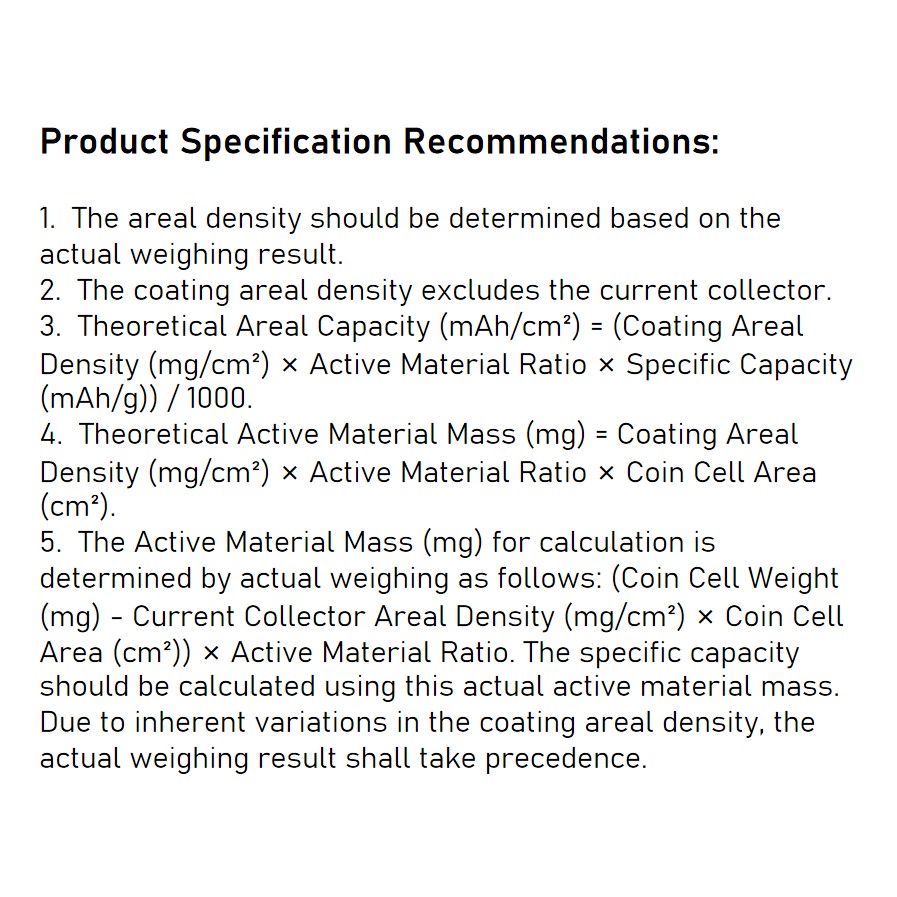
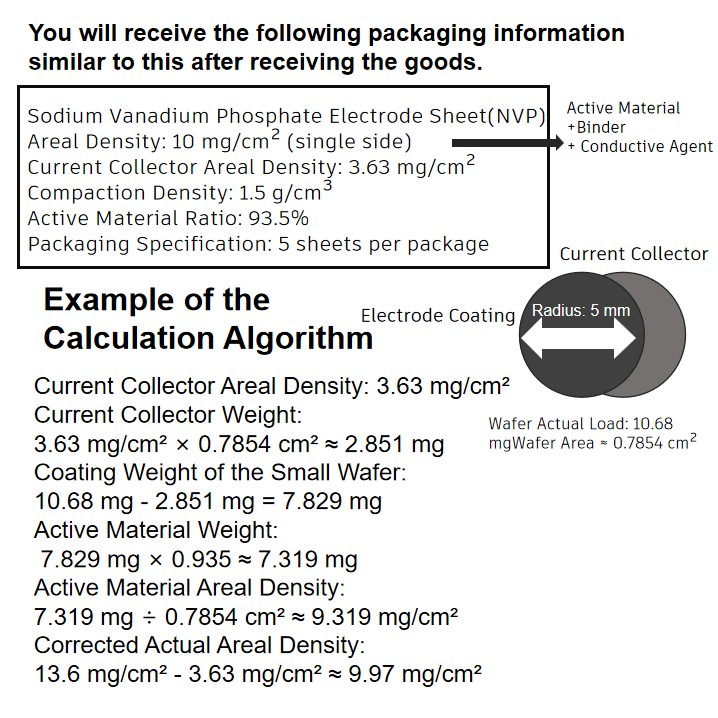
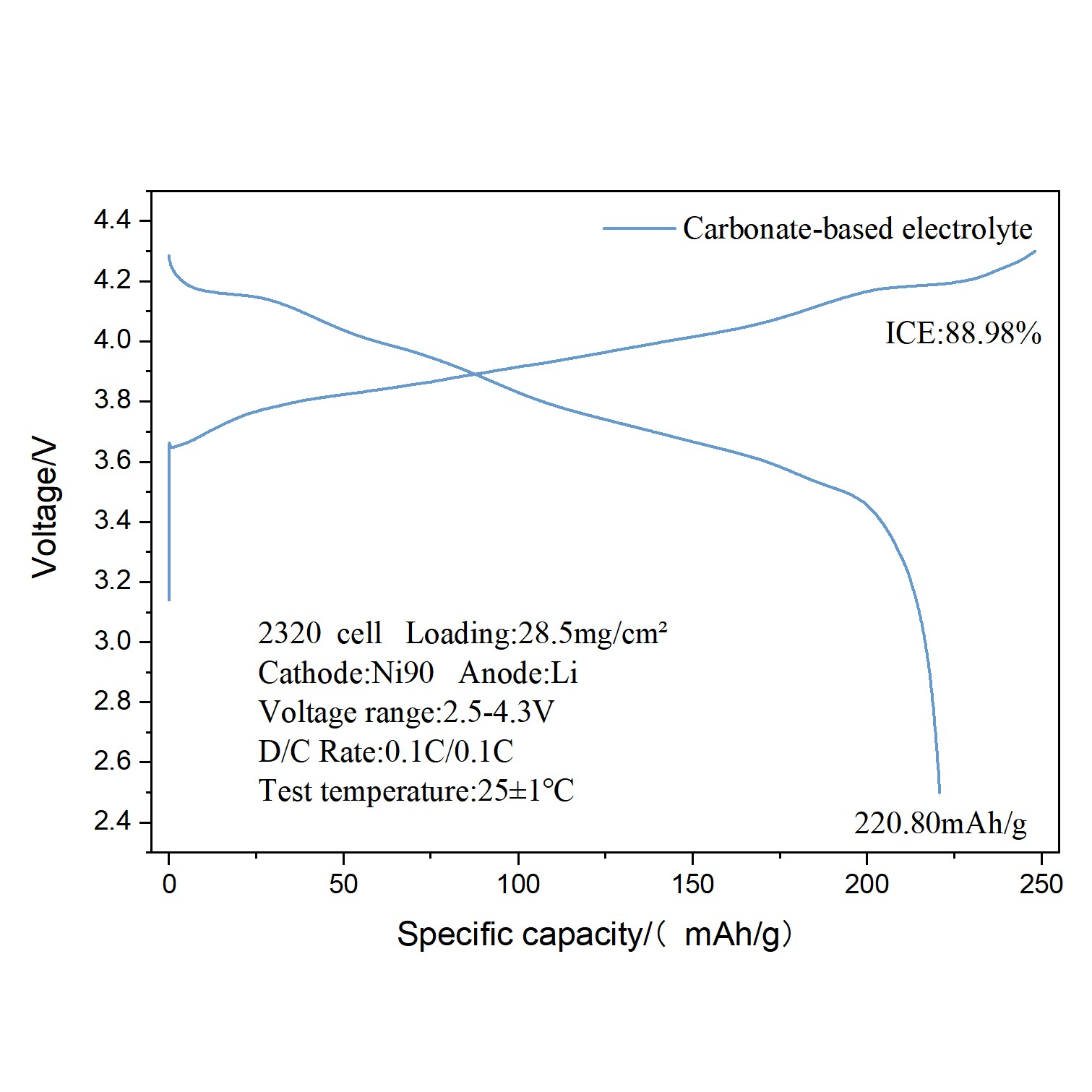
The electrode is designed at a coating density of 28.5 mg/cm² with an active material ratio of 97.4% and a rated capacity of 200 mAh/g. Higher areal loading increases energy density but typically reduces rate capability due to longer ion diffusion paths; however, the specific rate performance is not specified in the datasheet for this Ni90 electrode.
What type of current collector is used in this Ni90 electrode and what are its dimensions for cell assembly?
The electrode uses a carbon-coated aluminum foil current collector with an areal density of 3.2 mg/cm² and a thickness of 12 ±0.5 ±0.5 μm. The substrate size is 184×100 mm, with a coating area of 150×100 mm on one side, allowing direct integration into standard coin or pouch cell geometries for R&D testing.
What are the recommended storage and handling conditions for this Ni90 electrode sheet to prevent degradation?
The electrode should be stored in a dry, inert atmosphere and vacuum-baked at 100°C for 12 hours prior to use, as specified in the product FAQ. Exposure to moisture and air can degrade the high-nickel cathode material, so handling in an argon-filled glovebox is recommended for optimal electrochemical performance.
This Ni90 single-sided cathode sheet features a high active material ratio of 97.4% and a consistent areal density of 28.5 mg/cm² via wet processing, delivering 200 mAh/g capacity ideal for Li-ion battery R&D. However, users must account for a mandatory 12-hour vacuum bake at 100°C and the single-sided format restricts certain cell configurations.
Positive
- High active material ratio: 97.40% active material content minimizes inactive components, providing 200 mAh/g specific capacity for accurate electrochemical characterization.
- Precision wet-coated areal density: 28.5 mg/cm² loading with single-side coating ensures uniform electrode layer for reproducible half-cell or full-cell testing.
Trade-offs
- Mandatory vacuum bake preconditioning: Electrode requires 12-hour vacuum baking at 100°C before use, adding preparation time and requiring a vacuum oven.
- Single-sided coating format: Coating on one side only limits direct use in standard stacked or wound cells; paired counter electrodes or custom cell fixtures are needed.
Every advanced material, component, equipment, and instrument in our catalog is backed by rigorous testing. We maintain strict internal quality management frameworks and align with CE conformity metrics to deliver transparent, reproducible performance data via our public open-science repository.
To request raw batch performance data, submit formal vendor registration paperwork, or execute a fast-turnaround R&D manufacturing loop, contact us at inquiry@atomfair.com.
Item is dispatched under the Atomfair Shipping & Delivery Framework (Free worldwide shipping on orders over $59 USD). Return is governed by the Atomfair Return & Refund Policy (7-day technical return window).