Description
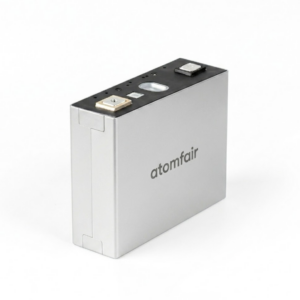
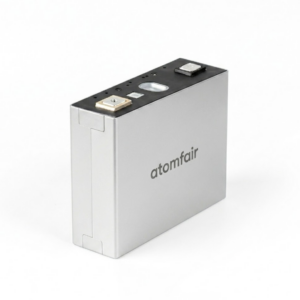
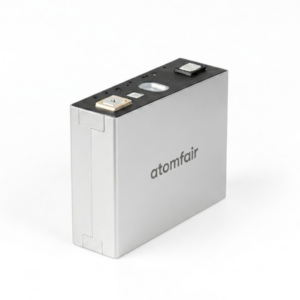
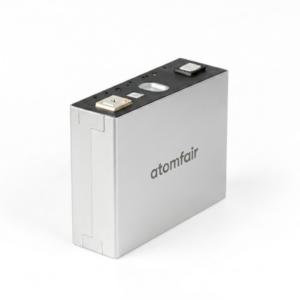
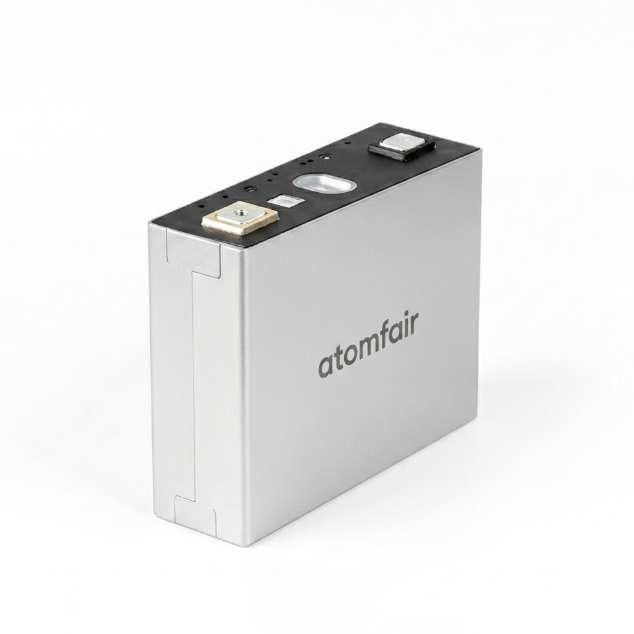
3.20V 125Ah LFP Prismatic Cell | ATOMFAIRCOMMERCIAL GRADE · PRODUCTION
|
|||||||||||||||||||||||||
|
|||||||||||||||||||||||||
|
TAILORED SOLUTIONS FOR RESEARCH
Contact our engineering team for technical support or official institutional quotations.
EMAIL: INQUIRY@ATOMFAIR.COM
|
|||||||||||||||||||||||||
|
Manufacturer: ATOMFAIR LLC
Brand: ATOMFAIR®
|
Store the cell in a clean, dry location away from direct sunlight and heat sources. Avoid physical damage, short circuits, and exposure to conductive materials that could cause electrical hazards.
- Environmental Storage: Maintain ambient temperature within recommended range to prevent accelerated aging.
- Electrical Safety: Keep terminals insulated and prevent short circuits during handling and storage.
This procedure outlines safe handling and electrical integration steps for the prismatic cell. Follow these steps to prepare the cell for installation into a battery pack.
Required Equipment: Insulated gloves, Digital multimeter, Battery management system (BMS) wiring harness
- Inspect cell integrity
Inspect the cell casing for any visible cracks, dents, or swelling before handling. - Measure voltage
Measure the open-circuit voltage using a digital multimeter to confirm it is within the safe operating range. - Connect to BMS
Connect the cell terminals to the battery management system (BMS) following the prescribed wiring diagram. - Secure in pack
Secure the cell in the pack housing with appropriate compression and insulation between adjacent cells. - Verify connections
Verify all electrical connections are tight and free of short circuits before proceeding with charging.
How does the 160 Wh/kg energy density of this 125Ah LFP prismatic cell translate into real-world EV range versus a comparable NMC cell at the same pack voltage?
The 160 Wh/kg energy density delivers a specific energy trade-off: while lower than typical NMC cells (180–260 Wh/kg), the LFP chemistry provides a cycle life of ≥3000 cycles at 1.0C/1.0C, 100% DOD, with 80% capacity retention, which is significantly higher than most NMC chemistries. For a given pack voltage, the 125Ah nominal capacity and ≤2.60 kg cell weight yield a gravimetric energy of 400 Wh per cell, enabling extended driving range with reduced battery weight, but the primary advantage is longevity and thermal stability rather than peak energy density.
Can this 3.20V LFP prismatic cell be directly integrated into an existing 48V or 96V EV traction pack designed for cylindrical cells without modifying the BMS voltage thresholds?
Yes, integration is feasible but requires careful BMS reconfiguration: the cell's nominal voltage of 3.20V and 1.0C continuous charge/discharge rate must be matched to the pack's series-parallel architecture. The prismatic format (33.3×200.6×172.0 mm including terminal) offers structural rigidity and efficient heat dissipation, but the BMS must be programmed for LFP-specific voltage windows (typically 2.5–3.65V per cell) and include over-discharge, over-charge, short-circuit, and cell balancing protection as specified in the product notice.
What are the critical storage and handling requirements for this LFP prismatic cell to prevent capacity fade before first use in a traction pack assembly?
Cells must be stored in humidity-controlled vacuum sealed packaging with individual isolation in anti-static foam lined cartons to prevent moisture ingress and mechanical deformation. Pre-condition at a moderate temperature before first use, and always operate within the manufacturer's specified voltage window and temperature range to avoid accelerated capacity loss. Do not exceed the recommended 1.0C continuous charge or discharge rates, and dispose of cells in accordance with local regulations.
This 3.20V 125Ah LFP prismatic cell offers a high energy density of 160 Wh/kg and a cycle life exceeding 3000 cycles at full depth of discharge, making it well-suited for EV traction packs requiring long operational lifespan and compact packaging. However, its continuous charge/discharge is limited to 1.0C, and it demands a dedicated BMS with thermal management to ensure safe and reliable operation.
Positive
- High energy density for extended range: With 125 Ah capacity and 160 Wh/kg, this cell enables reduced pack weight and increased driving range, directly benefiting EV traction applications.
- Extended cycle life under full discharge: Rated for ≥3000 cycles at 1.0C/1.0C, 100% DOD with 80% retention, providing long-term reliability for demanding EV duty cycles.
Trade-offs
- Requires dedicated BMS with protections: The cell must be paired with a BMS providing over-discharge, over-charge, short-circuit protection, and cell balancing, adding system complexity and cost.
- Limited continuous charge/discharge rate: Maximum continuous rate is 1.0C (125 A), which may constrain high-power traction applications requiring higher current throughput.
Every advanced material, component, equipment, and instrument in our catalog is backed by rigorous testing. We maintain strict internal quality management frameworks and align with CE conformity metrics to deliver transparent, reproducible performance data via our public open-science repository.
To request raw batch performance data, submit formal vendor registration paperwork, or execute a fast-turnaround R&D manufacturing loop, contact us at inquiry@atomfair.com.
Item is dispatched under the Atomfair Shipping & Delivery Framework (Free worldwide shipping on orders over $59 USD). Return is governed by the Atomfair Return & Refund Policy (7-day technical return window).