Description
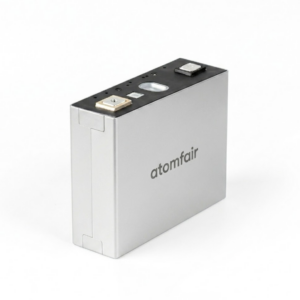
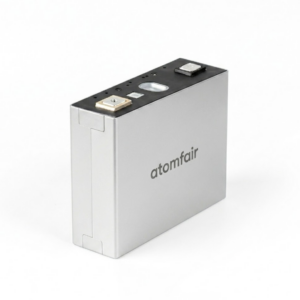
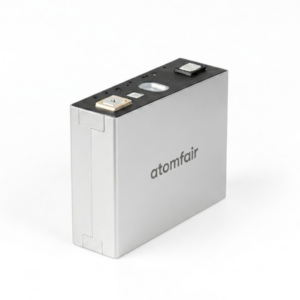
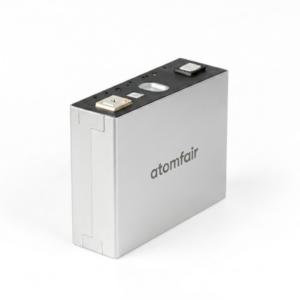
3.20V 280Ah LFP Prismatic Cell | ATOMFAIRCOMMERCIAL GRADE · PRODUCTION
|
|||||||||||||||||||||||||
|
|||||||||||||||||||||||||
|
TAILORED SOLUTIONS FOR RESEARCH
Contact our engineering team for technical support or official institutional quotations.
EMAIL: INQUIRY@ATOMFAIR.COM
|
|||||||||||||||||||||||||
|
MANUFACTURER: ATOMFAIR LLC
BRAND: ATOMFAIR®
|
Store the cell in a dry, cool environment away from flammable materials to prevent thermal runaway. Avoid exposing the cell to mechanical shock or electrical overload to maintain structural integrity and cycle life.
- Environmental Storage Conditions: Maintain a dry atmosphere with low relative humidity to prevent terminal corrosion and internal short circuits.
- Charge State for Storage: Keep the cell at a partial charge state to minimize electrolyte decomposition and capacity fade over extended storage.
- Containment Requirements: Store cells in individual insulated compartments or trays to prevent accidental electrical contact during handling.
- Safety Precautions: Use fire-resistant storage containers and wear insulating gloves when working with multiple cells in a confined area.
- Discharge Limitations: Avoid deep discharge below the manufacturer's recommended cutoff voltage to prevent irreversible damage to the electrode structure.
Follow these steps to safely prepare the cell for integration into a battery system. Proper handling ensures operator safety and maximizes cell performance.
Required Equipment: Insulated Wrench, Digital Multimeter, Safety Goggles, Non-Conductive Work Surface
- Visual Inspection
Inspect the cell for any physical damage such as dents, punctures, or swelling before use. - Voltage Verification
Verify the cell's open-circuit voltage using a calibrated multimeter to confirm it is within the nominal operating range. - Workspace Preparation
Place the cell on a non-conductive surface and ensure the workspace is free of conductive debris and moisture. - Connector Attachment
Connect the cell terminals to the battery management system using appropriately sized crimped connectors and an insulated wrench. - Initial Charging
Apply the recommended constant current charge rate until the cell reaches full charge, monitoring for abnormal temperature rise. - Temperature Monitoring
Monitor the cell surface temperature during initial charging to ensure it remains below the safety threshold specified in the datasheet. - Documentation
Record the initial voltage, temperature, and any observations for baseline performance tracking and future reference.
How does the 1.0C continuous charge/discharge rate of the 280Ah LFP prismatic cell affect its suitability for peak shaving versus daily cycling in utility ESS applications?
The 1.0C continuous charge/discharge rate provides a predictable power delivery of 280A, making the cell suitable for both peak shaving and daily cycling. However, its exceptional cycle life of ≥8000 cycles at 0.5C/0.5C, 100% DOD with 70% retention is optimized for long-duration, daily cycling ESS applications rather than high-rate, short-duration peak shaving, where a higher C-rate cell might be preferred.
What are the key integration constraints when assembling multiple 3.20V 280Ah LFP prismatic cells into a utility-scale ESS pack?
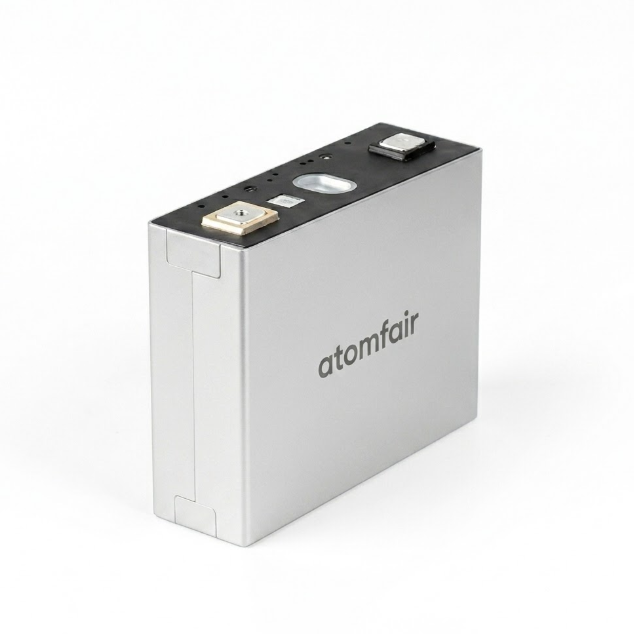
The prismatic format with dimensions 71.8×174.2×207.1 mm and weight ≤5.60kg per cell enables efficient pack assembly, but integration requires a dedicated BMS with appropriate protection functions to manage voltage and temperature ranges. The square aluminum case provides structural rigidity and heat dissipation, yet mechanical abuse, over-discharge, or short circuits must be avoided, and cells must be conditioned under standard ambient conditions before first use.
What handling and storage infrastructure is required for the 280Ah LFP prismatic cell to maintain safety and performance before installation?
Cells are shipped in humidity-controlled vacuum sealed packaging with individual isolation in anti-static foam lined cartons to prevent moisture ingress and mechanical damage. Storage must avoid mechanical abuse and short circuits, and cells should be operated within recommended voltage and temperature ranges; disposal must follow local regulations for used cells.
The 3.20V 280Ah LFP prismatic cell delivers an ultra-long cycle life of ≥8000 cycles at 100% DOD, ideal for stationary ESS, but requires a dedicated BMS and is limited to 1.0C continuous charge/discharge rates, which may constrain high-power applications.
Positive
- Ultra-high cycle life for ESS: ≥8000 cycles at 0.5C/0.5C, 100% DOD, 70% retention provides exceptional longevity for daily cycling in grid-scale, C&I, and residential storage.
- Intrinsic LFP thermal stability: LFP chemistry delivers exceptional thermal stability and resistance to thermal runaway, making it a safe choice for stationary storage environments.
Trade-offs
- Mandatory BMS integration: A dedicated battery management system with appropriate protection functions is required to ensure safe operation within voltage and temperature limits.
- 1.0C continuous rate ceiling: Maximum continuous charge/discharge at 1.0C may restrict deployment in applications requiring higher power demands beyond nominal ESS use.
Every advanced material, component, equipment, and instrument in our catalog is backed by rigorous testing. We maintain strict internal quality management frameworks and align with CE conformity metrics to deliver transparent, reproducible performance data via our public open-science repository.
To request raw batch performance data, submit formal vendor registration paperwork, or execute a fast-turnaround R&D manufacturing loop, contact us at inquiry@atomfair.com.
Item is dispatched under the Atomfair Shipping & Delivery Framework (Free worldwide shipping on orders over $59 USD). Return is governed by the Atomfair Return & Refund Policy (7-day technical return window).