Description
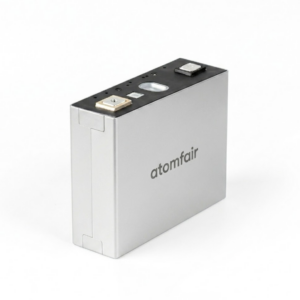
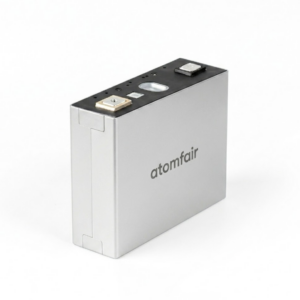
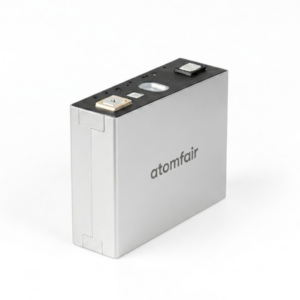
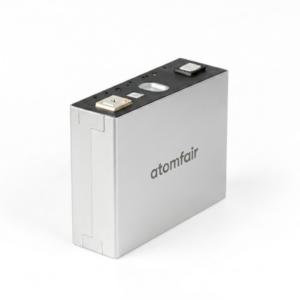
3.20V 107Ah LFP Prismatic Cell | ATOMFAIRCOMMERCIAL GRADE · PRODUCTION
|
|||||||||||||||||||||||||
|
|||||||||||||||||||||||||
|
TAILORED SOLUTIONS FOR RESEARCH
Contact our engineering team for technical support or official institutional quotations.
EMAIL: INQUIRY@ATOMFAIR.COM
|
|||||||||||||||||||||||||
|
Manufacturer: ATOMFAIR LLC
Brand: ATOMFAIR®
|
Store the cell in a cool, dry environment away from direct sunlight and maintain a partial state of charge to minimize capacity fade. Avoid physical deformation, short-circuiting, and exposure to temperatures outside the recommended operating range to ensure safe operation and long cycle life.
- Temperature and Humidity Control: Maintain storage temperature within the manufacturer's recommended range and keep relative humidity low to prevent electrolyte degradation and corrosion.
- State of Charge Management: Keep the cell at a state of charge between 30% and 50% during long-term storage to reduce stress on electrode materials.
- Mechanical Integrity Protection: Prevent denting, puncturing, or any deformation of the aluminum case that could compromise internal safety mechanisms.
- Electrical Safety Measures: Avoid short-circuiting the terminals by storing the cell with insulated covers and ensuring no conductive debris contacts the electrodes.
- Containment and Ventilation: Store cells in a non-combustible, ventilated area away from flammable materials and ensure spill containment is available in case of thermal runaway.
This procedure details the recommended steps for safely handling and initializing the LFP prismatic cell for integration into a battery pack. Follow these steps to ensure safe operation and prevent electrical hazards or mechanical damage.
Required Equipment: Insulated gloves, Safety goggles, Voltmeter, Battery management system (BMS)
- Inspect Cell Condition
Inspect the cell for any visible damage such as dents, swelling, or electrolyte leakage before handling. - Prepare Work Area
Set up the work area with proper ventilation, non-conductive surfaces, and accessible fire extinguishing equipment. - Measure Initial Voltage
Measure the open-circuit voltage using a calibrated voltmeter to confirm the cell is within safe operating range. - Attach BMS Leads
Connect the cell terminals to a compatible battery management system (BMS) using torque-rated hardware to ensure secure contact. - Configure Charging Parameters
Set the charge voltage to 3.65V maximum and current to 1.0C (107A) as per the datasheet limits. - Perform Initial Charge
Initiate a constant current/constant voltage (CC/CV) charge cycle and monitor cell temperature for any abnormal rise. - Verify Final Parameters
Confirm the cell reaches a stable voltage and temperature after charging before integrating into a pack assembly.
How does the 174 Wh/kg energy density of this 107Ah LFP prismatic cell translate into real-world EV range versus a comparable NMC cell at the same pack voltage?
The 174 Wh/kg energy density enables a lighter battery pack for a given capacity, directly extending driving range compared to lower-density chemistries. At a nominal 3.20V and 107Ah, this cell delivers 342.4 Wh per cell, and with a weight of ≤2.03 kg, the gravimetric advantage is clear. However, LFP's lower nominal voltage (3.20V vs. ~3.6-3.7V for NMC) means more cells in series are required to reach a given pack voltage, partially offsetting the weight benefit at the pack level.
Can this 3.20V 107Ah LFP cell be directly integrated into an existing 400V EV traction pack designed for pouch or cylindrical cells without modifying the cooling system?
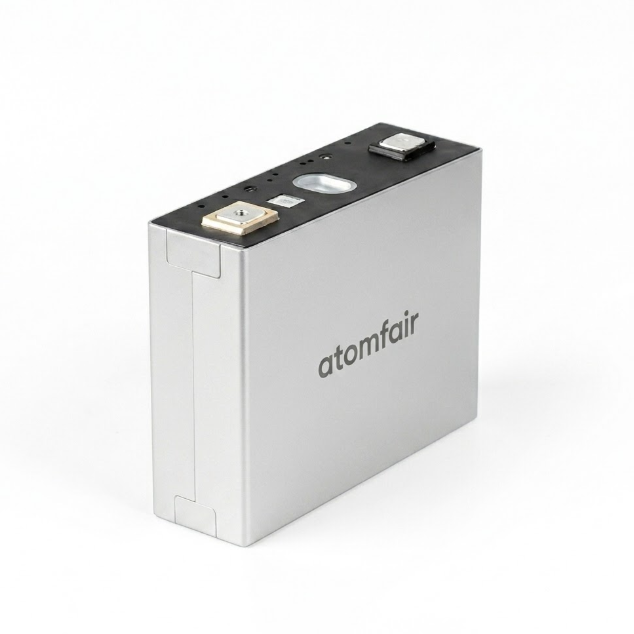
Direct integration requires careful mechanical and thermal redesign because the prismatic aluminum case (52.3×148.6×119.0 mm) has different form factor and thermal interface requirements than pouch or cylindrical cells. The rigid case provides structural rigidity and efficient cooling paths, but existing cooling plates or cold plates designed for pouch cells will not mate correctly. A dedicated BMS with over-discharge, over-charge, short-circuit, and cell balancing protection is mandatory, and the pack enclosure must accommodate the prismatic dimensions.
What are the critical storage and handling requirements for this LFP prismatic cell to prevent capacity fade before first use?
Cells must be stored in humidity-controlled vacuum sealed packaging with individual cell isolation in anti-static foam lined cartons to prevent moisture ingress and physical damage. Pre-condition cells at a moderate temperature before first use, and avoid deep discharge or operation at extreme temperatures to preserve cycle life (≥2200 cycles at 25°C with 80% retention). Always use a dedicated BMS and charge within the manufacturer’s recommended voltage window; do not exceed the rated 1.0C continuous charge or discharge rates.
The 3.20V 107Ah LFP prismatic cell delivers a high gravimetric energy density of 174 Wh/kg and a cycle life of ≥2200 cycles, making it well suited for EV traction applications. However, safe and optimal operation requires a dedicated BMS and strict avoidance of deep discharge and extreme temperatures.
Positive
- High energy density (174 Wh/kg): Provides extended EV driving range and reduces battery pack weight, directly improving vehicle efficiency and payload capacity.
- Long cycle life (≥2200 cycles): Achieves ≥2200 cycles with 80% capacity retention under 2.0C charge/1.0C discharge at 25°C, ensuring reliable performance over the lifespan of the vehicle.
Trade-offs
- Requires dedicated BMS: A battery management system with over-discharge, over-charge, short-circuit, and cell balancing protection is mandatory to prevent catastrophic failure or capacity loss.
- Sensitive to deep discharge and extreme temps: Optimal cycle life and safety require avoiding deep discharge and operation at extreme temperatures; preconditioning at moderate temperature before first use is recommended.
Every advanced material, component, equipment, and instrument in our catalog is backed by rigorous testing. We maintain strict internal quality management frameworks and align with CE conformity metrics to deliver transparent, reproducible performance data via our public open-science repository.
To request raw batch performance data, submit formal vendor registration paperwork, or execute a fast-turnaround R&D manufacturing loop, contact us at inquiry@atomfair.com.
Item is dispatched under the Atomfair Shipping & Delivery Framework (Free worldwide shipping on orders over $59 USD). Return is governed by the Atomfair Return & Refund Policy (7-day technical return window).