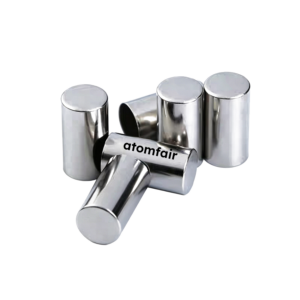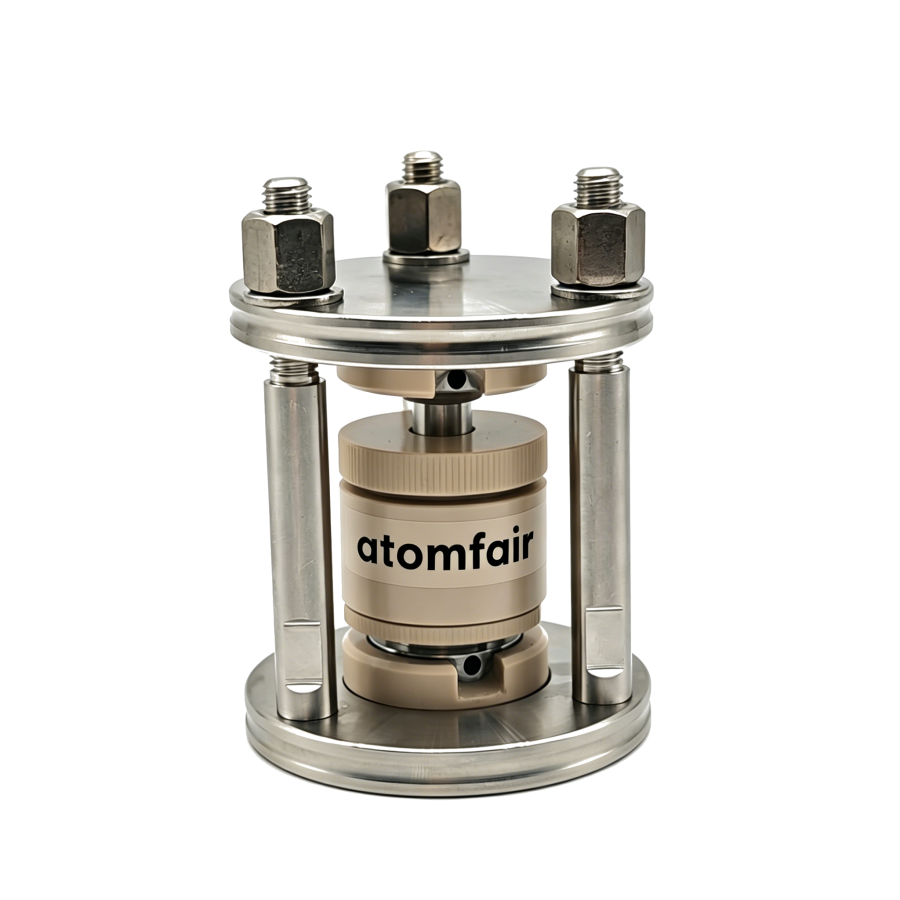
Description
ATOMFAIR® IN-SITU RAMAN CELLS & HIGH-PRECISION PEEK BATTERY MOLDS KITRESEARCH GRADE HARDWARE
|
|||||||||||||||||||||||
|
|||||||||||||||||||||||
|
TAILORED SOLUTIONS FOR RESEARCH
Contact our laboratory hardware division for specialized configuration parameters or official pricing quotes.
EMAIL: inquiry@atomfair.com
|
|||||||||||||||||||||||
|
Manufacturer: Atomfair LLC
Brand: ATOMFAIR®
|
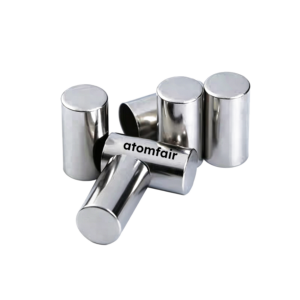
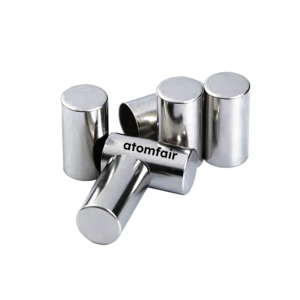
This set comprises two in-situ Raman test cells and two PEEK-insulated constant-spacing molds designed for solid-state battery research. The hardware requires compatibility with various electrolytes, leak-proof sealing, high dielectric insulation, and the ability to withstand high compression forces to ensure reproducible and safe testing.
- Electrolyte Compatibility: Corrosion-resistant internal components enable compatibility with a wide range of electrolytes during electrochemical testing.
- Leak-Proof Sealing: Leak-proof sealing design ensures long-term stability by preventing electrolyte leakage during extended cycling.
- Constant-Spacing Mechanism: Constant-spacing mechanism ensures precise control over electrolyte or pellet thickness for reproducible solid-state battery data.
- Dielectric Insulation: High dielectric strength prevents short-circuiting during high-pressure testing of solid-state electrolytes.
- Compression Withstand: Robust construction withstands the high compression forces required for solid-state electrolyte processing.
Why does the Atomfair in-situ Raman cell use a Quartz/Sapphire optical window instead of a standard glass window for electrochemical testing?
The Quartz/Sapphire window is optimized for maximum laser penetration and signal collection in Raman spectroscopy, providing superior transparency and durability compared to standard glass. This ensures reliable real-time spectral acquisition during electrochemical cycling without compromising optical performance.
What ensures the PEEK insulated mold's compatibility with corrosive solid-state electrolytes?
The mold is fabricated from aerospace-grade PEEK, which offers superior chemical resistance to a wide range of electrolytes. Its high dielectric strength also prevents short-circuiting under high compression forces, making it suitable for use with aggressive solid-state electrolyte systems.
What handling precautions are required to maintain the leak-proof seal of the Raman test cell during long-term experiments?
The cell incorporates a leak-proof sealing design to ensure long-term stability during testing. To maintain seal integrity, users must keep sealing surfaces clean and free of debris, and properly tighten all components before pressurization to prevent electrolyte leakage.
The In-situ Raman Test Cell and PEEK Mold Set provides an integrated solution for real-time spectroscopic analysis under solid-state battery cycling conditions. The constant-spacing mold ensures reproducible electrolyte/pellet thickness, while the Raman cell optimizes laser penetration and signal collection, but requires external instrumentation for operation.
Positive
- Optimized in-situ Raman window: Quartz/sapphire optical window maximizes laser penetration and signal collection for real-time spectroscopic analysis during electrochemical cycling.
- Constant-spacing solid-state mold: Precise control over electrolyte/pellet thickness ensures reproducible data crucial for solid-state battery research.
Trade-offs
- Requires external Raman setup: The Raman cell is a component for in-situ analysis and requires a compatible Raman microscope/spectrometer system for operation; not a standalone instrument.
- High compression press needed: The mold is designed to withstand high compression forces required for solid-state electrolyte processing, necessitating a dedicated hydraulic press in the lab.
Every advanced material, component, equipment, and instrument in our catalog is backed by rigorous testing. We maintain strict internal quality management frameworks and align with CE conformity metrics to deliver transparent, reproducible performance data via our public open-science repository.
To request raw batch performance data, submit formal vendor registration paperwork, or execute a fast-turnaround R&D manufacturing loop, contact us at inquiry@atomfair.com.
Item is dispatched under the Atomfair Shipping & Delivery Framework (Free worldwide shipping on orders over $59 USD). Return is governed by the Atomfair Return & Refund Policy (7-day technical return window).