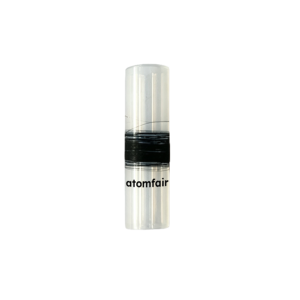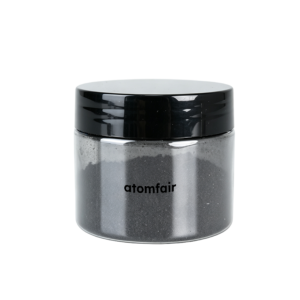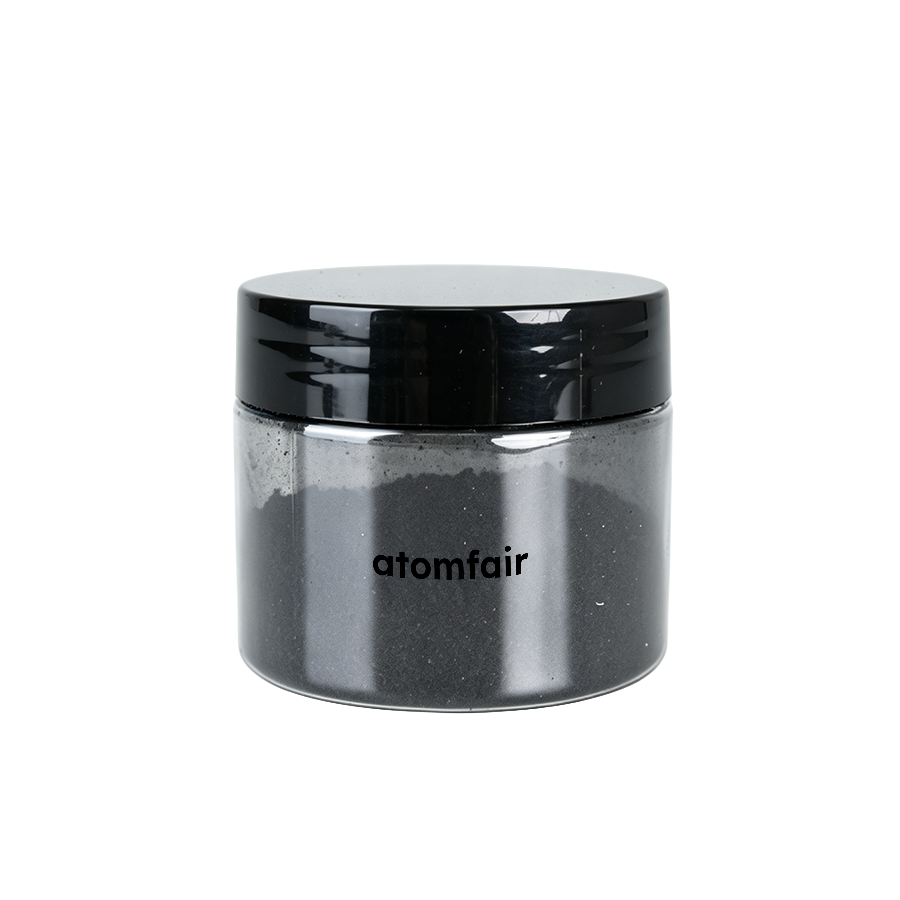
Purified Hydroxylate Single-walled carbon nanotubes, OD 1-2 nm, length 5-30um, purity >90%Product Type: Single-walled carbon nanotube material
Research-grade laboratory product
|
|||||||||||||||||||
|
|||||||||||||||||||
|
LABORATORY PROCUREMENT SUPPORT
For model selection, material specification matching, application fit or quotation confirmation, contact our technical sales team.
E-MAIL: inquiry@atomfair.com
|
|||||||||||||||||||
|
Supplier: Atomfair
Brand: ATOMFAIR®
|
Manufacturer: Atomfair LLC
Brand: ATOMFAIR®
How does the broad length distribution (5–30 µm) of these hydroxylated SWCNTs affect their performance in thin-film electronic applications compared to a more monodisperse sample?
The length distribution of 5–30 µm combined with an outer diameter of 1–2 nm yields an aspect ratio range of 2,500 to 30,000. While this high aspect ratio favors percolation and conductivity, the broad distribution can cause inconsistent film thickness and local conductivity variations in thin-film devices. The source does not provide a standard deviation for the length, so users should characterize the batch for their specific application.
Can these hydroxylated SWCNTs be used directly in epoxy-based composite formulations without additional surface modification?
The hydroxyl functional groups improve compatibility with polar polymers, making direct use in epoxy possible. However, the product description advises matching the material form to the intended composite workflow, and the powder form typically requires sonication or solvent-assisted mixing to achieve uniform dispersion. The >90% purity ensures minimal catalyst residue, which is beneficial for composite mechanical properties.
What laboratory equipment is necessary to prepare a stable dispersion of these hydroxylated SWCNTs in a typical organic solvent?
The product is supplied as a powder, so dispersion equipment such as an ultrasonic bath, probe sonicator, or high-shear mixer is necessary to break agglomerates. The selection notes reference dispersion workflows, confirming that the user must match the material form to the intended dispersion method. The source does not specify optimal solvent or concentration, so empirical testing is required.
Purified Hydroxylate Single-walled carbon nanotubes (OD 1-2 nm, length 5-30 µm, purity >90%) provide a functionalized nanomaterial for dispersion, composite, electrode, or conductivity research, with hydroxyl groups enabling covalent or hydrogen-bonding integration into polar matrices.
Positive
- Hydroxyl functionalization for matrix compatibility: The hydroxylate surface groups enable improved dispersibility and covalent bonding in polar solvents and polymer matrices, supporting composite, electrode, and film fabrication workflows.
- High purity and narrow dimensional range: Purity >90% with outer diameter 1-2 nm and length 5-30 µm reduces batch variability, critical for reproducible conductivity and mechanical reinforcement in research-scale formulations.
Trade-offs
- Handling sensitivity of dry powder: As a dry nanocarbon powder, the material requires careful handling to avoid airborne nanoparticle exposure and static aggregation, necessitating fume hood or glovebox use for safe laboratory processing.
- Application-specific dispersion optimization needed: Achieving uniform dispersion in target solvents or polymers may require sonication, surfactant addition, or surface chemistry adjustment, adding process development steps before integration into electrodes or composites.
Every advanced material, component, equipment, and instrument in our catalog is backed by rigorous testing. We maintain strict internal quality management frameworks and align with CE conformity metrics to deliver transparent, reproducible performance data via our public open-science repository.
To request raw batch performance data, submit formal vendor registration paperwork, or execute a fast-turnaround R&D manufacturing loop, contact us at inquiry@atomfair.com.
Item is dispatched under the Atomfair Shipping & Delivery Framework (Free worldwide shipping on orders over $59 USD excl. heavy equipment). Return is governed by the Atomfair Return & Refund Policy (7-day technical return window).