Photocatalytic High-Pressure Electrochemical Cell – Single LayerProduct Type: Variation
Laboratory procurement configuration
|
|||||||||||||||||||||||||||
|
|||||||||||||||||||||||||||
|
LABORATORY PROCUREMENT SUPPORT
For model selection, technical compatibility or configuration confirmation, contact our technical sales team.
E-MAIL: inquiry@atomfair.com
|
|||||||||||||||||||||||||||
|
Manufacturer: Atomfair LLC LLC
Brand: ATOMFAIR®
|
This cell operates under high pressure and vacuum, requiring careful handling. The quartz window is sensitive to impact and thermal stress, and the titanium body should be inspected for corrosion after use.
- Storage Constraint: Store the cell with the quartz window covered to prevent scratches and impact damage.
- Material Compatibility: Use only solvents and electrolytes compatible with titanium and high-borosilicate glass to avoid chemical attack.
- Pressure Limit: Never exceed the manufacturer's maximum rated pressure to avoid catastrophic failure.
Proper assembly and leak-testing prevent accidents during high-pressure operation. Follow these steps to ensure safe use of the single-layer cell.
Required Equipment: Torque wrench, Vacuum pump
- Inspect the Window
Inspect the quartz window for cracks, chips, or scratches before each use. - Check Seals
Verify that all sealing gaskets are clean, undamaged, and properly seated in their grooves. - Assemble the Cell
Tighten the bolts evenly in a cross-pattern to the torque specified by the manufacturer. - Evacuate for Leak Test
Apply vacuum to the assembled cell and confirm it holds pressure for at least 5 minutes. - Pressurize Gradually
Introduce the working gas or liquid slowly while monitoring the pressure gauge.
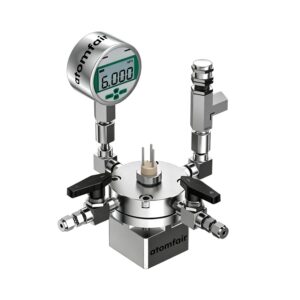
How does the 50 mL working volume and >95% transmittance quartz window of the single-layer photocatalytic cell support photoelectrochemical measurements?
The 50 mL volume provides adequate sample capacity for batch reactions, while the quartz glass window with >95% transmittance ensures minimal light loss across the UV-visible range, critical for efficient photoexcitation of catalysts. This combination is well-suited for photoelectrochemical studies requiring controlled high-pressure conditions.
What materials are used for the chamber body and inner chamber of the AF-PHC-S, and can the cell be customized for non-standard electrode sizes?
The chamber body is constructed from pure titanium for corrosion resistance at high pressure, and the inner chamber is high borosilicate glass to minimize catalytic interference. Customization for non-standard electrode sizes or alternative window materials is available upon request to the manufacturer.
Is the single-layer photocatalytic high-pressure cell compatible with vacuum purging prior to gas-phase reactions?
Yes, the cell is vacuum capable—vacuum can be pulled—enabling removal of atmospheric gases before introducing high-purity reactant gases or performing gas-phase photocatalytic experiments. This feature is essential for avoiding oxygen or moisture interference in sensitive reactions.
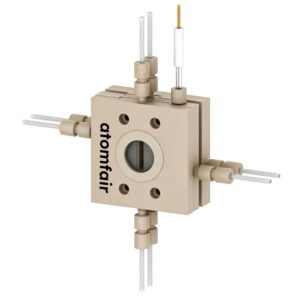
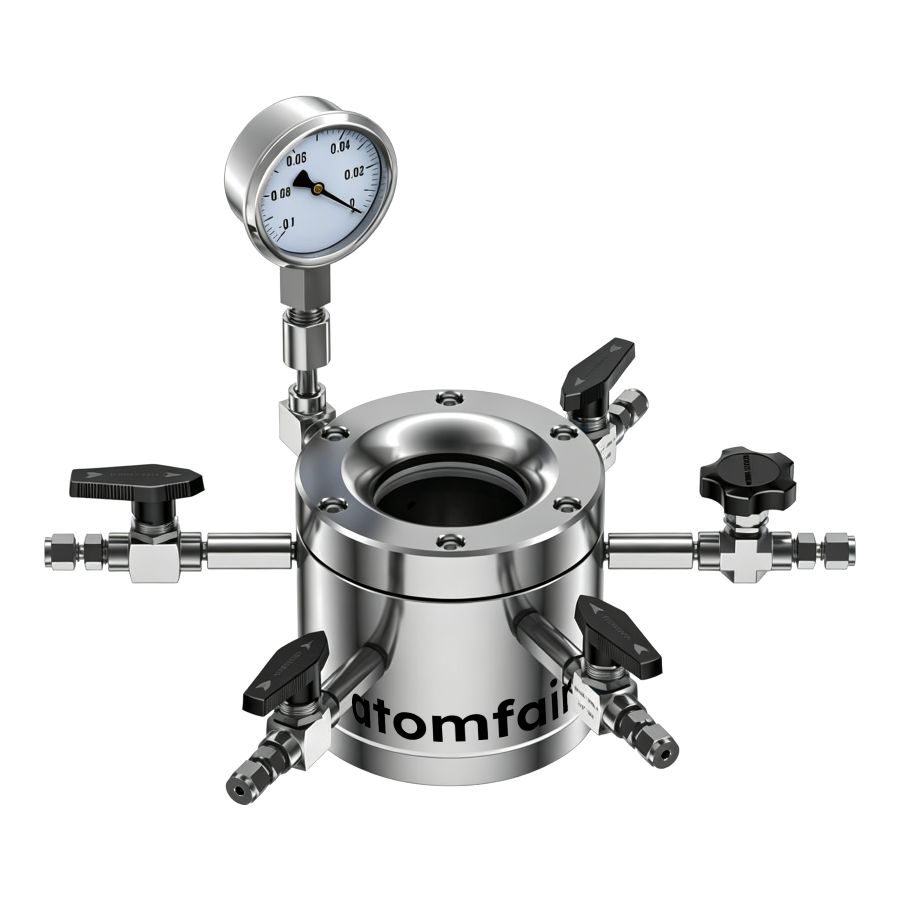
The single-layer Photocatalytic High-Pressure Electrochemical Cell (AF-PHC-S) offers a 50 mL pure titanium chamber with a high-transmittance quartz window and vacuum capability, suitable for basic photocatalytic studies under controlled conditions. However, users must procure electrodes and accessories separately, and the single-layer design limits reaction scalability.
Positive
- High-transmittance quartz window: The quartz glass window provides >95% transmittance, ensuring efficient light delivery for photocatalytic experiments.
- Vacuum capability: The cell can be evacuated, enabling degassing and controlled atmosphere conditions for sensitive reactions.
Trade-offs
- Separate accessory procurement required: Electrodes, membranes, windows, and gas diffusion electrodes are not included and must be ordered separately, adding to procurement complexity.
- Single-layer volume limitation: The single-layer configuration offers a fixed 50 mL working volume and simpler chamber structure, which may not suit multi-step or tandem photocatalytic processes.
Every advanced material, component, equipment, and instrument in our catalog is backed by rigorous testing. We maintain strict internal quality management frameworks and align with CE conformity metrics to deliver transparent, reproducible performance data via our public open-science repository.
To request raw batch performance data, submit formal vendor registration paperwork, or execute a fast-turnaround R&D manufacturing loop, contact us at inquiry@atomfair.com.
Item is dispatched under the Atomfair Shipping & Delivery Framework (Free worldwide shipping on orders over $59 USD excl. heavy equipment). Return is governed by the Atomfair Return & Refund Policy (7-day technical return window).