Description
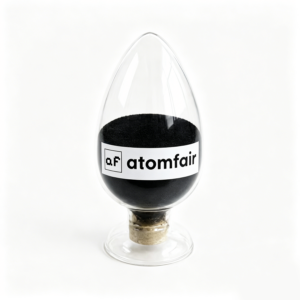
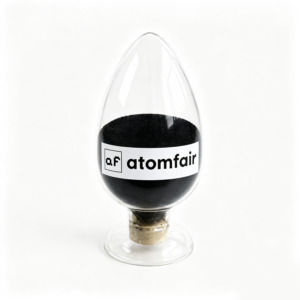
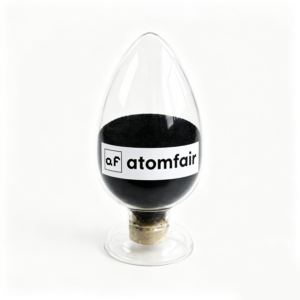
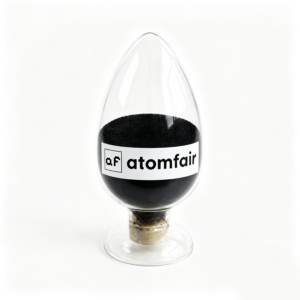
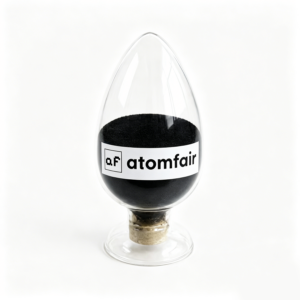
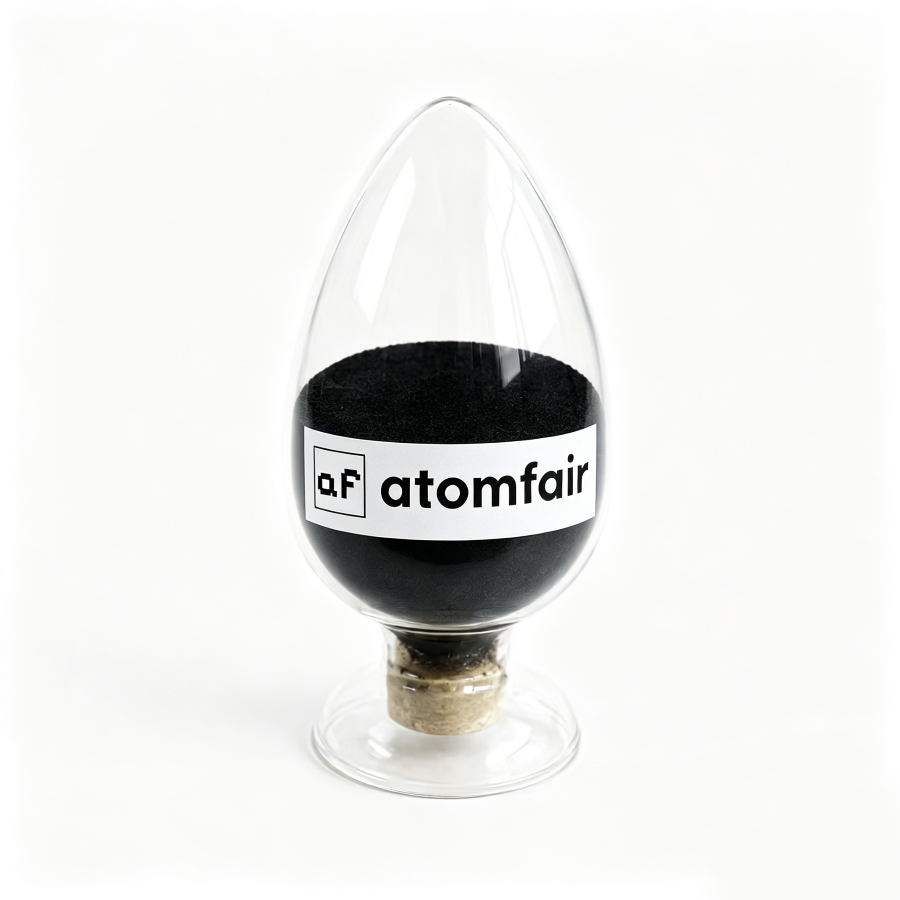
ATOMFAIR® 1800 MAH/G NANO SILICON CARBON POWDERRESEARCH GRADE | ULTRA-HIGH CAPACITY ANODE
|
|||||||||||||||||||||||||||||||||||||||||||
|
|||||||||||||||||||||||||||||||||||||||||||
|
TAILORED SOLUTIONS FOR RESEARCH
Contact our engineering team for technical support or official institutional quotations.
EMAIL: INQUIRY@ATOMFAIR.COM
|
|||||||||||||||||||||||||||||||||||||||||||
|
Manufacturer: ATOMFAIR LLC
Brand: ATOMFAIR®
|
|||||||||||||||||||||||||||||||||||||||||||
Store in an inert atmosphere (e.g., argon glovebox) to prevent oxidation and moisture uptake. Handle in a controlled environment to avoid contamination and electrostatic discharge.
- Moisture Sensitivity: Exposure to ambient air may degrade electrochemical performance due to silicon oxidation.
This procedure outlines safe handling and slurry preparation steps for the anode powder. Proper inert atmosphere and solvent selection are critical to preserve material performance.
Required Equipment: Argon-filled glovebox, Clean mixing container, Binder solution (e.g., PVDF in NMP)
- Transfer to glovebox
Transfer the powder into an argon-filled glovebox to avoid air exposure. - Dispense powder
Dispense the required mass into a clean mixing container using a spatula. - Add binder solution
Add the binder solution and mix thoroughly until a homogeneous slurry is formed. - Seal container
Seal the slurry container before removing from the glovebox to prevent solvent evaporation.
How does the reversible capacity of this nano silicon-carbon anode powder vary with voltage cut-off, and what is the corresponding first cycle efficiency trade-off?
At a 2V cut-off, the powder delivers >1800 mAh/g reversible capacity with >91% first cycle efficiency. When the cut-off is lowered to 0.8V, capacity drops to >1600 mAh/g and first cycle efficiency reduces to >82%, reflecting a trade-off between voltage window and active lithium consumption during SEI formation.
What particle size distribution does this nano silicon-carbon anode powder have, and how does it affect slurry homogenization for slot-die coating?
The powder has a median particle size (D50) of 6–9 μm, with D10 >3 μm and D90 <20 μm. This tight size profile ensures seamless slurry homogenization and uniform slot-die coating repeatability, which is critical for consistent electrode fabrication at research scale.
What compaction pressure is required to achieve the specified powder resistivity and density for this material?
A compaction pressure of 20 MPa is specified to achieve powder resistivity below 1.0 Ω·cm and compacted density between 1.0–1.3 g/cm³. A uniaxial press capable of at least 20 MPa is required to meet these electrochemical performance targets during electrode preparation.
This nano silicon-carbon anode powder delivers ultra-high reversible capacity exceeding 1800 mAh/g with low powder resistivity under 1.0 Ω·cm at 20 MPa and first-cycle efficiency above 91%, enabling substantial energy density gains over graphite. However, capacity and efficiency values vary with voltage cut-off (2V vs. 0.8V), and the specified resistivity is measured at a fixed compaction pressure, requiring users to optimize electrode processing conditions accordingly.
Positive
- Ultra-High Reversible Capacity: Reversible capacity exceeds 1800 mAh/g at 2V cut-off, nearly five times the theoretical capacity of graphite, enabling extreme energy density in lithium-ion anodes.
- Low Powder Resistivity: Powder resistivity below 1.0 Ω·cm at 20 MPa minimizes electronic impedance within electrode films, supporting efficient charge transport.
Trade-offs
- Voltage-Cutoff Dependent Performance: Reversible capacity and cycle efficiency differ significantly between 2V cut-off (1800 mAh/g, 91% efficiency) and 0.8V cut-off (1600 mAh/g, 82% efficiency), requiring careful selection based on target application.
- Resistivity at Fixed Compaction Pressure: Powder resistivity is specified at 20 MPa compaction pressure; actual electrode calendering conditions may vary, potentially altering the effective electronic conductivity.
Every advanced material, component, equipment, and instrument in our catalog is backed by rigorous testing. We maintain strict internal quality management frameworks and align with CE conformity metrics to deliver transparent, reproducible performance data via our public open-science repository.
To request raw batch performance data, submit formal vendor registration paperwork, or execute a fast-turnaround R&D manufacturing loop, contact us at inquiry@atomfair.com.
Item is dispatched under the Atomfair Shipping & Delivery Framework (Free worldwide shipping on orders over $59 USD excl. heavy equipment). Return is governed by the Atomfair Return & Refund Policy (7-day technical return window).