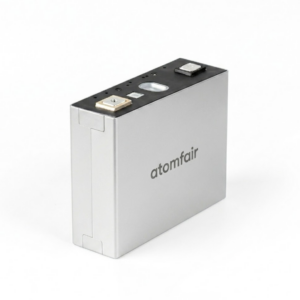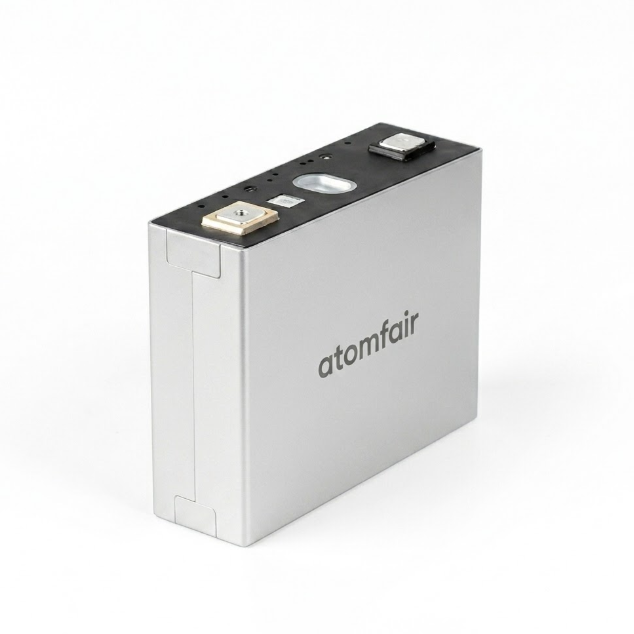
Description
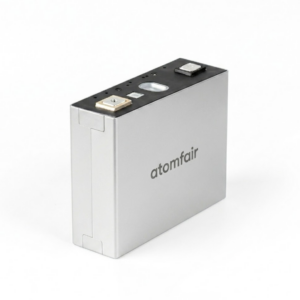
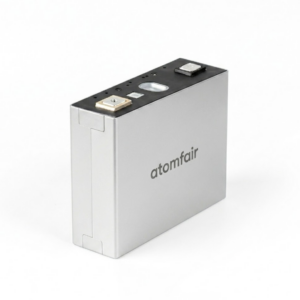
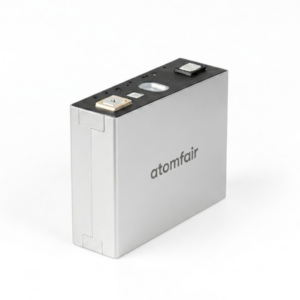
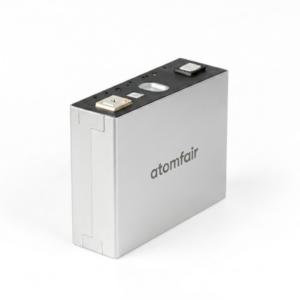
3.20V 588Ah LFP Prismatic Cell Series | ATOMFAIRCOMMERCIAL GRADE · PRODUCTION
|
|||||||||||||||||||||||||||||||||||||
|
|||||||||||||||||||||||||||||||||||||
|
TAILORED SOLUTIONS FOR RESEARCH
Contact our engineering team for technical support or official institutional quotations.
EMAIL: INQUIRY@ATOMFAIR.COM
|
|||||||||||||||||||||||||||||||||||||
|
MANUFACTURER: ATOMFAIR LLC
BRAND: ATOMFAIR®
|
The cell must be stored in a cool, dry environment to prevent capacity fade and avoid exposure to conductive materials that could cause short circuits. Do not operate the cell beyond the specified charge or discharge rates to maintain safety and cycle life.
- General Handling Constraint: Ensure the cell is stored in a non‑conductive container and at a moderate state of charge to minimize degradation during idle periods.
Follow these steps to safely handle and activate the LFP prismatic cell for ESS integration. Proper initialization ensures optimal performance and longevity.
Required Equipment: Personal protective equipment (insulated gloves, safety goggles), Calibrated multimeter
- Inspect Cell
Inspect the cell for visible damage, bulging, or leakage before any handling. - Verify Voltage
Confirm that the cell voltage is within the normal operating range using a calibrated multimeter. - Connect to BMS
Connect the cell to a compatible battery management system with appropriate overcurrent protection. - Charge Cell
Charge the cell at a maximum continuous current of 0.5C to ensure safe operation and long cycle life. - Store Correctly
Disconnect the cell from all electrical connections when storing to prevent accidental discharge and damage.
What is the trade-off between the 8000-cycle and 12000-cycle LFP prismatic cell variants for utility ESS pack design?
The primary trade-off is cycle life versus application cost: the AFLFP588-8K offers ≥8000 cycles at 0.5C/0.5C, 100% DOD with 70% retention, while the AFLFP588-12K delivers ≥12000 cycles under identical conditions. Both share the same 3.20V nominal voltage, 588Ah capacity, 187Wh/kg energy density, and identical mechanical footprint of 72.5×288.0×216.3 mm, enabling drop-in replacement. The 12K variant is optimized for daily deep-cycling applications requiring decades of service, whereas the 8K variant provides a cost-effective solution for standard ESS projects with less demanding cycle life requirements.
Can the 3.20V 588Ah LFP prismatic cell be integrated into existing 48V or 400V utility ESS battery racks without redesigning the mechanical enclosure?
Yes, both the AFLFP588-8K and AFLFP588-12K variants share identical dimensions of 72.5×288.0×216.3 mm including terminal, enabling direct mechanical integration into existing ESS racks designed for standard prismatic cells. The ultra-high 588Ah capacity per cell reduces total cell count, simplifying BMS architecture and lowering assembly costsasi. However, the 0.5C continuous charge/discharge rate must be matched to the system's power electronics and thermal management design to ensure compatibility with existing busbars and cooling infrastructure.
What are the critical handling and storage requirements for the 3.20V 588Ah LFP prismatic cell to prevent damage during ESS pack assembly?
The cells are shipped in humidity-controlled vacuum sealed packaging with individual cell isolation in anti-static materials to prevent moisture ingress and electrostatic discharge damage during transport and storage. Each cell weighs less than 10.0 kg and must be handled using appropriate lifting techniques to avoid mechanical stress on the aluminum case and terminal. Storage should be in a dry, temperature-controlled environment (recommended 15–35°C) with terminals protected from short circuits until assembly into the ESS pack.
This LFP prismatic cell series delivers industry-leading energy density of 187 Wh/kg and ultra-high capacity of 588 Ah in a compact aluminum case, with built-to-order cycle life up to 12,000 cycles at 100% DoD for stationary storage. However, its 0.5 C continuous rate restricts deployment to ESS duty cycles, and cycle life guarantees assume controlled lab conditions (25 °C, 0.5 C, 100 % DoD).
Positive
- Ultra-High Energy Density: With 187 Wh/kg and a weight under 10.0 kg, this cell significantly reduces system footprint and total weight for utility-scale storage applications.
- Exceptional Cyclability Options: Choose between ≥8000 or ≥12000 cycles at 0.5C/0.5C, 100% DoD, 70% retention, enabling decades of daily deep cycling for ESS projects.
Trade-offs
- 0.5C Continuous Rate Limit: The maximum continuous charge and discharge rate is 0.5C, which is optimized for typical ESS duty cycles but precludes use in high-rate or fast-charging applications.
- Cycle Life Lab Dependency: Cycle life specifications (≥8000/≥12000 cycles) are measured at 25 °C, 0.5C, and 100% DoD with 70% retention; real-world operating conditions such as temperature extremes or partial cycling will alter longevity.
Every advanced material, component, equipment, and instrument in our catalog is backed by rigorous testing. We maintain strict internal quality management frameworks and align with CE conformity metrics to deliver transparent, reproducible performance data via our public open-science repository.
To request raw batch performance data, submit formal vendor registration paperwork, or execute a fast-turnaround R&D manufacturing loop, contact us at inquiry@atomfair.com.
Item is dispatched under the Atomfair Shipping & Delivery Framework (Free worldwide shipping on orders over $59 USD). Return is governed by the Atomfair Return & Refund Policy (7-day technical return window).