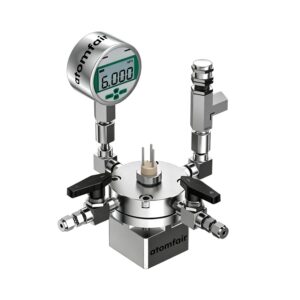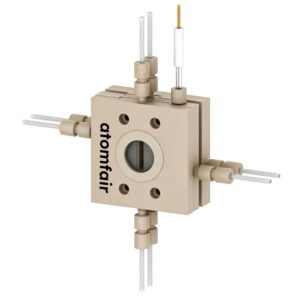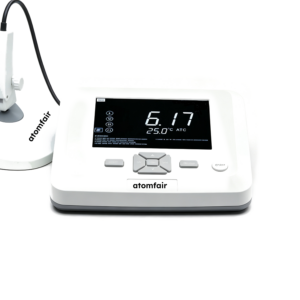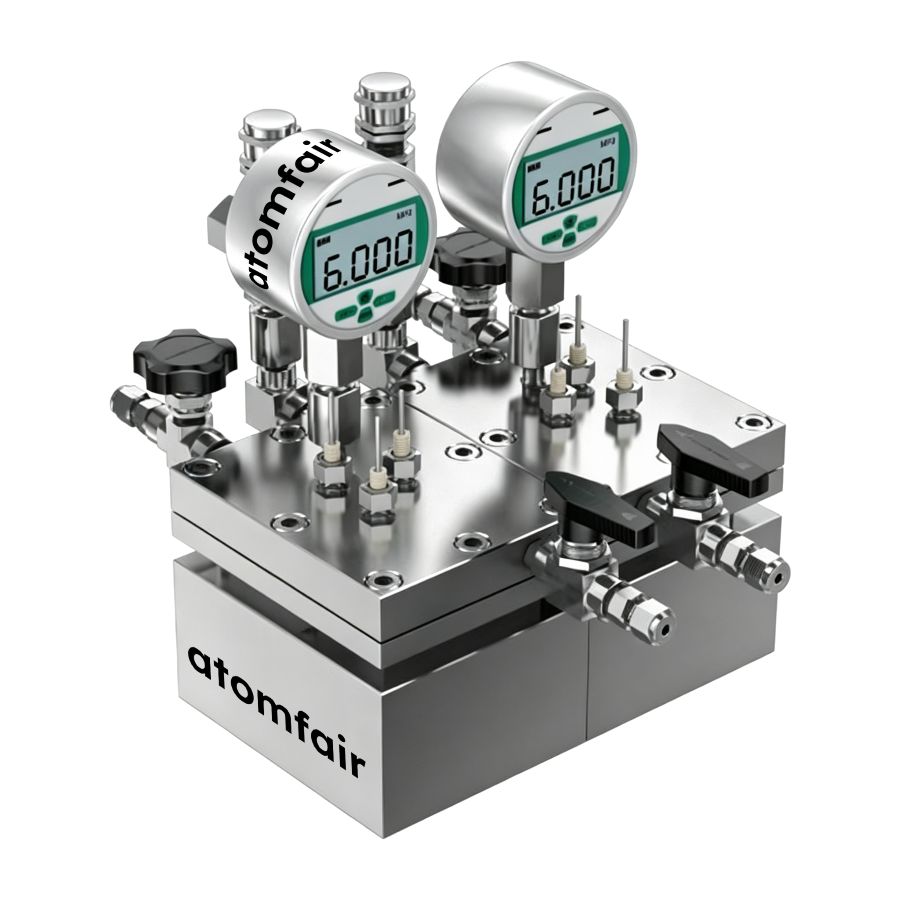
Double Chamber High-Pressure Electrochemical Cell with Quartz Window – 50+50 mLProduct Type: Variation
Laboratory procurement configuration
|
|||||||||||||||||||||||||
|
|||||||||||||||||||||||||
|
LABORATORY PROCUREMENT SUPPORT
For model selection, technical compatibility or configuration confirmation, contact our technical sales team.
E-MAIL: inquiry@atomfair.com
|
|||||||||||||||||||||||||
|
Manufacturer: Atomfair LLC LLC
Brand: ATOMFAIR®
|
The cell is rated for a maximum operating pressure of 6 MPa and must not be used above this limit to avoid catastrophic failure. The quartz window is a critical pressure boundary component requiring careful handling to prevent cracking or scratching.
- Pressure Limit: The system pressure must never exceed the rated 6 MPa during any phase of operation.
- Window Integrity: Inspect the quartz window for cracks, chips, or surface defects before every use to ensure it can withstand the working pressure.
- Valve Sealing: All 304 stainless steel valves must be tested for leak-tightness at the intended operating pressure prior to first use.
This procedure covers the essential steps for safely pressurizing, operating, and depressurizing the double chamber cell. Strict adherence to these steps prevents equipment damage and personal injury.
Required Equipment: Pressure regulator and gauge, Leak test solution or detector
- Pre-use Inspection
Inspect the cell body, window, and valves for any visible damage, contamination, or signs of wear. - Seal Verification
Verify that all seals are properly seated and that the window holding ring is evenly tightened to the torque specified for the cell. - Initial Leak Check
Pressurize the cell to 0.5 MPa with an inert gas and check all connections for leaks using a suitable leak detection method. - Controlled Pressurization
Gradually increase the pressure to the desired working level while continuously monitoring the pressure gauge and window condition. - Operation Monitoring
Monitor the pressure and temperature inside the cell throughout the experiment and immediately depressurize if any anomaly is detected. - Depressurization
Slowly vent the cell to atmospheric pressure using the outlet valve before any attempt to open or disassemble the cell.
Does the quartz window on the Atomfair AF-HCW-50 double chamber cell maintain >95% transmittance under the full 6 MPa pressure rating?
Yes, the quartz window is rated for the full 6 MPa operating pressure while delivering >95% optical transmittance as specified. The cell body is titanium with 304 stainless steel valves, ensuring the window seal remains intact under high-pressure electrochemical conditions.
Can the 50+50 mL double chamber cell be directly connected to a standard potentiostat and external light source for photo-electrochemical experiments?
Yes, the cell supports a three-electrode setup (reference, counter, and working electrodes sold separately) and the quartz window (>95% transmittance) provides optical access for illumination or in situ spectroscopy. Integration with a potentiostat and collimated light source is straightforward, with electrodes purchased separately and sealed via the provided ports.
What handling and safety procedures are critical when pressurizing the double chamber cell with quartz window to 6 MPa?
The cell uses 304 stainless steel valves and a titanium body rated for 6 MPa. Always verify that all electrode and window seals are properly seated before pressurization, use overpressure protection, and clean the quartz window with compatible solvents only. Standard protective packaging is used for transport; custom reinforcement is available on request.
This 50+50 mL double chamber high-pressure electrochemical cell with quartz window provides optical access for in-situ spectroscopy or illumination, but requires separate electrode procurement and is limited to 6 MPa operating pressure.
Positive
- Quartz window with >95% transmittance: Enables optical observation, illumination, or in-situ spectroscopic measurements during electrochemical testing without significant signal loss.
- Corrosion-resistant Ti body and SS valves: Titanium chamber body and 304 stainless steel valves provide chemical resistance and mechanical integrity for high-pressure (6 MPa) operation with aggressive electrolytes.
Trade-offs
- Electrodes sold separately: The three-electrode system is not included; users must independently source compatible electrodes, adding procurement steps and potential compatibility checks.
- Pressure limited to 6 MPa: Maximum operating pressure of 6 MPa may be insufficient for studies requiring higher hydrostatic pressures, such as certain gas-phase or supercritical experiments.
Every advanced material, component, equipment, and instrument in our catalog is backed by rigorous testing. We maintain strict internal quality management frameworks and align with CE conformity metrics to deliver transparent, reproducible performance data via our public open-science repository.
To request raw batch performance data, submit formal vendor registration paperwork, or execute a fast-turnaround R&D manufacturing loop, contact us at inquiry@atomfair.com.
Item is dispatched under the Atomfair Shipping & Delivery Framework (Free worldwide shipping on orders over $59 USD excl. heavy equipment). Return is governed by the Atomfair Return & Refund Policy (7-day technical return window).