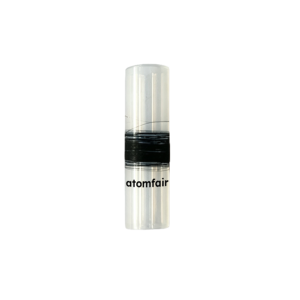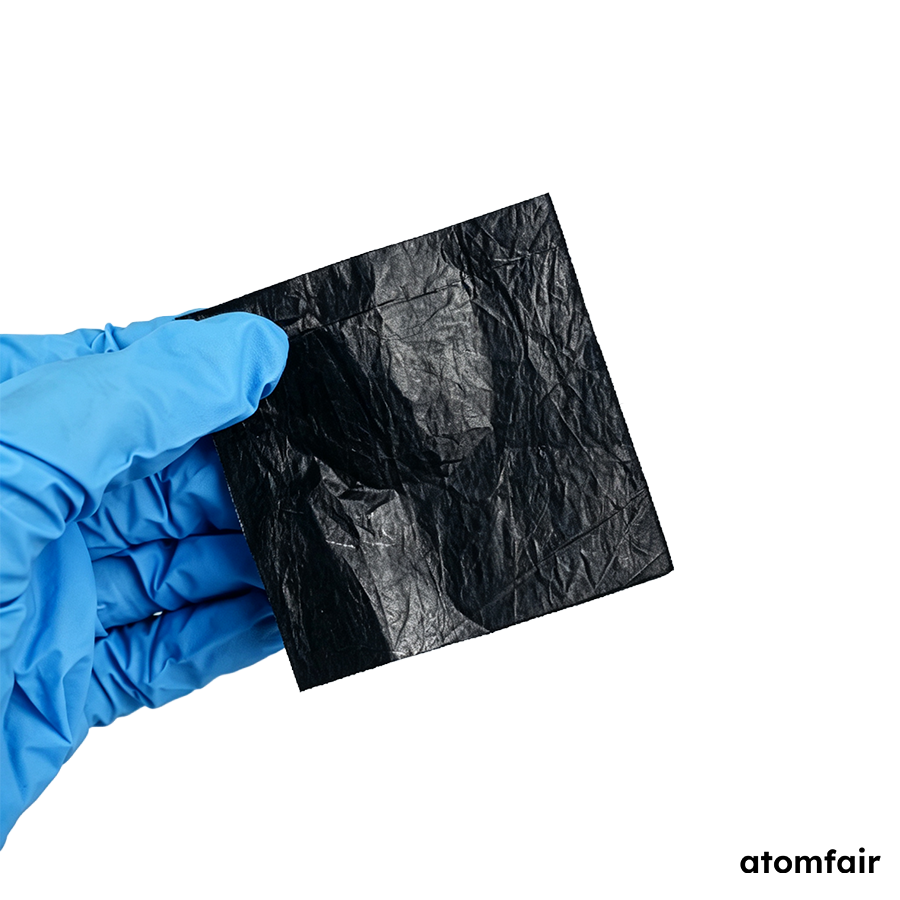
Conductive carbon nanotubefilm, thickness 10~15um, conductivity 3-8×10⁴ S/mProduct Type: Carbon nanotube film material
Research-grade laboratory product
|
|||||||||||||||||||||
|
|||||||||||||||||||||
|
LABORATORY PROCUREMENT SUPPORT
For model selection, material specification matching, application fit or quotation confirmation, contact our technical sales team.
E-MAIL: inquiry@atomfair.com
|
|||||||||||||||||||||
|
Supplier: Atomfair
Brand: ATOMFAIR®
|
Manufacturer: Atomfair LLC
Brand: ATOMFAIR®
This carbon nanotube film is a free-standing nanomaterial with specified thickness and conductivity ranges. Mechanical integrity and electrical performance depend on maintaining the film's structural continuity during handling.
- Mechanical Failure Mode: The film may tear or delaminate if subjected to excessive tensile stress beyond its 60-120 MPa strength range.
- Conductivity Sensitivity: Conductivity of 3-8×10⁴ S/m is measured across the film plane and may degrade if the film is creased, folded, or contaminated.
- Handling Infrastructure: Transfer and mounting should be performed in a clean environment using antistatic tweezers or vacuum pickup to avoid mechanical damage.
This procedure describes safe handling and mounting of free-standing carbon nanotube film for electrode or sensor integration. Proper technique prevents tearing, contamination, and conductivity loss.
Required Equipment: Antistatic tweezers, Vacuum pickup tool, Cleanroom-grade gloves
- Inspect Film Integrity
Inspect the film visually under good lighting for any pre-existing tears, wrinkles, or edge fraying before handling. - Prepare Work Surface
Place a clean, lint-free substrate on a flat work surface in a low-humidity, particle-controlled environment. - Transfer Film to Substrate
Transfer the film using antistatic tweezers or a vacuum pickup tool, gripping only at the edges to avoid surface contamination. - Align and Mount Film
Align the film gently onto the target substrate without stretching or folding, then secure edges with conductive tape if required. - Verify Electrical Contact
Verify electrical continuity across the mounted film using a multimeter to confirm conductivity within the specified range.
How does the tensile strength range of 60–120 MPa influence the mechanical handling and performance trade-offs of a 10–15 μm thick free-standing carbon nanotube film?
The 60–120 MPa tensile strength range indicates moderate mechanical integrity for a 10–15 μm free-standing CNT film, balancing flexibility with sufficient robustness for manual handling during electrode or composite integration. The lower end of the strength range (60 MPa) may require careful manipulation to avoid tearing, while the upper end (120 MPa) supports more aggressive processing. This trade-off is explicitly stated in the product specification, with thickness and strength provided as key selection parameters.
What compatibility constraints must be considered when integrating this conductive CNT film into a solvent-based dispersion or composite formulation?
The film is supplied as a free-standing CNT material without pre-optimized solvent or composition, so required composition, solvent, package size, and concentration must be confirmed before quotation. Compatibility with common dispersion solvents (e.g., NMP, DMF, water with surfactants) is not specified, meaning that users should expect to test and validate dispersion stability and film integrity against their workflow. The conductivity range of 3–8×10⁴ S/m is maintained only if the film structure is preserved during integration.
What storage and handling infrastructure is required to preserve the performance of this 10–15 μm conductive carbon nanotube film?
The film is a free-standing, thin (10–15 μm) CNT material with moderate strength (60–120 MPa) and high conductivity (3–8×10⁴ S/m), making it sensitive to physical damage and contamination. Cleanroom or low-dust environment handling is recommended to avoid particulate contamination that can locally alter conductivity. Storage should be in a dry, sealed container to prevent moisture adsorption or mechanical deformation, as the product specification emphasizes that dimensions and conductivity details are reviewed per order and no specific storage conditions are pre-defined.
This free-standing conductive carbon nanotube film (AF-NM-C-CNTM-Z014-R05U) with 10–15 μm thickness and 3–8×10⁴ S/m conductivity provides a mechanically robust (60–120 MPa) nanocarbon sheet for electrode, shielding, or sensor workflows, but requires pre-quotation confirmation of sheet dimensions, composition, and solvent compatibility.
Positive
- High electrical conductivity range: Conductivity of 3–8×10⁴ S/m supports use in conductive films, electrodes, and EMI shielding applications where moderate to high sheet conductance is required.
- Mechanical strength for handling: Tensile strength of 60–120 MPa allows the free-standing film to be handled, cut, and integrated into devices without immediate structural failure.
Trade-offs
- Pre-quotation specification confirmation required: Sheet form, dimensions, composition, solvent, and concentration must be confirmed before ordering, adding a procurement step for lab buyers.
- Limited thickness uniformity specification: Thickness is given as a range (10–15 μm) without tolerance data, which may affect reproducibility in precision electrode or thin-film device fabrication.
Every advanced material, component, equipment, and instrument in our catalog is backed by rigorous testing. We maintain strict internal quality management frameworks and align with CE conformity metrics to deliver transparent, reproducible performance data via our public open-science repository.
To request raw batch performance data, submit formal vendor registration paperwork, or execute a fast-turnaround R&D manufacturing loop, contact us at inquiry@atomfair.com.
Item is dispatched under the Atomfair Shipping & Delivery Framework (Free worldwide shipping on orders over $59 USD excl. heavy equipment). Return is governed by the Atomfair Return & Refund Policy (7-day technical return window).