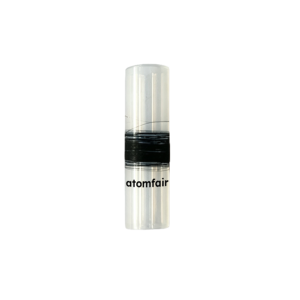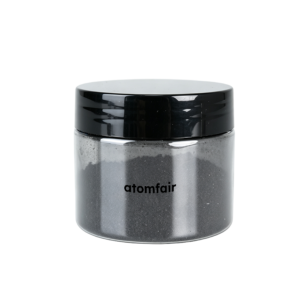
Oil single-walled carbon nanotubeconductivepaste High concentration MWCNTs water dispersion(~14 wt%) High concentration carboxyl MWCNTs waterdispersion, 2.16-2.64 wt% content, OD 1.4±0.5 nm; Lengthum>100Product Type: Single-walled carbon nanotube material
Research-grade laboratory product
|
|||||||||||||||||||||||||||||||||
|
|||||||||||||||||||||||||||||||||
|
LABORATORY PROCUREMENT SUPPORT
For model selection, material specification matching, application fit or quotation confirmation, contact our technical sales team.
E-MAIL: inquiry@atomfair.com
|
|||||||||||||||||||||||||||||||||
|
Supplier: Atomfair
Brand: ATOMFAIR®
|
Manufacturer: Atomfair LLC
Brand: ATOMFAIR®
This product is a single-walled carbon nanotube paste dispersed in NMP with PVDF binder. Its processing requires control of solid content and viscosity for consistent coating or dispersion performance.
- Solvent Compatibility: The NMP solvent system must be compatible with the intended substrate and processing equipment to avoid contamination or dissolution.
- Concentration Control: The solid content of 2.16-2.64 wt% and carbon nanotube content of 0.40 wt% must be precisely maintained to achieve target electrical conductivity.
- Viscosity Management: The paste viscosity below 5000 mPa·s is suitable for coating but may require adjustment if the solvent evaporates during storage.
What is the trade-off between the low nanotube content (0.40 wt%) and the high solid content (2.16-2.64 wt%) in this oil single-walled carbon nanotube conductive paste for electrode coating applications?
The low nanotube content (0.40 wt% of total paste) is balanced by the inclusion of PVDF binder (2+/-0.1 wt%) and NMP solvent (97.6 wt%). The solid content of 2.16-2.64 wt% ensures sufficient binder for film formation, but the nanotube loading is low, which may limit electrical conductivity per unit mass. This trade-off is optimized for dispersion stability and coating uniformity rather than maximum conductivity.
Is this oil-based single-walled carbon nanotube paste compatible with aqueous electrode slurries, or does it require an NMP-based formulation?
This paste is NMP-based (97.6 wt% NMP) and contains PVDF binder, making it directly compatible with NMP-based electrode formulations commonly used in lithium-ion battery cathodes. It is not designed for aqueous systems; the product's name includes a comparison to water dispersions, but the oil paste itself is intended for organic solvent processes. Users should confirm solvent compatibility before mixing with water-based slurries.
What are the recommended storage and handling conditions for this NMP-based single-walled carbon nanotube paste to prevent solvent evaporation and maintain viscosity?
The paste has a viscosity of ≤5000 mPa·s and contains 97.6 wt% NMP, a volatile solvent. Store in a tightly sealed container at room temperature (20-25°C) away from heat and open flames. Prolonged exposure to air will cause NMP evaporation, increasing viscosity and altering the solid content (2.16-2.64 wt%). Use within a reasonable timeframe after opening and re-disperse if necessary.
This oil-based single-walled carbon nanotube conductive paste (model AF-CNTP-OILSW-P200) is formulated with 2.16–2.64 wt% solid content, 0.40 wt% SWCNTs, and 2±0.1 wt% PVDF binder in NMP (97.6±0.1 wt%), providing a pre-dispersed, high-viscosity slurry for direct use in electrode coating or conductive composite preparation without additional dispersion steps.
Positive
- Pre-dispersed SWCNT paste with PVDF binder: The paste contains 0.40 wt% single-walled carbon nanotubes and 2±0.1 wt% PVDF in NMP, enabling direct use in slurry formulation for battery electrodes or conductive coatings without separate binder addition or dispersion optimization.
- Controlled metal impurity profile: Magnetized metal content is specified at low ppb levels (Cr 1.22, Cu 0.331, Fe 6.3, Mn 0, Ni 0, Zn 0 ppb), reducing contamination risk in electrochemical or electronic applications where trace metals affect performance.
Trade-offs
- NMP solvent requires handling precautions: The paste uses NMP (97.6±0.1 wt%) as the solvent, which requires proper ventilation, personal protective equipment, and waste disposal protocols due to its toxicity and regulatory classification as a reprotoxic solvent.
- Viscosity limits processing methods: With viscosity ≤5000 mPa·s and a black paste form, the material may require dilution or specialized coating equipment (e.g., slot-die or doctor blade) and is not suitable for low-viscosity spray or inkjet deposition without reformulation.
Every advanced material, component, equipment, and instrument in our catalog is backed by rigorous testing. We maintain strict internal quality management frameworks and align with CE conformity metrics to deliver transparent, reproducible performance data via our public open-science repository.
To request raw batch performance data, submit formal vendor registration paperwork, or execute a fast-turnaround R&D manufacturing loop, contact us at inquiry@atomfair.com.
Item is dispatched under the Atomfair Shipping & Delivery Framework (Free worldwide shipping on orders over $59 USD excl. heavy equipment). Return is governed by the Atomfair Return & Refund Policy (7-day technical return window).