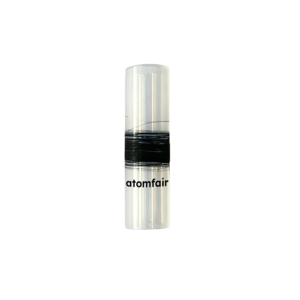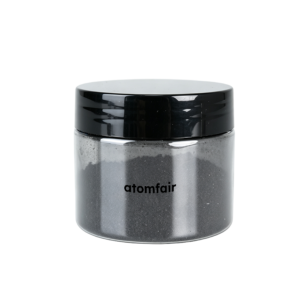
Hydroxylate Multi-walled Carbon Nanotubes, OD 5-15 nm, length 10-30um, purity >95%Product Type: Multi-walled carbon nanotube material
Research-grade laboratory product
|
|||||||||||||||||||||
|
|||||||||||||||||||||
|
LABORATORY PROCUREMENT SUPPORT
For model selection, material specification matching, application fit or quotation confirmation, contact our technical sales team.
E-MAIL: inquiry@atomfair.com
|
|||||||||||||||||||||
|
Supplier: Atomfair
Brand: ATOMFAIR®
|
Manufacturer: Atomfair LLC
Brand: ATOMFAIR®
This document contains the dimensional and purity specifications for the research-grade multi-walled carbon nanotube material. No specific handling or storage constraints are provided as part of the product documentation.
- Key Specifications: The product has outer diameter 5-15 nm, length 10-30 um, and purity >95%.
How does the hydroxyl functionalization of multi-walled carbon nanotubes (OD 5-15 nm, length 10-30 μm) influence their dispersion stability in aqueous systems compared to pristine or carboxylated grades?
The hydroxyl functionalization introduces polar groups that improve dispersibility in polar solvents and aqueous systems relative to pristine MWCNTs, which are hydrophobic. The Atomfair model AF-MWCNT-M02 is specifically supplied as a hydroxylated grade, and the selection notes indicate that functionalization type should be matched to dispersion, composite, or electrode workflows. Direct comparative data for carboxylated or pristine grades is not provided for this specific product, but the product page recommends matching the functional group to the intended application.
What are the key dimensional constraints when integrating hydroxylate multi-walled carbon nanotubes (OD 5-15 nm, length 10-30 μm) into thin-film electrode coatings?
The outer diameter range of 5-15 nm and length of 10-30 μm are typical for multi-walled CNTs used in electrode coatings, but the specific dimensions must be matched to the coating thickness and porosity requirements of the target electrode. The product description states that the dimensional specification should be matched to the electrode workflow, and the procurement note advises confirming specifications before quotation. No specific thickness or porosity limits are given, so application-specific testing is necessary.
What handling considerations are required for laboratory use of hydroxylate multi-walled carbon nanotubes with OD 5-15 nm and >95% purity?
The product is a research-grade laboratory material, and as with all carbon nanotubes, standard laboratory safety precautions for fine powders should be followed, including use of fume hoods, gloves, and respiratory protection. The Atomfair product page does not provide specific safety data sheets, but it recommends confirming bulk quantity requirements and reviewing specifications before quotation. Users should also ensure that dispersion equipment appropriate for nanotube handling is available, as the material is intended for dispersion, composite, and film workflows.
Hydroxylate-functionalized multi-walled carbon nanotubes (OD 5-15 nm, length 10-30 µm, purity >95%) offer a balance of high aspect ratio and surface hydroxyl groups for dispersion in polar matrices, but require careful handling to avoid inhalation and must be matched to specific composite or electrode workflows due to dimensional variability.
Positive
- Hydroxyl functionalization for dispersion: The hydroxyl (-OH) groups on the MWCNT surface improve compatibility with polar solvents and polymer matrices, facilitating uniform dispersion in composite, film, or electrode formulations without aggressive surfactants.
- High aspect ratio with small diameter: Outer diameter of 5-15 nm and length of 10-30 µm provide a high aspect ratio (>600), enabling efficient percolation networks for conductivity enhancement at low loading fractions in nanocomposites.
Trade-offs
- Respirable dust hazard requires containment: As a nanomaterial powder with sub-micron diameter, airborne particles pose inhalation risks; handling must be performed in fume hoods or gloveboxes with appropriate PPE to prevent respiratory exposure.
- Dimensional variability affects reproducibility: The specified outer diameter range (5-15 nm) and length range (10-30 µm) introduce batch-to-batch variation that may require pre-characterization (e.g., TEM, Raman) for applications demanding narrow dimensional tolerances.
Every advanced material, component, equipment, and instrument in our catalog is backed by rigorous testing. We maintain strict internal quality management frameworks and align with CE conformity metrics to deliver transparent, reproducible performance data via our public open-science repository.
To request raw batch performance data, submit formal vendor registration paperwork, or execute a fast-turnaround R&D manufacturing loop, contact us at inquiry@atomfair.com.
Item is dispatched under the Atomfair Shipping & Delivery Framework (Free worldwide shipping on orders over $59 USD excl. heavy equipment). Return is governed by the Atomfair Return & Refund Policy (7-day technical return window).