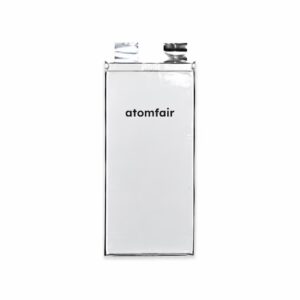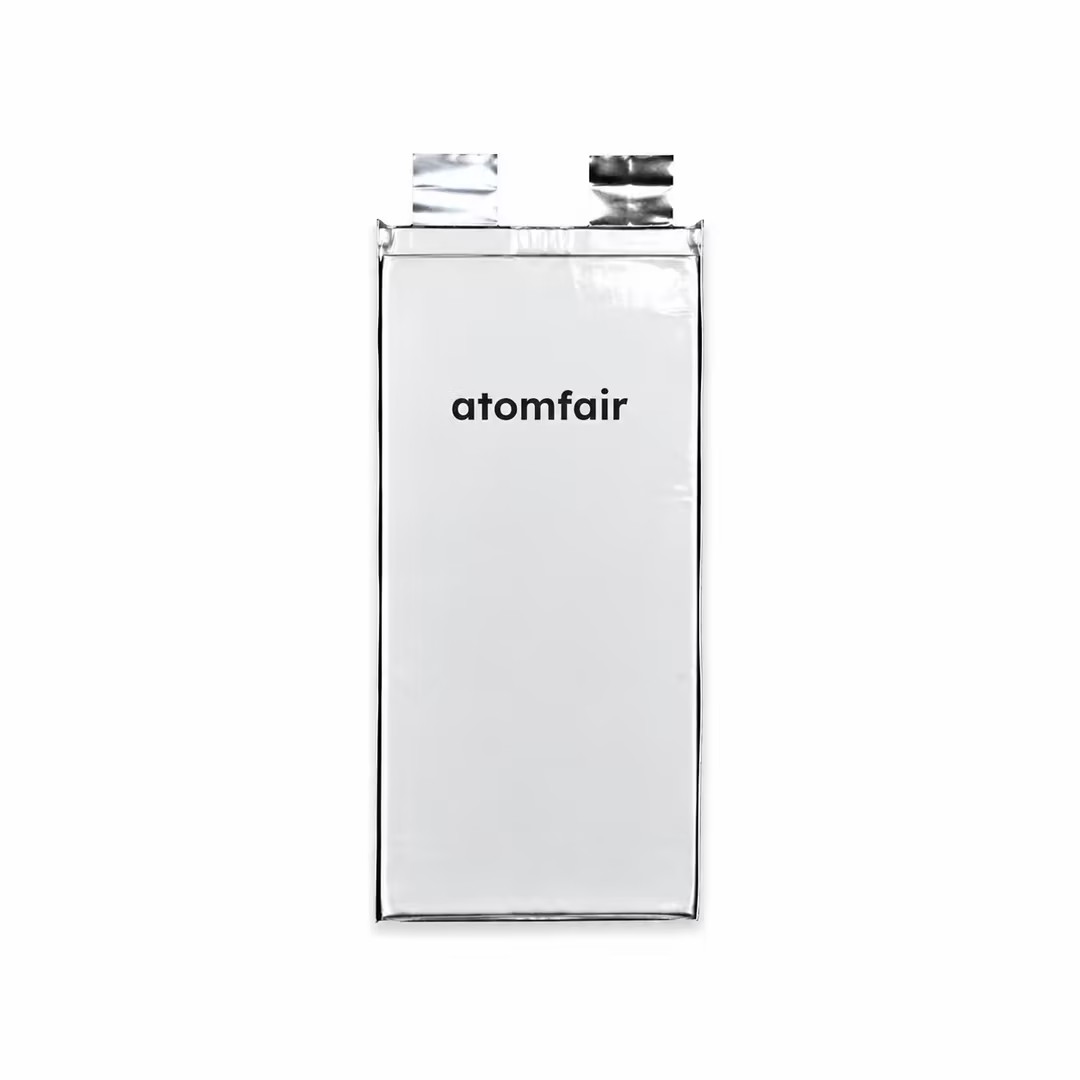
Description
ZE Series High-Performance Solid-State Cells (230Wh/kg LMFP Composite Ternary Battery) | ATOMFAIR
Product Overview
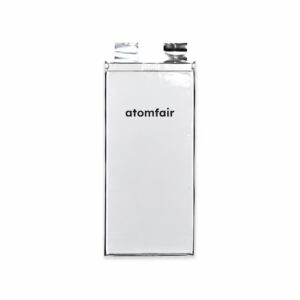
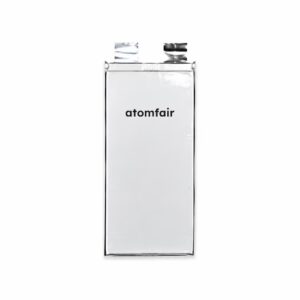
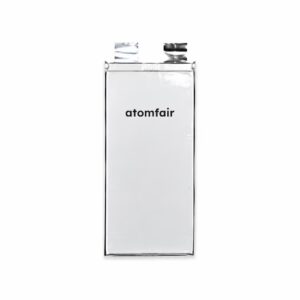
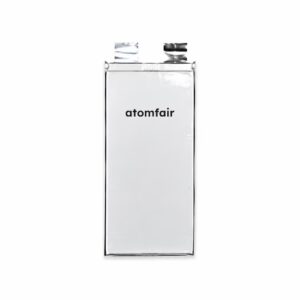
The ZE Series represents the cutting edge of solid-state motive power technology, engineered for high-performance electric motorcycles and professional power systems. Powered by a “triple-core” architecture—an advanced LMFP-based (Lithium Manganese Iron Phosphate) composite ternary cathode, high-rate graphite anode, and proprietary high-performance separator—it achieves a breakthrough energy density of 230Wh/kg. This flagship series delivers exceptional discharge efficiency (98% at 3C) with zero power fade, providing sustained and potent energy for urban e-mobility and high-load industrial applications. For bulk inquiries or official volume quotations, please contact us via email at inquiry@atomfair.com.
Technical Specifications
| Specification | ZE122175-20 | ZE165227-48 (Flagship) | ZE14894-38 |
|---|---|---|---|
| Nominal Capacity | 20Ah | 48Ah | 38Ah |
| Energy Density | 220Wh/kg | 230Wh/kg | 180Wh/kg |
| Cell Size (mm) | 7.9*122*175 | 10*165*227 | 26*148*94 |
| Cycle Life @RT | ≥2500 cycles | ||
| Continuous Discharge | 3C (98% Efficiency) | ||
Core Features & Advantages
Pinnacle Energy Density
Achieving up to 230Wh/kg, offering an unparalleled balance between lightweight architecture and 200km+ extreme range.
Superior Discharge Efficiency
98% energy conversion rate at 3C discharge with zero power fade, ensuring massive torque and consistent output.
Enhanced Cycle Stability
Rated for ≥2500 cycles at room temperature, providing industrial-grade reliability and lower total cost of ownership.
Application Scope
- High-Performance Electric Motorcycles
- Heavy-Duty Professional Power Tools
- High-Capacity Portable Power Stations
- Urban Smart E-Mobility Fleet Systems
Technical Customization
Advanced BMS Integration: Optimized for smart management systems with high-precision SOC/SOH monitoring for urban motorcycles.
OEM Prototyping: Specialized dimensions, tab orientations, and multi-cell pack configurations available for scientific research and industrial scaling.
Certified Data: Official UN38.3, MSDS, and comprehensive 3C discharge curve reports available upon request.
Continuous discharge above 3C may reduce cycle life below the rated 2500 cycles. Cells should be stored in a dry, temperature-controlled environment to prevent degradation.
- Discharge Rate Limit: Sustained operation at discharge rates exceeding the 3C specification can compromise long-term cycle life.
Proper handling ensures safe operation and maximizes cell longevity. Follow these steps for initial deployment.
Required Equipment: Battery Management System (BMS)
- Inspect Cell
Inspect the cell for any visible damage, swelling, or leakage before use. - Verify Voltage
Verify the open-circuit voltage of the cell falls within the safe operating range using a multimeter. - Connect BMS
Connect the cell terminals to a compatible Battery Management System to monitor voltage and temperature during operation.
How does the 230Wh/kg energy density of the ZE Series solid-state cell translate into real-world range for an electric motorcycle compared to conventional lithium-ion batteries?
The ZE Series achieves a 230Wh/kg energy density, enabling a 200km+ range per charge for electric motorcycles, which is a significant improvement over conventional lithium-ion batteries that typically offer 150-180Wh/kg. This is enabled by the LMFP composite ternary cathode and proprietary high-performance separator, which also deliver 98% discharge efficiency at 3C with zero power fade, ensuring sustained power delivery over the entire range.
Can the ZE Series solid-state cells be integrated into existing electric motorcycle battery packs designed for standard lithium-ion pouch cells, or are custom BMS and mechanical modifications required?
Integration requires custom BMS and mechanical modifications due to the cell's unique dimensions (e.g., 10*165*227mm for the 48Ah flagship) and LMFP chemistry, which demands a BMS optimized for high-precision SOC/SOH monitoring. The product description explicitly offers OEM prototyping for specialized dimensions, tab orientations, and multi-cell pack configurations, indicating that direct drop-in replacement is not supported without engineering adjustments.
What are the specific handling and storage requirements for the ZE Series solid-state cells to maintain their rated cycle life of ≥2500 cycles?
The ZE Series cells require storage and operation at room temperature to achieve the rated ≥2500 cycles, as cycle life is specified at RT. The cells are solid-state and contain LMFP chemistry, which is inherently safer than liquid electrolyte cells, but they still require standard lithium-ion handling precautions including protection from physical damage, short circuits, and extreme temperatures. Official UN38.3 and MSDS documentation is available upon request for detailed safety protocols.
The ZE Series solid-state cells achieve 230Wh/kg energy density and 98% discharge efficiency at 3C with zero power fade, enabling 200km+ range for electric motorcycles. However, they require a sophisticated BMS for accurate SOC/SOH monitoring and their non-standard dimensions necessitate custom pack design for integration.
Positive
- High energy density 230Wh/kg: Achieves up to 230 Wh/kg, providing an unparalleled balance of lightweight architecture and 200km+ extreme range for high-performance electric motorcycles.
- 98% discharge efficiency at 3C: Delivers 98% energy conversion rate at 3C continuous discharge with zero power fade, ensuring consistent torque and output for demanding motive applications.
Trade-offs
- Requires advanced BMS integration: Optimized for smart management systems with high-precision SOC/SOH monitoring; without a compatible BMS, full performance and safety monitoring cannot be guaranteed.
- Non-standard cell dimensions: OEM prototyping notes that specialized dimensions and tab orientations are available, meaning these cells are not drop-in replacements and require custom pack design for integration.
Every advanced material, component, equipment, and instrument in our catalog is backed by rigorous testing. We maintain strict internal quality management frameworks and align with CE conformity metrics to deliver transparent, reproducible performance data via our public open-science repository.
To request raw batch performance data, submit formal vendor registration paperwork, or execute a fast-turnaround R&D manufacturing loop, contact us at inquiry@atomfair.com.
Item is dispatched under the Atomfair Shipping & Delivery Framework (Free worldwide shipping on orders over $59 USD). Return is governed by the Atomfair Return & Refund Policy (7-day technical return window).