Description
15Ah Extreme Low-Temperature Primary Lithium Cell (8540140-15) | ATOMFAIR
Product Overview
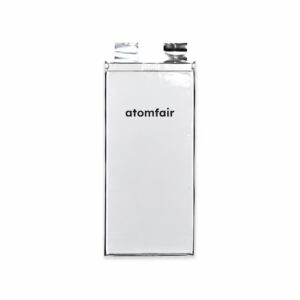
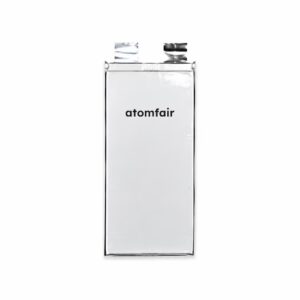
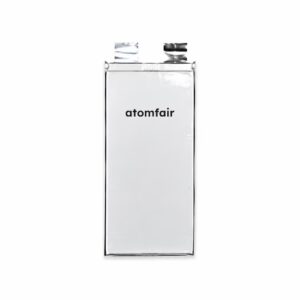
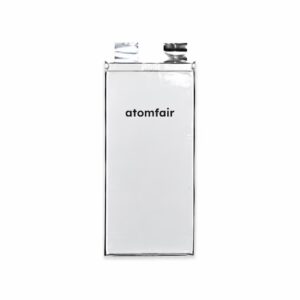
The 8540140-15 is a specialized high-energy-density primary (non-rechargeable) lithium power cell engineered for mission-critical applications in extreme environments. Delivering a massive 15Ah capacity, this cell features a unique electrolyte chemistry that allows for efficient discharge down to -40C. It is designed for one-time high-reliability power delivery where consistent output and extreme environmental resilience are non-negotiable. For bulk inquiries or official volume quotations, please contact us via email at inquiry@atomfair.com.
Technical Specifications
| Parameter Item | Technical Specification | Conditions / Remarks |
|---|---|---|
| Cell Model | 8540140-15 | Primary Cell (Non-rechargeable) |
| Nominal Capacity | >= 15Ah | 0.5C, 25C, Fresh Cell |
| Nominal Voltage | 3.8V | 0.33C, 25C |
| Work Voltage Range | 2.3V – 4.3V | Range for -40C to 0C |
| Cell Dimensions | 8.5 x 40 x 140 mm | Thickness x Width x Length |
| Cell Weight | 112 +/- 3g | Lightweight Design |
| Max. Cont. Discharge | 3C (45A) | -40C to 25C Range |
| Max. Pulse Discharge | 5C (75A) | 10s @ 50% SOC |
| Internal Resistance | < 3 mOhm | 1kHz @ 70% SOC |
| Operating Temp Range | -40C to 55C | Discharge Capability |
Core Features & Advantages
Sub-Zero Performance
Specifically optimized for ultra-low temperature environments, maintaining over 70% capacity retention even at -40C.
Extreme Discharge Rate
Capable of 3C continuous and 5C pulse discharge (75A), providing heavy-duty power for high-intensity equipment.
Validated Reliability
Passed 1.5m concrete fall tests, low-pressure (vacuum) tests, and external short-circuit protocols with zero fire or explosion risk.
Low Thermal Loss
With internal resistance < 3mOhm, the cell minimizes heat generation during high-power operation, protecting sensitive electronics.
Application Scope
- Polar Research Instrumentation
- High-Altitude Aerospace Prototypes
- Sub-Zero Emergency Power Systems
- Military-Grade Hardware Prototyping
- UAV Deep-Space Exploration Models
- Remote Environmental Monitoring
Accessories & Customization
Safety Warning: This is a PRIMARY (Non-rechargeable) cell. Charging is strictly prohibited and may cause thermal runaway.
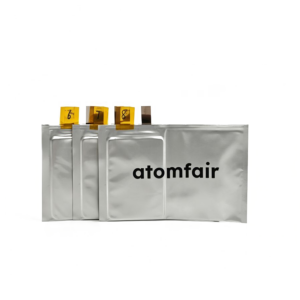
Customization Options: Available with custom spot-welded nickel tabs, specialized insulation wrapping, and series/parallel pack assembly for specific voltage requirements. Engineering support is provided for integration into cryo-stabilized battery boxes.
Store the cell in a dry, cool environment away from conductive materials to prevent short circuits and leakage. Maintain storage temperature within the operating range of -40°C to 25°C to preserve capacity and prevent internal damage.
- Non-Rechargeable: Do not attempt to recharge the cell as it may cause rupture or fire.
- Short Circuit Prevention: Keep the terminals protected from contact with conductive objects to avoid external short circuits.
- Temperature Sensitivity: Avoid exposure to temperatures exceeding 25°C during storage to minimize capacity fade.
- Voltage Monitoring: Monitor cell voltage during discharge and stop use when voltage drops below 2.3V to prevent polarity reversal.
- Moisture Sensitivity: Store in a dry environment with low humidity to prevent electrolyte degradation and corrosion.
Follow these steps to safely initialize and connect the cell for high-reliability discharge in extreme environments. Proper handling ensures maximum capacity delivery and prevents safety hazards.
Required Equipment: Multimeter, Insulated gloves, Temperature sensor, PPE (safety glasses)
- Inspect Cell
Inspect the cell for physical damage, swelling, or corrosion before handling. - Verify Voltage
Verify the open-circuit voltage using a multimeter to ensure it exceeds 3.8V. - Prepare Environment
Confirm the ambient temperature is within the -40°C to 25°C operating range for discharge. - Connect Load
Connect the cell to the load with correct polarity, matching the positive terminal to the positive lead. - Monitor Discharge
Monitor the terminal voltage during discharge and cease operation at 2.3V to prevent overdischarge. - Dispose Properly
Dispose of spent cells in accordance with local regulations for primary lithium batteries.
How does the 15Ah capacity and 3C continuous discharge rate trade off against energy density at -40°C compared to room temperature?
At -40°C, the cell retains over 70% of its nominal 15Ah capacity when discharged at 0.5C, as specified for fresh cells at 25°C. The maximum continuous discharge rate of 3C (45A) is maintained across the full -40°C to 25°C range, but pulse discharge capability of 5C (75A) is only guaranteed at 50% state of charge, indicating a performance trade-off between depth of discharge and peak power delivery under extreme cold.
Can the 8540140-15 cell be integrated into existing battery packs designed for rechargeable Li-ion cells without modifying the battery management system?
No, this is a primary (non-rechargeable) lithium cell with a nominal voltage of 3.8V and a working voltage range of 2.3V to 4.3V, which differs from standard rechargeable Li-ion chemistries. Integration into existing packs requires a BMS configured for primary cell protection—specifically to prevent any charging current—and must accommodate the wider voltage window and the cell's unique low-temperature discharge profile.
What safety and handling precautions are required for storing and transporting this primary lithium cell given its validated reliability under extreme conditions?
Despite passing 1.5m concrete drop tests, low-pressure vacuum tests, and external short-circuit protocols with zero fire or explosion risk, the cell must be stored in a dry, cool environment within its -40°C to 55°C operating temperature range. Transport regulations for primary lithium cells apply due to the 15Ah capacity and high energy density, requiring compliance with IATA/UN38.3 testing standards for air shipment.
The 15Ah primary lithium cell delivers exceptional low-temperature performance with over 70% capacity at -40°C and high discharge rates, but its non-rechargeable nature and temperature-dependent voltage output impose infrastructure considerations for mission-critical deployments.
Positive
- High capacity retention at -40°C: Maintains over 70% capacity at -40°C, ensuring reliable power in extreme cold conditions for polar and aerospace applications.
- High continuous and pulse discharge: Capable of 3C continuous (45A) and 5C pulse (75A) discharge, supporting heavy-duty equipment and high-intensity loads.
Trade-offs
- Non-rechargeable single-use design: As a primary cell, it cannot be recharged; replacement is required after depletion, increasing lifecycle cost and logistics overhead.
- Voltage output varies with temperature: Operating voltage range shifts to 2.3V–4.3V at -40°C to 0°C, requiring system-level voltage regulation to maintain downstream electronics.
Every advanced material, component, equipment, and instrument in our catalog is backed by rigorous testing. We maintain strict internal quality management frameworks and align with CE conformity metrics to deliver transparent, reproducible performance data via our public open-science repository.
To request raw batch performance data, submit formal vendor registration paperwork, or execute a fast-turnaround R&D manufacturing loop, contact us at inquiry@atomfair.com.
Item is dispatched under the Atomfair Shipping & Delivery Framework (Free worldwide shipping on orders over $59 USD). Return is governed by the Atomfair Return & Refund Policy (7-day technical return window).