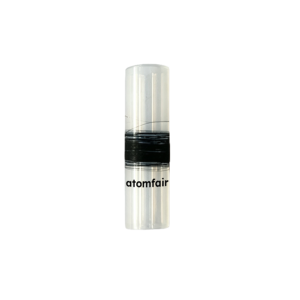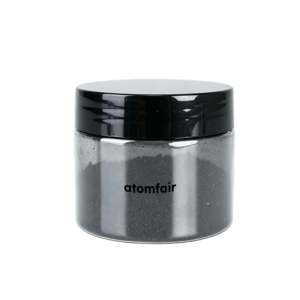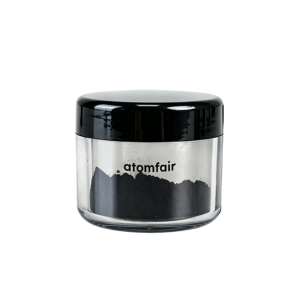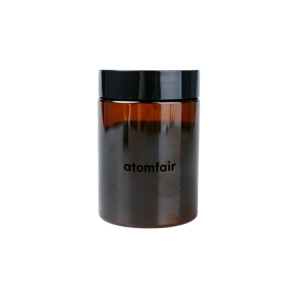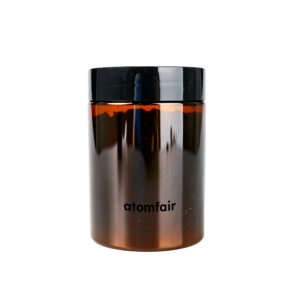
Transparentconducting electrostatic carbon nanotube coatingProduct Type: Carbon nanotube composite material
Research-grade laboratory product
|
|||||||||||||||
|
|||||||||||||||
|
LABORATORY PROCUREMENT SUPPORT
For model selection, material specification matching, application fit or quotation confirmation, contact our technical sales team.
E-MAIL: inquiry@atomfair.com
|
|||||||||||||||
|
Supplier: Atomfair
Brand: ATOMFAIR®
|
Manufacturer: Atomfair LLC
Brand: ATOMFAIR®
This carbon nanotube composite coating requires careful matching to the intended substrate and processing workflow. Solid content of 5-15% must be verified for viscosity and coating thickness; compatibility with matrix materials such as PET, ABS, PA6, or epoxy must be confirmed before application.
- Substrate Compatibility: The coating must be matched to a compatible substrate such as PET, ABS, PA6, or epoxy to ensure proper adhesion and performance.
- Solid Content Verification: The solid content range of 5-15% must be verified to match the required viscosity and coating thickness for the intended application.
- Resistivity Confirmation: The target resistivity or conductivity should be confirmed to ensure the coating meets electrostatic discharge specifications.
- Matrix Material Selection: The matrix material, such as epoxy or polymer, must be selected to match the CNT composite for optimal dispersion and conductive properties.
How does the solid content range of 5-15% affect film properties for the AF-CNTC-TC01-P350 transparent conducting CNT coating?
The solid content range of 5-15% allows tuning of viscosity and achievable film thickness, with higher solid content yielding thicker coatings that can provide lower sheet resistance but may reduce optical transparency. The exact trade-off is application-dependent and should be confirmed during specification matching and quotation, as noted in the product description: 'Solidcontent: 5-15% supports model matching against the required experiment or formulation workflow.'
Which substrate materials are compatible with this transparent conducting electrostatic carbon nanotube coating?
The coating is compatible with PET, ABS, PA6, epoxy, and various coating forms, as stated in the product's material selection notes: 'MATERIAL SELECTION: PET, ABS, PA6, epoxy and coating forms can be matched to composite processing or conductive coating requirements.' Compatibility for other substrates should be coordinated with the technical sales team.
What storage and handling precautions are required for this carbon nanotube composite coating?
Specific storage and handling instructions are not detailed in the product description. The manufacturer recommends contacting their technical sales team for safety data sheets and handling guidelines before use, especially given the nanomaterial composition. Quotation requests should include target processing requirements for tailored support.
This transparent conducting electrostatic carbon nanotube coating (model AF-CNTC-TC01-P350) is a carbon nanotube composite material with a solid content range of 5-15%, designed for research workflows requiring conductive coatings or composite integration. Its material form and tunable solid content enable application-specific matching for dispersion, film, electrode, or conductivity studies, but the broad solid content range and unspecified resistivity require pre-quotation confirmation of exact specifications.
Positive
- Tunable solid content range: The 5-15% solid content range allows researchers to select a formulation that matches specific experimental requirements for dispersion, composite loading, or film thickness, providing flexibility in conductive coating or electrode preparation.
- Versatile material form compatibility: The coating can be matched to multiple matrix materials including PET, ABS, PA6, and epoxy, enabling integration into diverse composite processing or conductive coating workflows without requiring a single fixed substrate.
Trade-offs
- Unspecified resistivity and composition: The product description does not provide explicit resistivity values or base material composition details, requiring buyers to confirm these parameters through quotation before ensuring fit for conductivity-sensitive applications.
- Broad solid content tolerance: The 5-15% solid content range is not a fixed specification but a selection parameter, meaning the exact delivered solid content must be confirmed per model, which may introduce variability for experiments requiring precise loading control.
Every advanced material, component, equipment, and instrument in our catalog is backed by rigorous testing. We maintain strict internal quality management frameworks and align with CE conformity metrics to deliver transparent, reproducible performance data via our public open-science repository.
To request raw batch performance data, submit formal vendor registration paperwork, or execute a fast-turnaround R&D manufacturing loop, contact us at inquiry@atomfair.com.
Item is dispatched under the Atomfair Shipping & Delivery Framework (Free worldwide shipping on orders over $59 USD excl. heavy equipment). Return is governed by the Atomfair Return & Refund Policy (7-day technical return window).