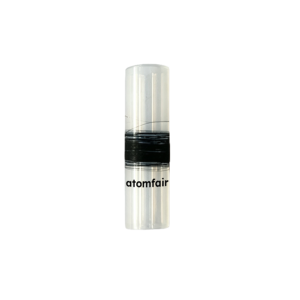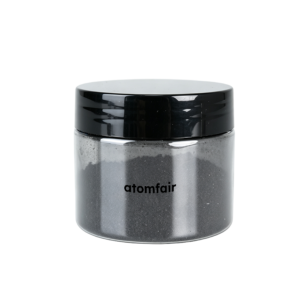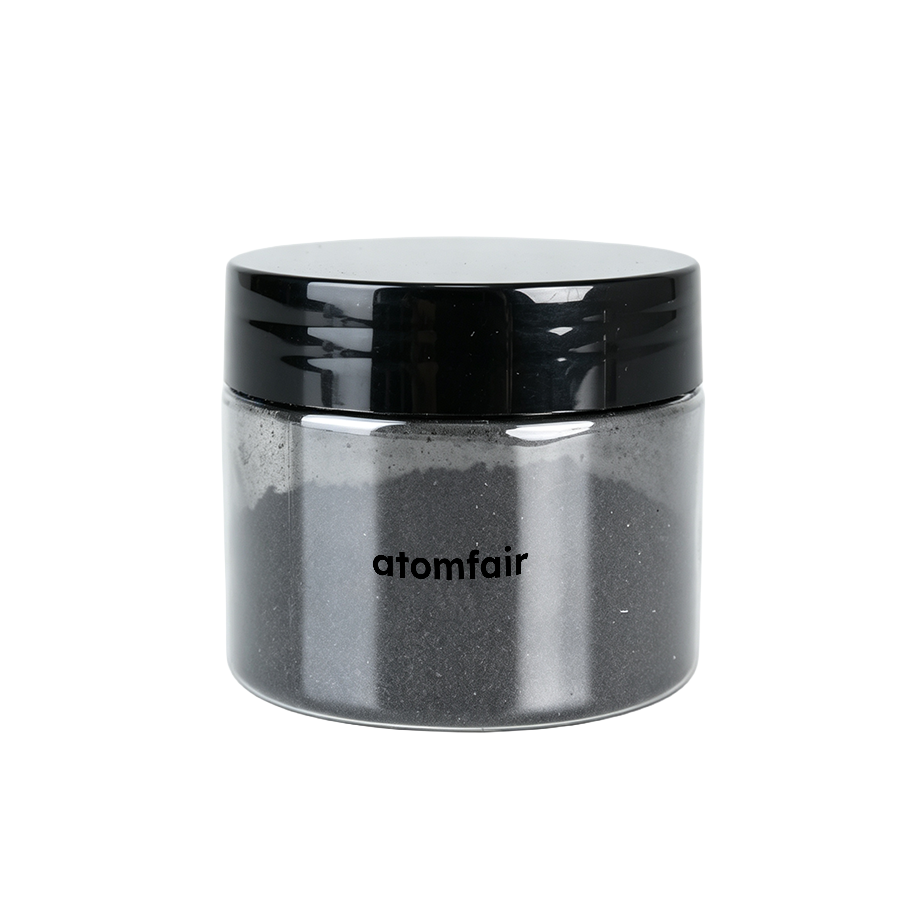
Single-walled carbon nanotubesfor thermoelectricity, OD 1-2 nm, length 5-30um, purity >95%Product Type: Single-walled carbon nanotube material
Research-grade laboratory product
|
|||||||||||||||||||
|
|||||||||||||||||||
|
LABORATORY PROCUREMENT SUPPORT
For model selection, material specification matching, application fit or quotation confirmation, contact our technical sales team.
E-MAIL: inquiry@atomfair.com
|
|||||||||||||||||||
|
Supplier: Atomfair
Brand: ATOMFAIR®
|
Manufacturer: Atomfair LLC
Brand: ATOMFAIR®
Single-walled carbon nanotubes are nanoscale materials with high aspect ratio and surface area, requiring controlled handling to prevent airborne particulate release. Storage in sealed, inert containers is recommended to minimize moisture adsorption and oxidative degradation.
- Containment Requirement: Use sealed, antistatic containers in a ventilated area to prevent nanoparticle inhalation and electrostatic accumulation.
- Moisture Sensitivity: Store below 25°C in a dry, inert atmosphere to avoid moisture-induced agglomeration and loss of dispersibility.
How does the >95% purity of these SWCNTs impact thermoelectric performance compared to lower purity grades?
The >95% purity minimizes amorphous carbon and metal catalyst residues that serve as scattering centers for charge carriers and phonons. This directly improves electrical conductivity and the Seebeck coefficient while reducing thermal conductivity, enhancing the thermoelectric figure of merit. The source specifies the product is for 'thermoelectricity' with 'purity >95%'.
Can these pristine SWCNTs be directly integrated into common polymer thermoelectric composites without additional functionalization?
This product is supplied as pristine SWCNTs without specified functionalization. For integration into polymer matrices like PEDOT:PSS, functionalization (e.g., carboxylation) is often required to improve dispersion and interfacial adhesion. The product page notes that functionalized grades (hydroxylated, carboxylated, amino-modified) are available for matching to specific workflows, implying the pristine form may not be optimal for all composites. Confirm with technical sales.
What laboratory equipment is required to process this SWCNT powder into a thermoelectric film?
Processing this CNT powder into a thermoelectric film requires a dispersion step using ultrasonication or high-shear mixing in a suitable solvent, followed by film deposition methods such as drop-casting, spin-coating, or vacuum filtration. The source indicates the product is intended for 'dispersion, composite, film, electrode, conductivity or nanocarbon research workflow', confirming the need for dispersion and film formation equipment.
This single-walled carbon nanotube material (OD 1-2 nm, length 5-30 µm, purity >95%) is evaluated for thermoelectricity research, where its narrow diameter distribution and high purity support consistent electronic transport properties, though the broad length range and powder form introduce dispersion challenges and require careful solvent selection for uniform film or composite fabrication.
Positive
- High purity for consistent transport: Purity >95% minimizes amorphous carbon and catalyst residue, reducing scattering centers that degrade thermoelectric figure of merit in nanotube-based films or composites.
- Narrow diameter range for bandgap tuning: Outer diameter of 1-2 nm provides a relatively uniform electronic band structure, enabling reproducible Seebeck coefficient and electrical conductivity measurements across batches.
Trade-offs
- Broad length distribution complicates dispersion: Length range of 5-30 µm introduces variability in aspect ratio, requiring optimization of sonication time and surfactant concentration to achieve homogeneous dispersions without excessive shortening.
- Powder form requires handling expertise: As a dry powder, the material is prone to agglomeration and electrostatic charging; proper glovebox or fume hood handling and pre-dispersion protocols are necessary to avoid batch-to-batch inconsistency in film or electrode preparation.
Every advanced material, component, equipment, and instrument in our catalog is backed by rigorous testing. We maintain strict internal quality management frameworks and align with CE conformity metrics to deliver transparent, reproducible performance data via our public open-science repository.
To request raw batch performance data, submit formal vendor registration paperwork, or execute a fast-turnaround R&D manufacturing loop, contact us at inquiry@atomfair.com.
Item is dispatched under the Atomfair Shipping & Delivery Framework (Free worldwide shipping on orders over $59 USD excl. heavy equipment). Return is governed by the Atomfair Return & Refund Policy (7-day technical return window).