
Description
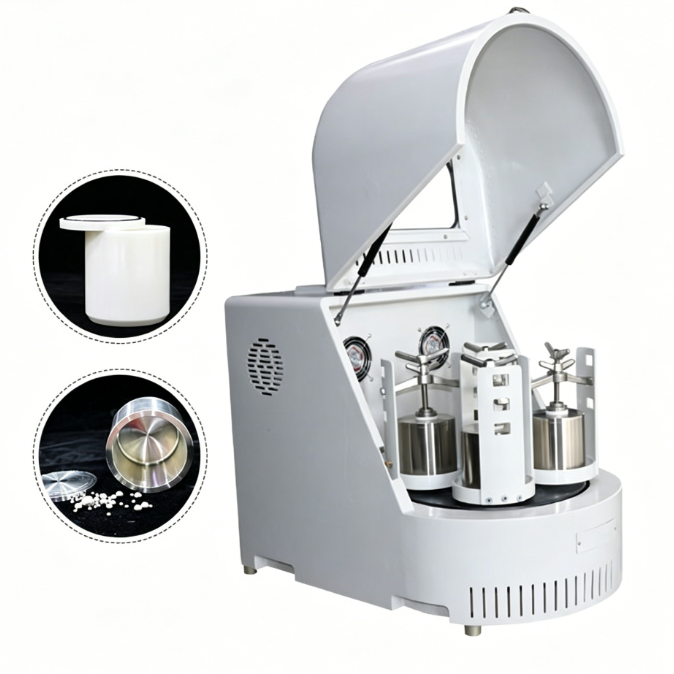
ATOMFAIR SPBM-6A VERTICAL SEMI-CIRCULAR PLANETARY BALL MILL 4-STATIONRESEARCH GRADE EQUIPMENT
|
|||||||||||||||||||||||||||||||||||||||||||||||||||||||||||||||||||||||||||||||||||||||||||||||||||||||||||||||||||||||||||||||||||||||||||||||||||||||||||||||||||||||||||||||||||||||||||||||||||||||||
|
|||||||||||||||||||||||||||||||||||||||||||||||||||||||||||||||||||||||||||||||||||||||||||||||||||||||||||||||||||||||||||||||||||||||||||||||||||||||||||||||||||||||||||||||||||||||||||||||||||||||||
|
TAILORED SOLUTIONS FOR RESEARCH
Contact our engineering team for technical support or official quotations.
EMAIL: inquiry@atomfair.com
|
|||||||||||||||||||||||||||||||||||||||||||||||||||||||||||||||||||||||||||||||||||||||||||||||||||||||||||||||||||||||||||||||||||||||||||||||||||||||||||||||||||||||||||||||||||||||||||||||||||||||||
|
Manufacturer: Atomfair LLC
Brand: ATOMFAIR®
|
This equipment requires a stable electrical supply rated for 0.75 kW and must be operated with properly secured grinding jars and balls. The mill generates high rotational forces and should be placed on a vibration-resistant surface in a well-ventilated, non-flammable environment.
- Electrical safety: Verify the mains supply voltage matches the motor specification and that the unit is connected to a grounded outlet.
- Mechanical hazard mitigation: Inspect all locking mechanisms on the jar holders before each run to prevent jar displacement during operation.
- Containment integrity: Use only compatible grinding jars and balls that are free from cracks or defects to avoid material leakage at high speeds.
- Thermal management: Allow the mill to cool down for at least 10 minutes between consecutive high-speed runs to prevent motor overheating.
- Environmental conditions: Operate the mill in a dry, dust-free area with ambient temperature between 15–30°C and relative humidity below 80%.
This guide covers the initialization and safe operation of the PBM-6 vertical planetary ball mill for grinding and mixing materials. Follow these steps sequentially to ensure proper setup, operation, and shutdown.
Required Equipment: Grinding jars (semi-circular or circular, ordered separately), Grinding balls (ordered separately), Variable speed controller (integrated), Locking mechanism on jar holders
- Position the mill
Place the PBM-6 on a level, stable laboratory bench away from flammable materials and with adequate clearance for ventilation. - Secure the grinding jars
Load the appropriate grinding jars and balls into the four holders and engage the locking mechanism until each jar is firmly seated. - Add material and balls
Fill each jar with the sample material and grinding balls, leaving at least one-third of the jar volume empty to allow free motion. - Set rotation speed
Adjust the variable speed controller to the desired rpm within the safe operating range specified for your jar and ball combination. - Start the mill
Press the start switch and monitor the mill for abnormal noise or vibration during the first minute of operation. - Stop and allow deceleration
After the grinding cycle, press the stop switch and wait for the planetary disk to come to a complete halt before opening the lid. - Remove and clean jars
Unlock each jar, extract the ground material, and thoroughly clean the jars and balls with an appropriate solvent if needed.
How does the lower maximum rotation speed of the PBM-6 (670 rpm) compared to smaller models like the PBM-0.2 (1160 rpm) affect its suitability for sub-micron and nanomaterial grinding?
The PBM-6's maximum jar speed of 670 rpm is lower than micro models, which reduces the maximum impact energy for grinding. However, its larger revolution diameter of 234 mm and 0.75 kW motor enable higher torque and larger batch processing, making it more suitable for grinding larger volumes to micron-scale fineness rather than ultra-fine nanoscale grinding. For true nanomaterial preparation, higher-speed models may be preferable.
What size grinding jars and balls are required for the PBM-6, and are they included with the main unit?
The PBM-6 is sold as a main machine only; grinding jars and grinding balls must be ordered separately. The jar holder inner diameter is 134 mm, so jars with a maximum outer diameter of 134 mm are compatible. The specific jar capacity and ball sizes depend on the material and desired final particle size and must be selected by the user.
What are the spatial and electrical requirements for installing the PBM-6 in a laboratory?
The PBM-6 has overall dimensions of 760×470×580 mm and a net weight of 100 kg, requiring a sturdy, vibration-resistant bench or floor mount. The motor power is 0.75 kW, typically requiring a standard single-phase electrical supply, though specific voltage and plug type should be confirmed with the manufacturer. Adequate clearance around the unit is needed for ventilation and access to the jar holders.
The PBM-6 planetary ball mill offers variable speed operation up to 670 rpm with a 0.75 kW motor and a revolution diameter of Φ234 mm, enabling high-energy planetary motion for efficient grinding and mixing of materials. However, the unit requires separate procurement of grinding jars and balls, and its 100 kg net weight necessitates a stable, dedicated benchtop or floor mounting.
Positive
- Variable speed control for versatile applications: Grinding jar rotation speed is adjustable from 0 to 670 rpm, allowing the operator to fine-tune impact and friction intensity for different material hardness and target particle sizes.
- High-energy planetary grinding mechanism: The four-jar design with combined revolution and rotation creates high-energy impact and frictional forces, enabling efficient comminution, mixing, and nanomaterial preparation in small-batch, high-precision experiments.
Trade-offs
- Grinding jars and balls sold separately: The listed price covers only the main machine; compatible grinding jars and balls must be ordered separately, adding to the initial capital expenditure and lead time before operation.
- Significant weight requiring sturdy installation: With a net weight of 100 kg, the instrument demands a robust bench or floor support and may require two-person handling or mechanical lifting during setup and relocation.
Every advanced material, component, equipment, and instrument in our catalog is backed by rigorous testing. We maintain strict internal quality management frameworks and align with CE conformity metrics to deliver transparent, reproducible performance data via our public open-science repository.
To request raw batch performance data, submit formal vendor registration paperwork, or execute a fast-turnaround R&D manufacturing loop, contact us at inquiry@atomfair.com.
Item is dispatched under the Atomfair Shipping & Delivery Framework (Free worldwide shipping on orders over $59 USD). Return is governed by the Atomfair Return & Refund Policy (7-day technical return window).
