Description
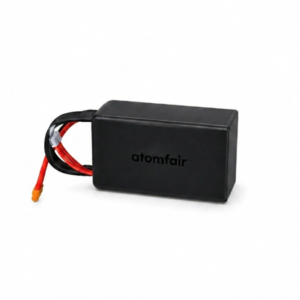
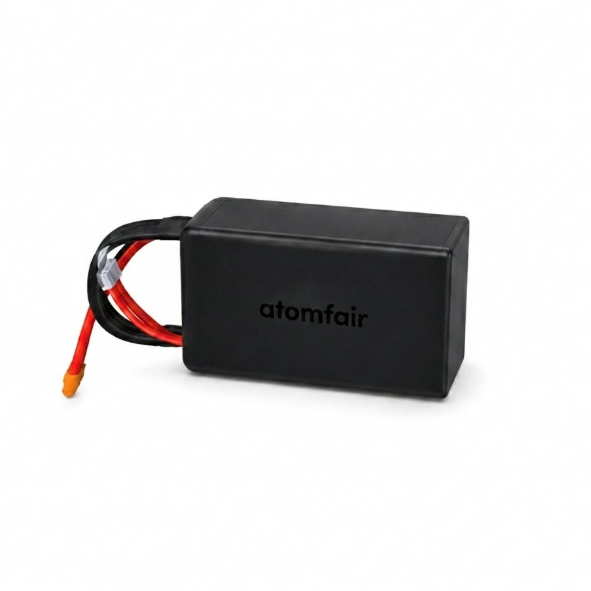
Dedicated 48V 10Ah Solid-State Battery for Robotics (One-Click Rapid Swap) | ATOMFAIR
Next-Gen Pouch Cell Technology | 5.0C Peak Discharge | Industrial IPX5 Protection
Product Overview
Engineered for high-performance robotic platforms and scientific research, this system integrates cutting-edge High-Energy Solid-State Cell technology with an intelligent BMS. It is designed to deliver extended runtime and ultra-fast charging while remaining resilient against bumps, mechanical shocks, and extreme temperatures. The centerpiece of this module is the “One-click Release” mechanism, enabling battery swaps as swift as the wind to minimize operational downtime and unleash the full potential of your robot. For bulk inquiries or official volume quotations, please contact us via email at inquiry@atomfair.com.
Technical Specifications
| Parameter | Specifications for Model 48V 10Ah |
|---|---|
| Cell Type | High-Density Pouch Cell |
| Typical Energy (Wh) | 480Wh |
| Continuous Charging Current | 0.5C |
| Peak Discharge Current | 5.0C |
| Dimensions (L*W*H mm) | 120 * 100 * 180 mm |
| Communication Method | Bluetooth, RS485, CAN |
| Operating Temperature | Charge: 0~45°C | Discharge: -20~55°C |
| IP Rating / Cycle Life | IPX5 / 250 @ 70% |
Core Features & Advantages
Solid-State Pouch Architecture
Utilizes advanced solid-state soft-pack cells to provide a superior energy-to-weight ratio and enhanced thermal stability compared to traditional formats.
Rapid One-Click Release
Features a unique mechanical quick-swap interface, allowing for near-instantaneous battery replacement to maximize mission uptime.
Multi-Protocol Smart BMS
Standardized with Bluetooth, RS485, and CAN communication for real-time telemetry and seamless integration with robotic controllers.
Application Scope
- Autonomous Delivery & Service Robots
- Inspection & Surveying Quadruped Platforms
- Laboratory AI Research & Prototyping
- Indoor Logistics & Warehousing AMR
Accessories & Customization
BMS Integration: Real-time access to high-fidelity SOC/SOH data via mobile app or industrial CAN gateways.
Swap Docking: Specialized mounting rails and electrical docks are available for standardized robot chassis integration.
Customization: Alternative voltage platforms and enclosure materials can be tailored for high-vibration aerospace or military research environments.
This battery system requires strict adherence to specified temperature ranges during charge (0–45°C) and discharge (-20–55°C) to prevent thermal degradation. The pouch cell must be protected from physical puncture, crushing, and exposure to conductive fluids despite its IPX5 rating.
- Storage Conditions: Store the battery at 50–80% state of charge in a cool, dry environment between 10–30°C for optimal longevity.
- Charging Protocol: Use only the supplied or equivalent smart charger that respects the continuous charging current limit of 0.5C.
- Mechanical Protection: Avoid dropping or subjecting the pouch cell to impact forces that could compromise internal solid-state electrolyte integrity.
- Short Circuit Prevention: Keep the battery terminals covered when not in use to prevent accidental short circuits across metallic objects.
- Disposal Requirements: Dispose of the battery at end of life through a certified electronics recycling facility specializing in lithium-based chemistries.
This procedure describes the safe removal and replacement of the battery module using the integrated quick-release mechanism. Always ensure the robot is powered down and secured before initiating the swap to prevent electrical or mechanical hazards.
- Power Down
Verify the robotic platform is completely powered off and all moving parts have come to rest. - Access Battery Bay
Open the battery compartment cover according to the robot manufacturer's instructions. - Release Latch
Depress the one-click quick-release button located on the battery pack to disengage the locking mechanism. - Remove Battery
Slide the battery pack out of its bay by grasping the integrated handle or housing. - Inspect Contacts
Check the battery terminals and robot connectors for any debris, corrosion, or damage before inserting a new pack. - Insert Fresh Battery
Align the replacement battery pack with the guide rails and slide it fully into the bay until the latch clicks securely. - Verify Connection
Confirm that the battery is locked in place and power on the robot to verify communication via BMS indicator lights or software.
What is the peak discharge current of the ATOMFAIR 48V 10Ah solid-state robotics battery and how does it affect robotic performance under load?
The battery supports a peak discharge current of 5.0C, enabling high-power bursts essential for demanding robotic maneuvers such as rapid acceleration or heavy lifting. This specification, combined with a typical energy of 480Wh, ensures sustained performance during peak loads without voltage sag, though continuous charging is limited to 0.5C to maintain cell integrity.
Can the ATOMFAIR 48V 10Ah solid-state battery integrate with existing robotic controllers via CAN or RS485 for real-time telemetry?
Yes, the integrated Smart BMS supports Bluetooth, RS485, and CAN communication protocols, allowing direct integration with industrial robotic controllers for real-time SOC/SOH data streaming. This multi-protocol capability ensures compatibility with common automation frameworks without requiring additional gateway hardware.
What are the operating temperature limits and IP rating for the ATOMFAIR 48V 10Ah solid-state battery in field robotics applications?
The battery operates reliably across a wide temperature range: charging from 0 to 45°C and discharging from -20 to 55°C, making it suitable for both indoor lab environments and outdoor field deployments. It carries an IPX5 rating, providing protection against water jets, and has a cycle life of 250 cycles at 70% capacity retention under standard conditions.
This 48V 10Ah solid-state robotics battery integrates a high-density pouch cell with a rapid one-click release mechanism and multi-protocol BMS for real-time telemetry. While its solid-state architecture provides enhanced thermal stability and energy density, the limited cycle life of 250 cycles at 70% capacity and a 0.5C continuous charging current impose operational constraints for high-uptime or fast-turnaround applications.
Positive
- Solid-State Pouch Architecture: Utilizes advanced solid-state soft-pack cells offering a superior energy-to-weight ratio and enhanced thermal stability relative to traditional liquid-electrolyte formats.
- Rapid One-Click Release Mechanism: Features a unique mechanical quick-swap interface enabling near-instantaneous battery replacement to maximize operational uptime and mission continuity.
Trade-offs
- Limited Cycle Life at High Capacity: Specified cycle life of only 250 cycles at 70% capacity retention, which is relatively low compared to conventional Li-ion chemistries and may require more frequent replacement in high-usage deployments.
- Restricted Continuous Charge Rate: Continuous charging is limited to 0.5C, resulting in a full charge time of approximately 2 hours, which may be a bottleneck for applications requiring rapid turnarounds between missions.
Every advanced material, component, equipment, and instrument in our catalog is backed by rigorous testing. We maintain strict internal quality management frameworks and align with CE conformity metrics to deliver transparent, reproducible performance data via our public open-science repository.
To request raw batch performance data, submit formal vendor registration paperwork, or execute a fast-turnaround R&D manufacturing loop, contact us at inquiry@atomfair.com.
Item is dispatched under the Atomfair Shipping & Delivery Framework (Free worldwide shipping on orders over $59 USD). Return is governed by the Atomfair Return & Refund Policy (7-day technical return window).