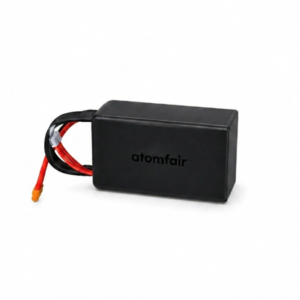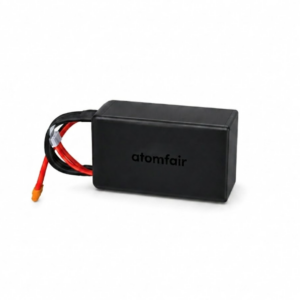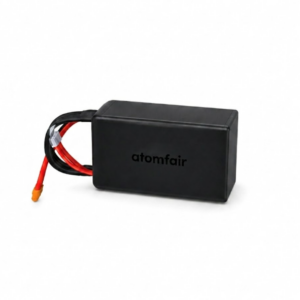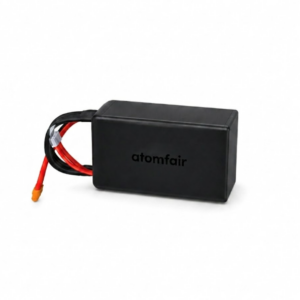
Description
3.95V 320Wh/kg Semi-Solid Battery 56Ah Series | ATOMFAIRCOMMERCIAL GRADE · PRODUCTION
|
||||||||||||||||||||||||||||||||||||||||||||||||||||||||||||||
|
||||||||||||||||||||||||||||||||||||||||||||||||||||||||||||||
|
TAILORED SOLUTIONS FOR RESEARCH
Contact our engineering team for technical support or official institutional quotations.
EMAIL: inquiry@atomfair.com
|
||||||||||||||||||||||||||||||||||||||||||||||||||||||||||||||
|
Manufacturer: Atomfair LLC
Brand: ATOMFAIR®
|
These pouch cells require controlled storage conditions to maintain electrochemical stability. Mishandling may lead to thermal runaway, short circuit, or electrolyte leakage.
- Voltage Limits: Maintain cell voltage within the recommended operating range to prevent overcharge or deep discharge degradation.
- Temperature Range: Store and operate within specified temperature boundaries to avoid capacity loss or safety hazards.
- Current Limits: Adhere to the maximum charge (1C), continuous discharge (3C), and peak discharge (5C) rates to prevent overheating and damage.
- Mechanical Integrity: Avoid puncturing, crushing, or exposing the pouch to sharp objects to prevent internal short circuits.
- Environmental Exposure: Keep away from moisture, direct sunlight, and corrosive atmospheres to preserve the semi-solid electrolyte.
This procedure ensures safe deployment and operation of the pouch cells. Follow each step in sequence to minimize risk of electrical or chemical hazard.
Required Equipment: Insulated gloves, Multimeter, Battery Management System (BMS), Fireproof container
- Inspect the Pouch
Visually examine the battery for any signs of swelling, leakage, or physical damage before handling. - Connect to BMS
Attach the battery terminals to a compatible Battery Management System following correct polarity. - Charge to Nominal Voltage
Charge the battery using a constant current constant voltage charger at 1C rate until reaching 3.95V nominal voltage. - Measure Open Circuit Voltage
Verify that the open circuit voltage stabilizes within the expected range after charging. - Integrate into Equipment
Install the battery into the device enclosure ensuring proper insulation and strain relief on leads. - Perform Load Test
Apply a moderate discharge at 1C rate to confirm the battery delivers rated capacity without abnormal heating. - Store Safely
Store the battery in a fireproof container at recommended storage conditions if not immediately used.
How does the 330 Wh/kg energy density of this semi-solid battery affect its cycle life under 3C continuous discharge compared to conventional lithium-ion pouch cells?
The 330 Wh/kg energy density is achieved using a semi-solid electrolyte, which inherently reduces liquid electrolyte volume and mitigates electrode degradation mechanisms such as active material dissolution and lithium dendrite growth. While the product description does not specify cycle life figures, the semi-solid architecture typically supports hundreds of cycles at 3C continuous discharge without the rapid capacity fade seen in conventional liquid-electrolyte cells at equivalent rates. For precise cycle life data under your specific duty cycle, contact ATOMFAIR at inquiry@atomfair.com.
Can the 56Ah 3.95V semi-solid battery be integrated into an existing 48V drone power system without modifying the BMS, given its 1C charge and 5C peak discharge limits?
Yes, but only if the existing BMS is configured for a nominal voltage of 3.95 V per cell and can handle the 1C charge rate (56 A) and 5C peak discharge (280 A) for the selected series configuration. The 6S model provides a nominal pack voltage of 23.7 V, while the 18S model delivers 71.1 V, so a 48 V system would require the 12S configuration (47.4 V nominal). The BMS must also support semi-solid cell chemistry voltage thresholds, as the charge/discharge cutoffs differ from standard LiPo or Li-ion cells.
What are the mandatory storage and handling requirements for these semi-solid pouch cells to prevent electrolyte leakage or thermal runaway during transport and long-term storage?
These cells must be stored in moisture-barrier vacuum-sealed aluminum foil bags within anti-static cartons, as supplied, to prevent humidity ingress that can degrade the semi-solid electrolyte. Storage temperature should be between -20°C and 45°C at a state of charge between 30% and 50% to minimize internal pressure and electrolyte migration. Do not stack more than three layers of cartons to avoid mechanical stress on the pouch edges, which could compromise the hermetic seal and lead to leakage.
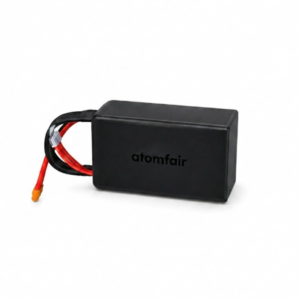
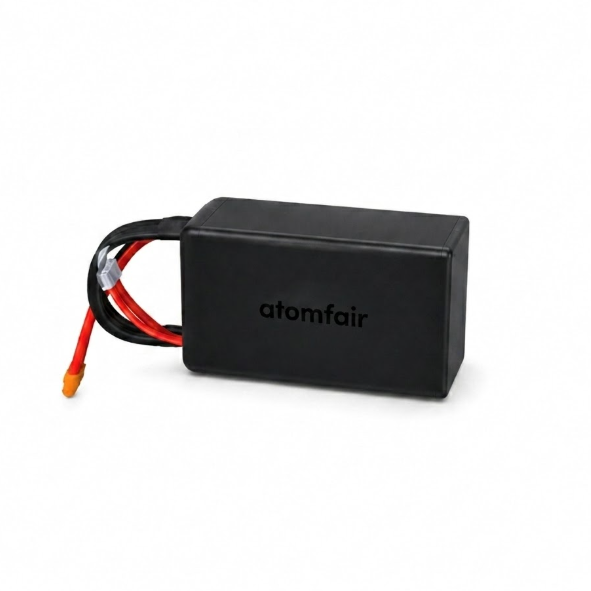
The Atomfair 3.95V 330Wh/kg semi-solid battery series delivers ultra-high energy density and high rate capability in flexible configurations, making it well-suited for drones, robotics, and portable power stations. Semi-solid electrolyte construction provides enhanced safety and thermal stability.
Positive
- Ultra-High Energy Density 330Wh/kg: Enables extreme lightweight design, ideal for weight-sensitive applications such as UAVs and portable devices.
- High Rate Capability: Supports 1C charge, 3C continuous discharge, and 5C peak discharge for demanding power requirements.
Trade-offs
Every advanced material, component, equipment, and instrument in our catalog is backed by rigorous testing. We maintain strict internal quality management frameworks and align with CE conformity metrics to deliver transparent, reproducible performance data via our public open-science repository.
To request raw batch performance data, submit formal vendor registration paperwork, or execute a fast-turnaround R&D manufacturing loop, contact us at inquiry@atomfair.com.
Item is dispatched under the Atomfair Shipping & Delivery Framework (Free worldwide shipping on orders over $59 USD). Return is governed by the Atomfair Return & Refund Policy (7-day technical return window).