Description
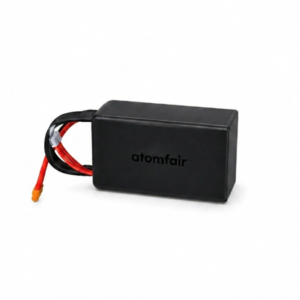
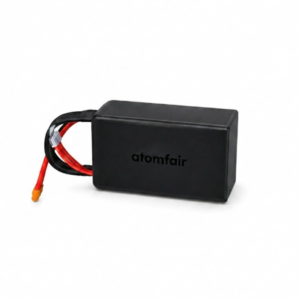
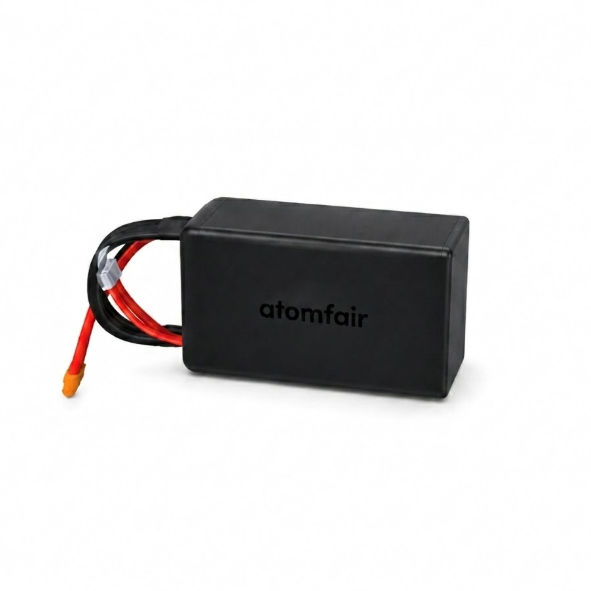
3.95V Semi-Solid Battery 240Wh/kg 17Ah Series | ATOMFAIRCOMMERCIAL GRADE · PRODUCTION
|
||||||||||||||||||||||||||||||||||||||||||||||||||||||||||||||
|
||||||||||||||||||||||||||||||||||||||||||||||||||||||||||||||
|
TAILORED SOLUTIONS FOR RESEARCH
Contact our engineering team for technical support or official institutional quotations.
EMAIL: inquiry@atomfair.com
|
||||||||||||||||||||||||||||||||||||||||||||||||||||||||||||||
|
Manufacturer: Atomfair LLC
Brand: ATOMFAIR®
|
This semi-solid lithium polymer battery requires storage in a cool, dry environment away from heat sources and conductive materials. The pouch cells must be handled with care to prevent physical damage, short circuits, and overcharge conditions.
- Short Circuit Prevention: Keep battery terminals insulated and away from metallic objects to prevent short circuits.
- Thermal Management: Maintain the battery within the recommended temperature range during storage and operation to prevent thermal runaway.
- Mechanical Integrity: Do not disassemble, puncture, crush, or subject the pouch cell to excessive vibration or impact.
- Charge Management: Use only a lithium polymer compatible charger with a battery management system to prevent overcharge and overdischarge.
This procedure outlines the safe handling, inspection, and charging steps for initial deployment of the semi-solid battery pack. Adherence to these steps minimizes risk of electrical or chemical hazard.
Required Equipment: Lithium polymer battery charger with CC/CV mode, Battery management system (BMS) rated for 6-18S configuration, Fireproof charging bag or container, Insulated gloves and safety goggles
- Inspect the Battery
Inspect the battery pouch for any signs of swelling, punctures, electrolyte leakage, or connector damage. - Prepare Charging Area
Place the battery on a non-conductive, fire-resistant surface inside the fireproof charging bag. - Connect BMS and Charger
Connect the battery balance leads to the BMS and the main power leads to the charger, ensuring correct polarity for each cell group. - Configure Charger Settings
Set the charger to constant current mode with a charging current appropriate for the battery capacity and manufacturer specification. - Initiate Charging
Start the charging cycle and continuously monitor the battery voltage and temperature until full charge is reached. - Disconnect and Store
Disconnect the charger and BMS after charging is complete, then store the battery in a cool, dry, and fire-safe location.
How does the 280 Wh/kg energy density of the semi-solid battery trade off against cycle life compared to conventional lithium-ion pouch cells?
The 280 Wh/kg energy density is achieved using a semi-solid electrolyte that reduces leakage risk and improves thermal stability, but the product description does not specify cycle life figures. For high-rate applications requiring 5C continuous and 10C peak discharge, the semi-solid design prioritizes safety and power density over maximum cycle count, which may be lower than that of standard LFP or NMC cells optimized for longevity.
Can the 3.95V 17Ah semi-solid battery be integrated into existing drone battery management systems designed for standard lithium polymer packs?
Yes, the 3.95V nominal voltage and 17Ah capacity are compatible with many drone BMS platforms, but the semi-solid electrolyte requires a charge profile limited to 2C maximum. The 6S, 8S, 12S, and 18S configurations provide flexible voltage matching, though the BMS must support the 5C continuous and 10C peak discharge rates without triggering overcurrent protection.
What special handling or storage infrastructure is required for semi-solid electrolyte pouch cells compared to standard liquid-electrolyte lithium-ion batteries?
Semi-solid electrolyte cells require moisture-barrier vacuum-sealed aluminum foil packaging to prevent electrolyte degradation, as supplied by ATOMFAIR. Unlike liquid-electrolyte cells, they have reduced leakage risk and improved thermal stability, but storage must still follow standard lithium-ion safety protocols including temperature control between -20°C and 45°C and avoidance of physical puncture.
The 3.95V 280Wh/kg Semi-Solid Battery 17Ah Series delivers a high energy density of 280 Wh/kg combined with 2C charge and 5C continuous discharge capability in a semi-solid electrolyte pouch format, offering enhanced thermal stability and reduced leakage risk for demanding applications such as drones, robotics, and portable power stations. However, the moisture-barrier packaging and ±5% dimensional/weight tolerances require controlled storage environments and design margin for integration.
Positive
- High energy density 280 Wh/kg: The 280 Wh/kg energy density enables extended runtime in lightweight designs, particularly beneficial for UAVs and portable devices where weight is critical.
- High rate capability (2C/5C/10C): Supports 2C fast charge, 5C continuous discharge, and 10C peak discharge, allowing the battery to meet power-intensive demands in robotics and high-drain equipment.
Trade-offs
- Moisture sensitivity in storage: Shipped in moisture-barrier vacuum-sealed foil bags, indicating the cells require dry storage conditions to prevent performance degradation or swelling.
- Dimensional and weight tolerances ±5%: Actual dimensions and weight may vary by ±5%, which must be accounted for in mechanical design and balancing of multi-cell assemblies.
Every advanced material, component, equipment, and instrument in our catalog is backed by rigorous testing. We maintain strict internal quality management frameworks and align with CE conformity metrics to deliver transparent, reproducible performance data via our public open-science repository.
To request raw batch performance data, submit formal vendor registration paperwork, or execute a fast-turnaround R&D manufacturing loop, contact us at inquiry@atomfair.com.
Item is dispatched under the Atomfair Shipping & Delivery Framework (Free worldwide shipping on orders over $59 USD). Return is governed by the Atomfair Return & Refund Policy (7-day technical return window).