Description
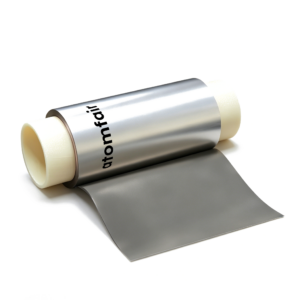
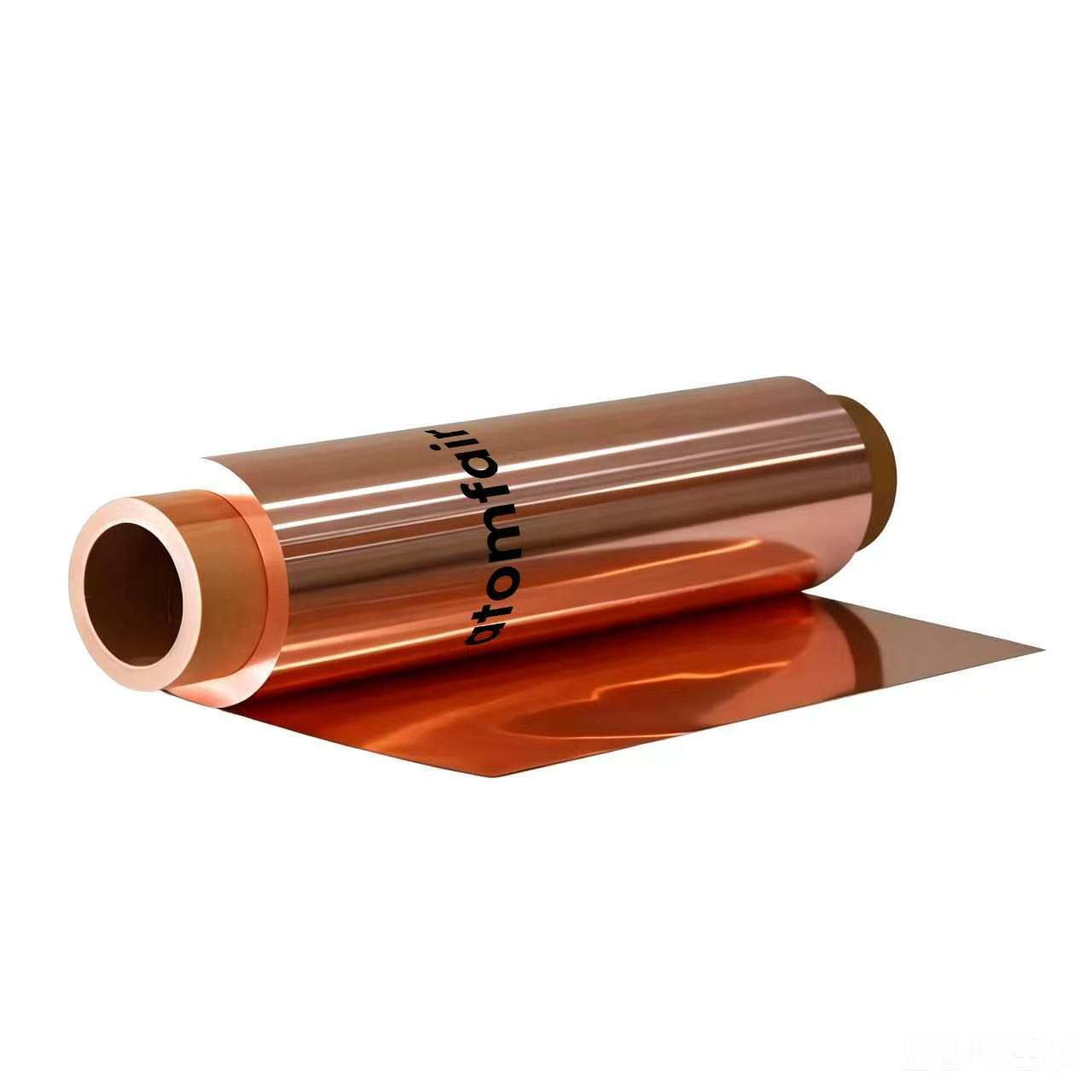
ATOMFAIR® BATTERY ANODE SUBSTRATE PET COMPOSITE COPPER FOILRESEARCH GRADE MATERIAL
|
||
|
|
|
|
The foil must be stored in a cool, dry environment to prevent degradation and ensure material integrity. Optimal adhesion of active materials requires a clean, contamination-free PET surface prior to coating.
- Storage Environment: Store the foil in a cool, dry environment with stable temperature and low humidity to avoid moisture absorption and material degradation.
- Thermal Stability: Avoid exposing the foil to temperatures exceeding the PET layer's rated thermal stability to prevent deformation or delamination during processing or operation.
- Surface Adhesion: Maintain a clean, dust-free PET surface before applying active material coatings to ensure strong adhesion and prevent failure modes such as delamination.
- Mechanical Handling: Handle the foil carefully to avoid creasing, tearing, or puncturing the thin copper layer, which could compromise current collector functionality.
How does the PET composite copper foil achieve weight reduction without compromising electrical conductivity?
The composite design uses a thin copper layer on a PET backing, significantly reducing overall density compared to pure copper foil of equivalent mechanical strength. The copper layer maintains high electrical conductivity suitable for advanced battery applications, while the lightweight PET provides structural support and flexibility. This trade-off enables lighter anode substrates for electric vehicles and portable electronics.
What types of anode active materials are best suited for deposition on this PET composite copper foil?
The PET surface is engineered for enhanced adhesion of common lithium-ion battery anode active materials such as graphite, silicon, and lithium metal. The improved adhesion enhances electrochemical performance and cycle life. For specialized material systems, customizable surface treatments may be arranged by contacting the supplier.
What are the critical storage conditions required to prevent degradation of PET composite copper foil?
The foil must be stored in a cool, dry environment to prevent oxidation of the copper layer and deformation of the PET backing. High humidity or extreme temperatures can cause corrosion or dimensional changes. Proper storage ensures the composite structure retains its mechanical integrity and conductivity for reliable battery performance.
This PET composite copper foil provides a lightweight, flexible anode substrate with high electrical conductivity and enhanced active material adhesion, but requires controlled storage environments and is optimized exclusively for lithium-ion battery applications.
Positive
- Composite structure advantages: The PET backing delivers flexibility and mechanical strength, while the copper layer ensures high electrical conductivity, collectively enhancing battery performance.
- Enhanced active material adhesion: The PET surface promotes superior adhesion of active materials, leading to improved electrochemical performance and extended cycle life.
Trade-offs
- Controlled storage required: The material must be kept in a cool, dry environment to prevent degradation, imposing specific storage infrastructure needs.
- Restricted to lithium-ion anodes: Designed exclusively as an anode substrate for lithium-ion batteries; not validated for other battery chemistries or electrochemical systems.
Every advanced material, component, equipment, and instrument in our catalog is backed by rigorous testing. We maintain strict internal quality management frameworks and align with CE conformity metrics to deliver transparent, reproducible performance data via our public open-science repository.
To request raw batch performance data, submit formal vendor registration paperwork, or execute a fast-turnaround R&D manufacturing loop, contact us at inquiry@atomfair.com.
Item is dispatched under the Atomfair Shipping & Delivery Framework (Free worldwide shipping on orders over $59 USD). Return is governed by the Atomfair Return & Refund Policy (7-day technical return window).