Description
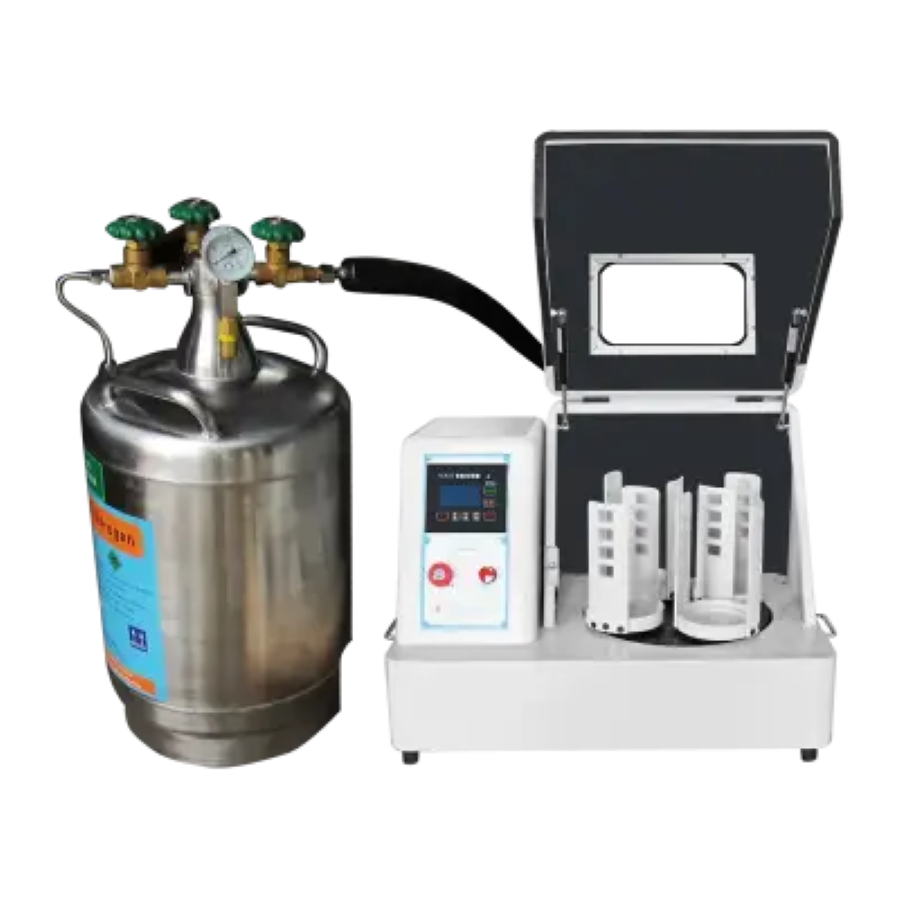
PBM-12C CRYOGENIC PLANETARY BALL MILL 12L -40°C VERTICALLABORATORY GRADE EQUIPMENT
|
||||||||||||||||||||||||||||||||||||||||||||||||||||||||||||||||||||||||||||||||||||||||||||||||||||||||||||||||||||||||||||||||||||||||||||||||||||||||||||||||||
|
||||||||||||||||||||||||||||||||||||||||||||||||||||||||||||||||||||||||||||||||||||||||||||||||||||||||||||||||||||||||||||||||||||||||||||||||||||||||||||||||||
|
TAILORED SOLUTIONS FOR RESEARCH
Contact our engineering team for technical support or official quotations.
|
Operate only within the specified temperature range and with appropriate vacuum-rated jars to prevent seal failure. Electrical safety switches and overload protection must be verified before each use to mitigate hazards from rotating parts and cryogenic cooling.
- Temperature Range: Maintain the system temperature between -40℃ and 20℃ using liquid nitrogen cooling to avoid material embrittlement or thermal shock.
- Vacuum Compatibility: Use only designated vacuum ball milling jars and ensure proper sealing to prevent atmospheric contamination and maintain grinding efficiency.
- Electrical Safety: Confirm that safety switches and overload protection are functional before operation to prevent electrical or mechanical failure.
- Jar Material Compatibility: Select jar materials (stainless steel, ceramics, polyurethane) compatible with the sample chemistry and grinding conditions to avoid contamination or degradation.
- Cryogenic Handling: Handle liquid nitrogen with appropriate personal protective equipment and ensure adequate ventilation to prevent asphyxiation or frostbite.
Prepare the ball mill by selecting appropriate jars and setting cooling and rotation parameters. Execute the grinding cycle with continuous monitoring and safe shutdown after completion.
Required Equipment: Planetary ball mill, Vacuum ball milling jar, Liquid nitrogen cooling system
- Inspect and verify safety
Inspect the planetary ball mill for any damage and verify that all safety switches are operational before loading materials. - Load materials and balls
Load the grinding balls and sample material into the vacuum ball milling jar, ensuring proper fill volume. - Secure jar and connect cooling
Secure the jar onto the planetary disk and connect the liquid nitrogen cooling system if low-temperature grinding is required. - Set grinding parameters
Set the desired rotation speed, grinding time, and forward/reverse intervals using the intelligent control panel. - Start and monitor operation
Start the ball mill and monitor the operation for any abnormal noise or vibration throughout the grinding cycle. - Safe shutdown and removal
After the cycle completes, turn off the power and allow the jar to warm to room temperature before removing it.
Does liquid nitrogen cooling in the XQM-12C compromise grinding energy transfer compared to ambient temperature operation?
Yes, cryogenic conditions reduce material ductility and slow diffusion-limited reactions, but the planetary ball mill’s high-energy impact and friction mechanism still achieves particle sizes down to 0.1 micron. The variable frequency drive and precisely coordinated revolution-rotation speeds compensate for the increased viscosity of lubricants and maintain efficient comminution at temperatures as low as -40°C.
Can the XQM-12C accommodate both vacuum and inert gas conditions without modifying the jar sealing mechanism?
Yes, the vacuum ball milling jars are engineered to maintain a hermetic seal under both vacuum and positive inert gas pressure. The same sealing system, compatible with jars made from stainless steel, ceramics, or polyurethane, preserves atmospheric control without retrofitting, enabling direct switching between vacuum grinding and argon or nitrogen backfill operations.
What specific safety measures are required when operating the XQM-12C with liquid nitrogen coolant?
The built-in overload protection device and emergency stop function remain fully operational, but the liquid nitrogen system demands proper insulation of the cooling jacket and venting to prevent overpressure. The low-noise design and CNC-machined components ensure stable operation within the -40°C to 20°C range, while the grinding jar clamping device must be checked for frost buildup to maintain secure fastening during cryogenic cycling.
The Atomfair XQM-12C is a 12-liter planetary ball mill engineered for cryogenic grinding from -40°C to 20°C using liquid nitrogen cooling, and supports vacuum operation for air-sensitive materials. Its high-energy planetary motion achieves uniform particle sizes down to 0.1 micron, making it suitable for advanced materials research including battery chemistry, ceramics, and nanomaterials.
Positive
- High-Energy Planetary Motion: The planetary motion mode provides high energy density, significantly improving grinding efficiency compared with traditional equipment.
- Uniform Particle Size Down to 0.1 Micron: Three-dimensional motion trajectory ensures thorough mixing and uniform particle size distribution, capable of achieving particle sizes down to 0.1 micron.
Trade-offs
- Liquid Nitrogen Cryogenic Supply: The mill requires a continuous liquid nitrogen source to reach and maintain the -40°C to 20°C operating range, adding infrastructure and safety requirements.
- Limited to Low-Temperature Grinding: The design is optimized for cryogenic applications and cannot be used for ambient or high-temperature grinding without risking damage or performance loss.
Every advanced material, component, equipment, and instrument in our catalog is backed by rigorous testing. We maintain strict internal quality management frameworks and align with CE conformity metrics to deliver transparent, reproducible performance data via our public open-science repository.
To request raw batch performance data, submit formal vendor registration paperwork, or execute a fast-turnaround R&D manufacturing loop, contact us at inquiry@atomfair.com.
Item is dispatched under the Atomfair Shipping & Delivery Framework (Free worldwide shipping on orders over $59 USD). Return is governed by the Atomfair Return & Refund Policy (7-day technical return window).