Description
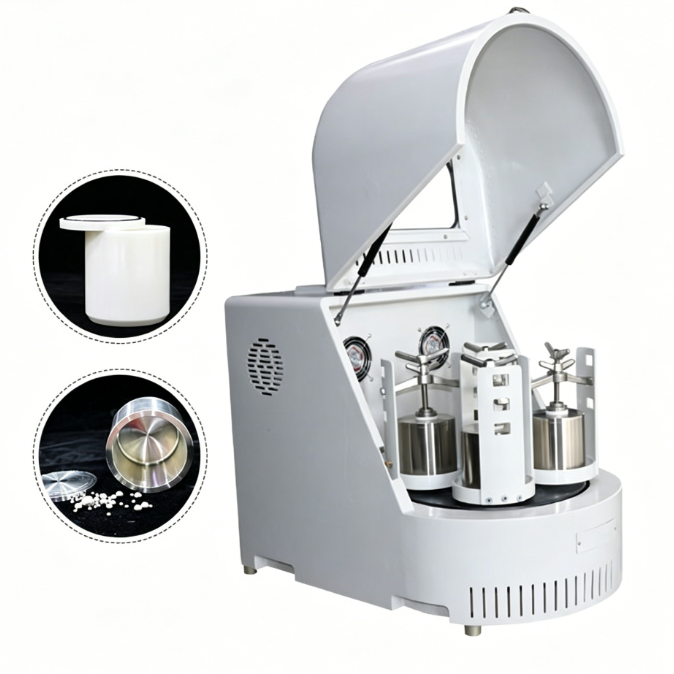
PBM-100 HEAVY DUTY VERTICAL PLANETARY BALL MILL 11KWLABORATORY GRADE EQUIPMENT
|
||||||||||||||||||||||||||||||||||||||||||||||||||||||||||||||||||||||||||||||||||||||||||||||||||||||||||||||||||||||||||||||||||||||||||||||||
|
||||||||||||||||||||||||||||||||||||||||||||||||||||||||||||||||||||||||||||||||||||||||||||||||||||||||||||||||||||||||||||||||||||||||||||||||
|
TAILORED SOLUTIONS FOR RESEARCH
Contact our engineering team for technical support or official quotations.
EMAIL: inquiry@atomfair.com
|
||||||||||||||||||||||||||||||||||||||||||||||||||||||||||||||||||||||||||||||||||||||||||||||||||||||||||||||||||||||||||||||||||||||||||||||||
|
Manufacturer: Atomfair LLC
Brand: ATOMFAIR®
|
This mill operates at 11 kW with high mechanical and electrical energy, requiring proper grounding and overload protection. Vacuum ball milling jars enable inert atmosphere grinding but demand careful sealing and pressure monitoring to prevent leaks.
- Electrical Safety: Ensure the mill is connected to a grounded power supply with a circuit breaker rated for the 11 kW load.
- Mechanical Hazard: Always secure the grinding jars and close the safety guard before starting the motor to prevent jar ejection.
- Vacuum Operation: Verify seal integrity of vacuum jars and do not exceed the manufacturer's specified maximum vacuum level.
- Material Compatibility: Select jar and ball materials that are chemically inert to the sample to avoid contamination and corrosion.
- Speed Limits: Operate the mill only within the rated rotational speed range to prevent structural failure.
This procedure outlines safe startup and operation of the planetary ball mill for powder grinding. Follow each step in order to avoid mechanical damage or personal injury.
Required Equipment: Ball milling jar (semi-circular), Grinding balls, Safety guard, Vacuum pump (optional)
- Inspect Jar and Media
Inspect the grinding jar and balls for cracks, wear, or contamination before use. - Load Sample
Load the sample material and appropriate grinding balls into the jar, filling no more than two-thirds of the jar volume. - Seal the Jar
Seal the jar tightly with its lid, ensuring the gasket is properly seated for vacuum or atmospheric operation. - Mount Jar on Mill
Mount the jar onto the planetary disk and lock it in place using the clamping mechanism. - Configure Mill Settings
Set the desired rotation speed and grinding time on the control panel within the manufacturer's recommended limits. - Close Safety Guard
Close the safety guard and verify that all interlocks are engaged before starting the mill. - Start Grinding
Start the mill and monitor the operation for any abnormal noise or vibration, stopping immediately if detected.
How does the semi-circular jar design of the XQM-100 achieve sub-micron particle size uniformity compared to traditional planetary mills, and what is the trade-off in batch capacity?
The semi-circular jar design optimizes space utilization and grinding efficiency, enabling uniform particle size distribution down to 0.1 micron. However, this mill is designed for small-batch, high-precision experimental requirements, so batch capacity is inherently limited compared to larger-scale planetary mills.
Can the XQM-100 be configured for vacuum grinding of air-sensitive materials, and what jar materials are available to prevent contamination?
Yes, the mill can be equipped with vacuum ball milling jars to grind samples in a vacuum state. It also supports jar materials such as stainless steel, ceramics, and polyurethane, allowing selection of chemically inert containers to avoid cross-contamination.
What safety and operational features does the XQM-100 include to protect users during high-energy milling of reactive powders?
The mill includes safety switches, motor overload protection, and an emergency stop function, all compliant with laboratory safety standards. Additionally, intelligent controls like variable frequency speed regulation and timed forward/reverse rotation mitigate risks from reactive powder handling.
The Atomfair XQM-100 planetary ball mill delivers high energy density grinding with uniform particle size down to 0.1 micron, but its semi-circular jar design restricts throughput to small-batch, high-precision experiments, and requires separate procurement of jar materials compatible with specific sample chemistries.
Positive
- High energy density grinding: Planetary motion (revolution + rotation) provides high energy impact and friction, significantly improving grinding efficiency compared with traditional ball mills.
- Uniform particle size down to 0.1 micron: Three-dimensional motion trajectory ensures thorough mixing and a uniform particle size distribution, achieving fines down to 0.1 micron.
Trade-offs
- Small batch capacity limitation: The semi-circular jar design is optimized for small-batch, high-precision experimental requirements, not suitable for large-scale production runs.
- Requires material-specific jar procurement: Compatibility with stainless steel, ceramics, polyurethane, and vacuum jars means users must select and purchase the appropriate jar material separately based on sample contamination and reactivity needs.
Every advanced material, component, equipment, and instrument in our catalog is backed by rigorous testing. We maintain strict internal quality management frameworks and align with CE conformity metrics to deliver transparent, reproducible performance data via our public open-science repository.
To request raw batch performance data, submit formal vendor registration paperwork, or execute a fast-turnaround R&D manufacturing loop, contact us at inquiry@atomfair.com.
Item is dispatched under the Atomfair Shipping & Delivery Framework (Free worldwide shipping on orders over $59 USD). Return is governed by the Atomfair Return & Refund Policy (7-day technical return window).