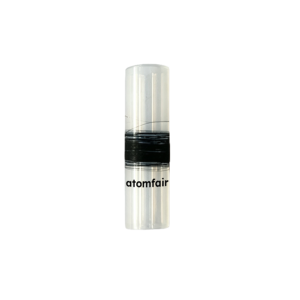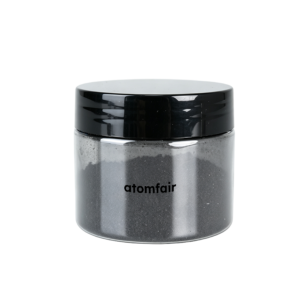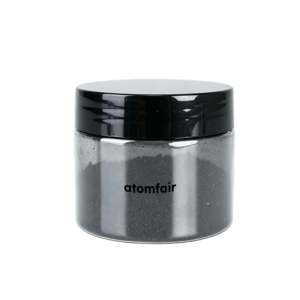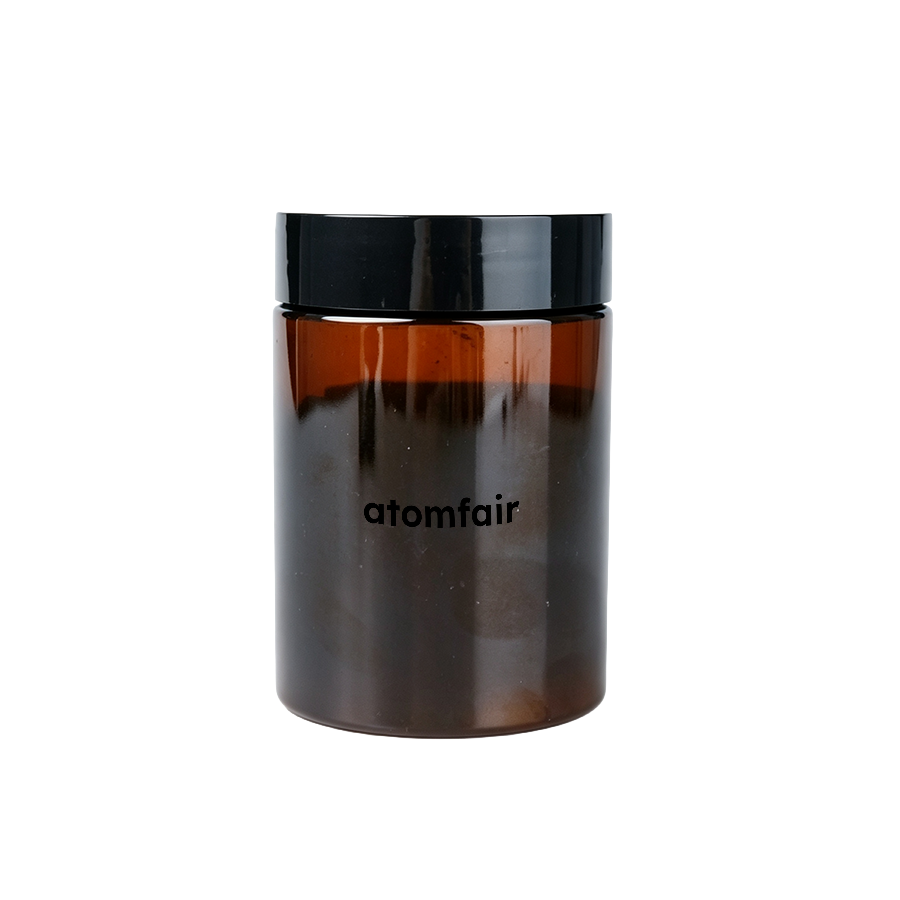
Multi-walled Carbon Nanotubes, OD 20-30 nm,, length 10-30um, purity >95%Product Type: Multi-walled carbon nanotube material
Research-grade laboratory product
|
|||||||||||||||||||||
|
|||||||||||||||||||||
|
LABORATORY PROCUREMENT SUPPORT
For model selection, material specification matching, application fit or quotation confirmation, contact our technical sales team.
E-MAIL: inquiry@atomfair.com
|
|||||||||||||||||||||
|
Supplier: Atomfair
Brand: ATOMFAIR®
|
Manufacturer: Atomfair LLC
Brand: ATOMFAIR®
This document outlines the technical constraints for processing and compatibility of multi-walled carbon nanotube material. Users must match the material form, dimensional specification, and functionalization to the intended dispersion, composite, or electrode workflow.
- Workflow Matching: Users must match the material form, dimensional specification, and functionalization to the intended dispersion, composite, film, electrode, or conductivity workflow.
- Pre-Use Confirmation: Confirm the nanotube wall type, outer diameter, length, purity, functional group, and package size before quotation to ensure the material is suitable.
- Functional Grade Selection: Select from pristine, hydroxylated, carboxylated, amino-modified, graphitized, doped, or coated grades to match the required dispersion, electrode, composite, or conductivity application.
- Dimensional Verification: Verify that the outer diameter range of 20-30 nm and length range of 10-30 µm are appropriate for the intended experiment or formulation to avoid performance mismatches.
How does the >95% purity of these multi-walled carbon nanotubes (OD 20-30 nm, length 10-30 um) affect their electrochemical performance in electrode formulations compared to lower-purity alternatives?
The >95% purity level ensures that residual catalyst metals and amorphous carbon are minimized, reducing parasitic side reactions in electrochemical electrodes. The source explicitly states >95% purity, which is critical for achieving consistent conductivity and cycling stability in supercapacitor or battery electrode research workflows. Lower-purity nanotubes may introduce variable capacitance or increased charge-transfer resistance.
Are these pristine multi-walled carbon nanotubes directly suitable for biological conjugation, or do they require functionalization for compatibility with biomolecules?
These are pristine multi-walled carbon nanotubes without surface functional groups. The product description notes that hydroxylated, carboxylated, and amino-modified grades are available for matching to specific workflows. For biological conjugation, carboxylated or amino-modified variants are typically required to covalently attach antibodies or DNA. The source recommends contacting technical sales to select the appropriate functionalized grade.
What laboratory dispersion infrastructure is necessary to process these 20-30 nm OD, 10-30 um length multi-walled carbon nanotubes into a uniform composite or coating?
The source does not specify exact equipment, but the high aspect ratio (length-to-diameter >330) of these nanotubes typically requires ultrasonication, high-shear mixing, or three-roll milling to achieve uniform dispersion in solvents or polymer matrices. The product description emphasizes matching the dimensional specification to the intended dispersion, composite, or electrode workflow, and recommends contacting technical sales for application-specific guidance.
This multi-walled carbon nanotube material (OD 20-30 nm, length 10-30 µm, purity >95%) is evaluated for its dimensional consistency and high carbon purity, which support reproducible dispersion and composite integration in nanocarbon research workflows.
Positive
- High purity >95%: The >95% purity specification reduces amorphous carbon and catalyst residue content, minimizing contamination in sensitive electrode or composite formulations.
- Controlled outer diameter 20-30 nm: The narrow outer diameter range supports consistent aspect ratio and surface area, enabling reproducible electrical percolation and mechanical reinforcement in polymer or ceramic matrices.
Trade-offs
- Bulk quantity confirmation required: Procurement notes indicate that bulk quantity requirements must be confirmed before quotation, introducing a potential lead-time constraint for large-scale laboratory or pilot projects.
- Length variability up to 30 µm: The length range of 10-30 µm introduces batch-to-batch variability in aspect ratio, which may affect dispersion uniformity and require pre-characterization for precision workflows.
Every advanced material, component, equipment, and instrument in our catalog is backed by rigorous testing. We maintain strict internal quality management frameworks and align with CE conformity metrics to deliver transparent, reproducible performance data via our public open-science repository.
To request raw batch performance data, submit formal vendor registration paperwork, or execute a fast-turnaround R&D manufacturing loop, contact us at inquiry@atomfair.com.
Item is dispatched under the Atomfair Shipping & Delivery Framework (Free worldwide shipping on orders over $59 USD excl. heavy equipment). Return is governed by the Atomfair Return & Refund Policy (7-day technical return window).