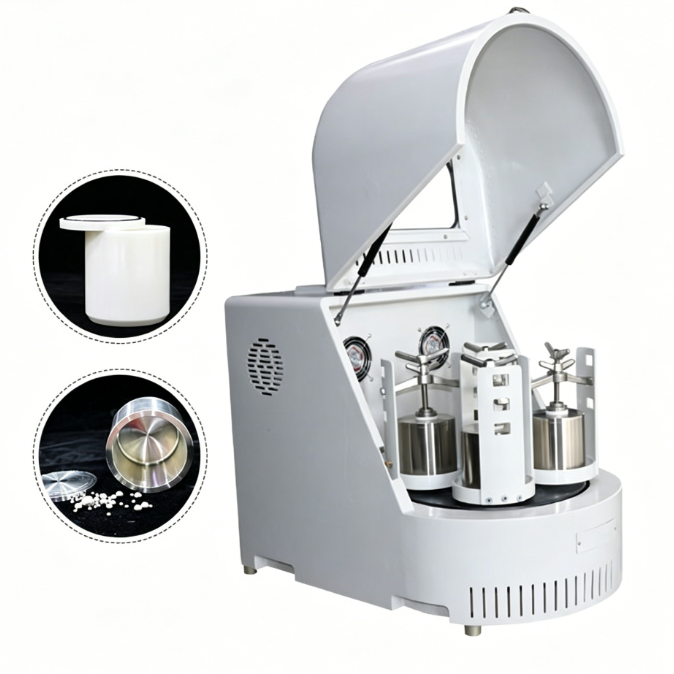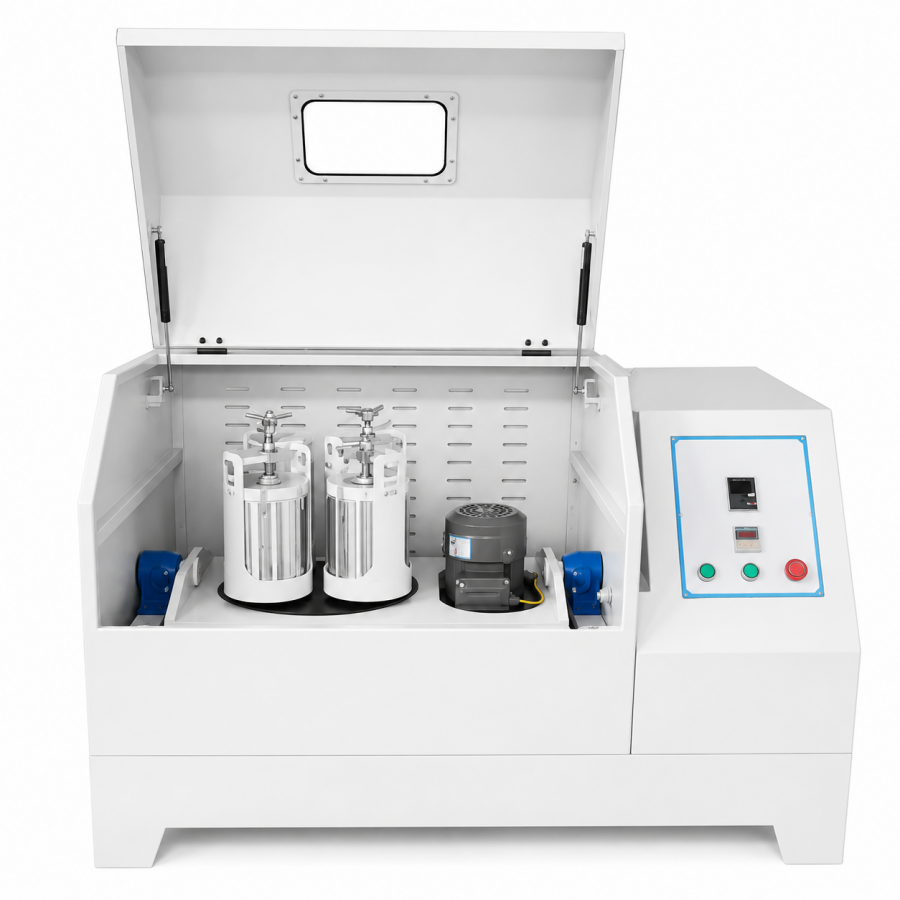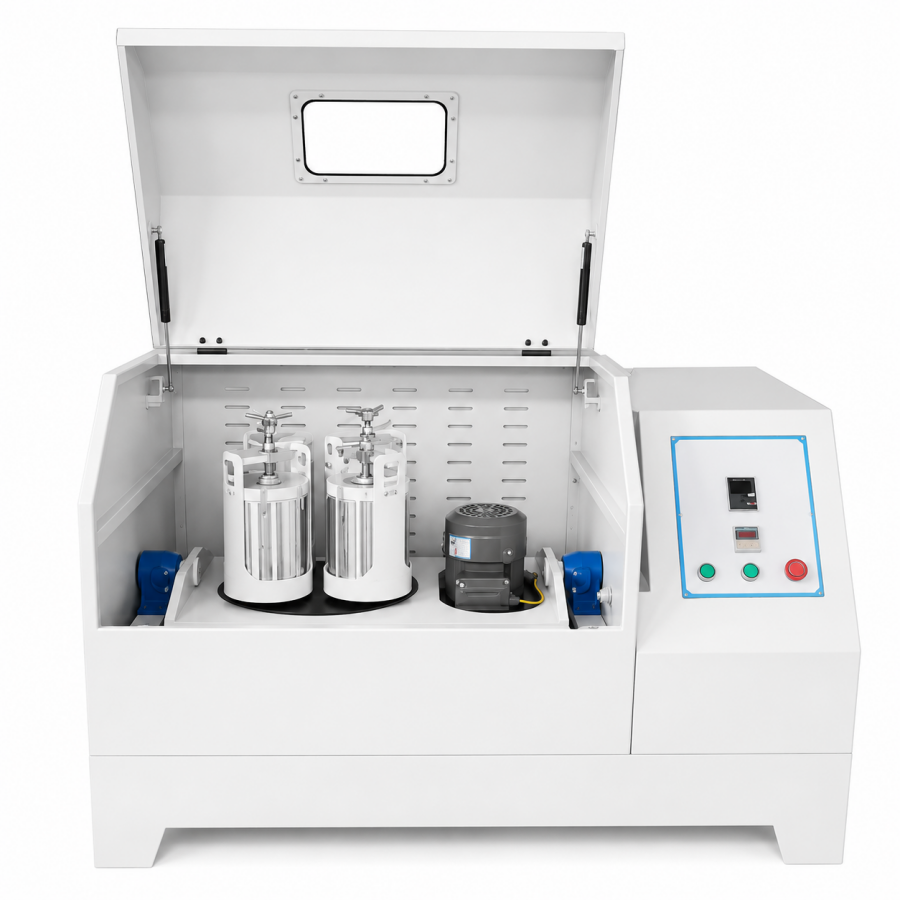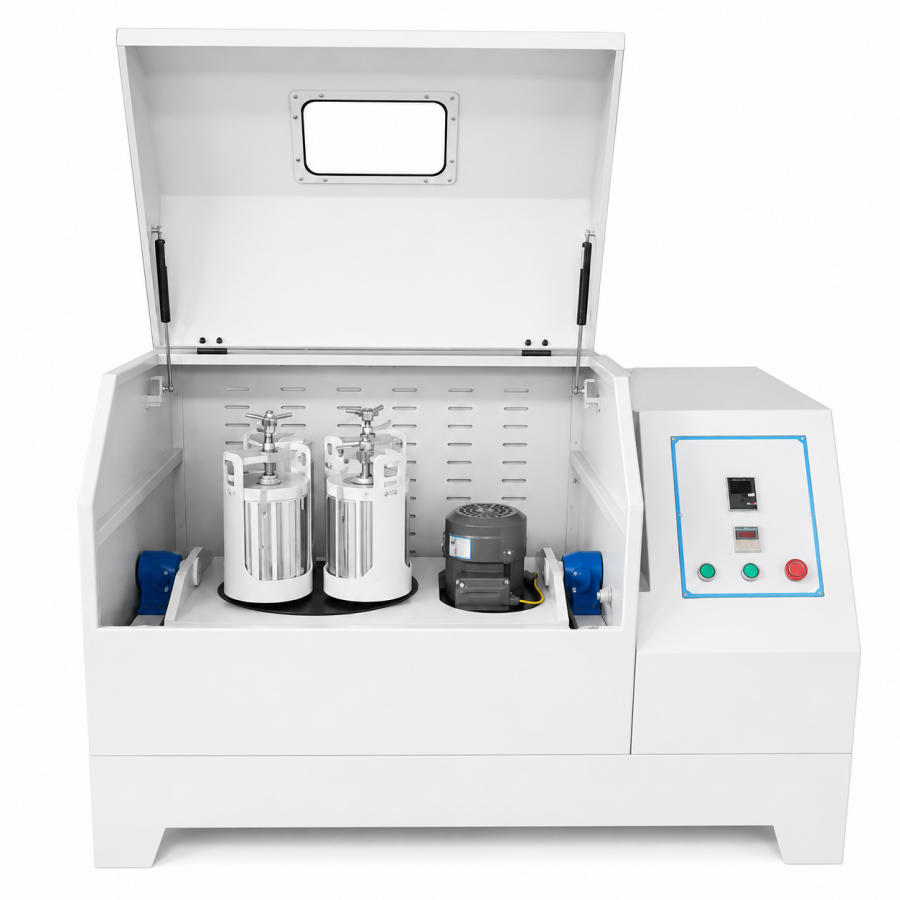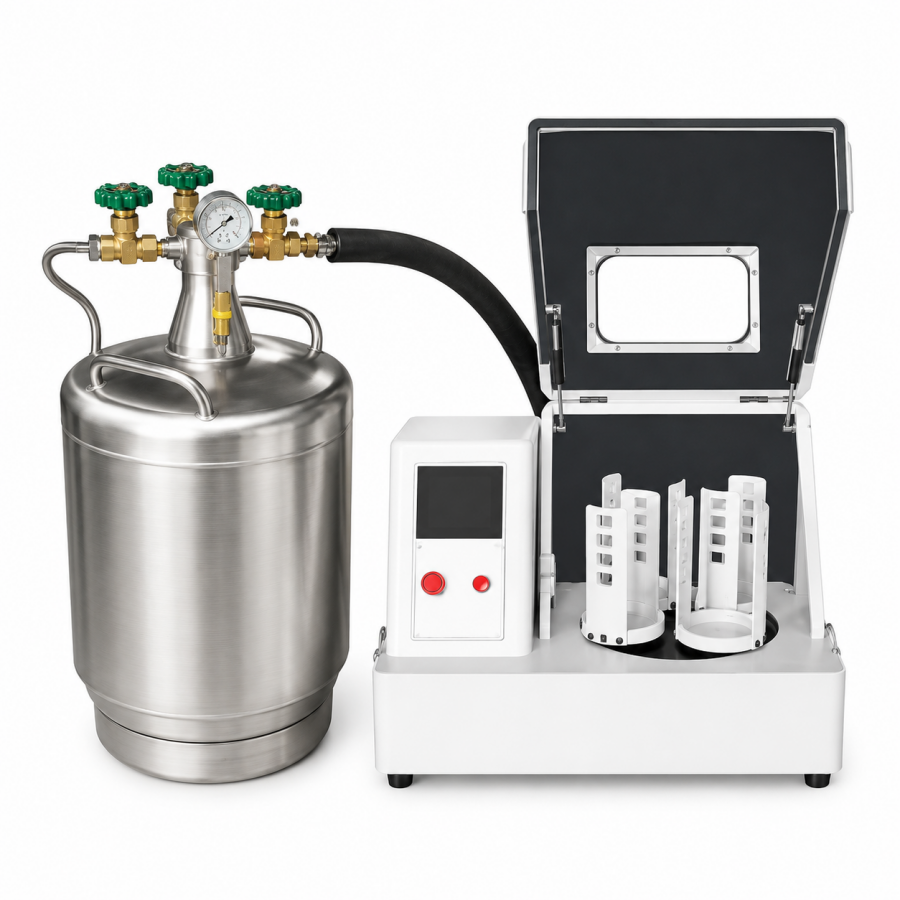
ATOMFAIR LNPM-6C LIQUID NITROGEN PLANETARY BALL MILL -40°C 4-STATIONRESEARCH & PRODUCTION GRADE EQUIPMENT
|
|||||||||||||||||||||||||||||||||||||||||||||||||||||||||||||||||||||||||||||||||||
|
|||||||||||||||||||||||||||||||||||||||||||||||||||||||||||||||||||||||||||||||||||
|
TAILORED SOLUTIONS FOR RESEARCH & PRODUCTION
Contact our engineering team for technical support or official quotations.
EMAIL: inquiry@atomfair.com
|
|||||||||||||||||||||||||||||||||||||||||||||||||||||||||||||||||||||||||||||||||||
|
Manufacturer: Atomfair LLC
Brand: ATOMFAIR®
|
The LNPM-6C requires continuous liquid nitrogen supply at 4–5 L/h under 0–10°C operating conditions to maintain the –40°C to 20°C grinding environment. Adequate ventilation is mandatory to prevent nitrogen gas displacement, and cryogenic safety protocols must be followed during operation.
- Liquid Nitrogen Supply: The mill requires a continuous liquid nitrogen supply at a consumption rate of 4–5 L/h under 0–10°C ambient conditions.
- Ventilation Requirement: The operating area must be adequately ventilated to prevent oxygen displacement from nitrogen gas boil-off.
- Temperature Control: The system maintains a grinding chamber temperature between –40°C and 20°C via controlled liquid nitrogen injection.
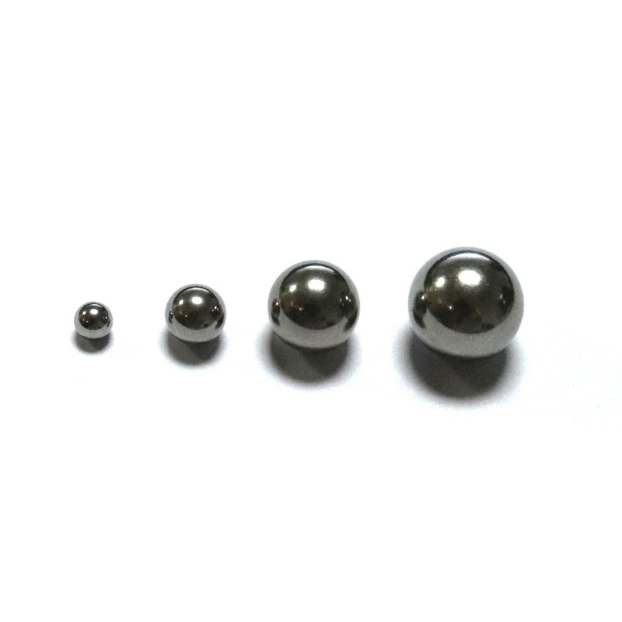
- Jar Compatibility: Only compatible grinding jars and media (WC-Co, Al₂O₃, Agate, YSZ, SS, PU, Ceramic, Nylon) must be used to avoid mechanical failure.
- Safety Protocols: All cryogenic safety procedures, including personal protective equipment and proper handling of liquid nitrogen, must be followed.
This procedure outlines the operation of the cryogenic ball mill for safe and efficient grinding. Follow the steps below after installing the unit and connecting the liquid nitrogen supply.
Required Equipment: Liquid Nitrogen Tank (50 L), Grinding Jars (1.5 L each, material selected), Grinding Balls (40% jar volume), Temperature Controller (built-in)
- Prepare Ventilation and Safety
Ensure the operating area is well-ventilated and all cryogenic safety equipment is in place. - Connect Liquid Nitrogen Supply
Connect the liquid nitrogen supply to the insulated chamber and fill the 50 L tank to the recommended level. - Load Grinding Jars
Load each grinding jar with sample material and grinding balls to 40% of jar volume, then seal the jar. - Secure Jars in Platform
Place the jars into the four-station grinding platform and secure them. - Set Grinding Temperature
Set the desired grinding temperature within the range of –40°C to 20°C using the built-in controller. - Set Rotation Speed and Start
Set the rotation speed between 70–670 rpm and start the grinding cycle. - Monitor During Operation
Monitor liquid nitrogen consumption and temperature throughout the run, replenishing LN2 as needed.
Why does the LNPM-6C have a lower maximum rotation speed (670 rpm) compared to smaller LNPM models (810 rpm)?
The LNPM-6C has a larger total volume (6 L) and heavier load, requiring reduced rotational speed to maintain stability and effective cryogenic grinding. The series table shows that models up to 4 L achieve 810 rpm, while the 6C is limited to 670 rpm, and larger models further decrease to 580 rpm. This trade-off balances throughput with mechanical integrity and temperature control.
Can the LNPM-6C be used for grinding air-sensitive materials under inert atmosphere?
Yes, the LNPM-6C supports vacuum grinding jars, enabling inert gas or vacuum atmosphere cryogenic grinding for air-sensitive materials. The system's four-station configuration allows simultaneous preparation of up to four different samples under controlled atmosphere conditions, as stated in the key features.
What is the liquid nitrogen consumption rate of the LNPM-6C and what safety precautions are required?
Under 0–10°C operating conditions, the LNPM-6C consumes approximately 4–5 L/h of liquid nitrogen. Adequate ventilation is required in the operating area due to nitrogen gas displacement, and cryogenic safety protocols must be followed. The system includes a 50 L empty LN2 tank with the main unit.
The ATOMFAIR LNPM-6C is a 4-station cryogenic planetary ball mill with 6 L total volume, capable of maintaining -40°C to 20°C via liquid nitrogen injection, enabling ultrafine grinding of temperature-sensitive materials. Its vacuum/inert atmosphere compatibility and 4-station simultaneous processing make it suitable for comparative material studies in R&D settings.
Positive
- Cryogenic temperature control down to -40°C: Continuous liquid nitrogen injection rapidly absorbs grinding heat, maintaining a persistent low-temperature environment essential for processing temperature-sensitive materials such as electronic ceramics, polymers, and battery materials.
- Four-station vacuum/inert atmosphere grinding: The four-station configuration enables simultaneous preparation of up to four different samples in a single run, with compatibility for vacuum grinding jars that allow inert gas or vacuum atmosphere cryogenic grinding for air-sensitive materials.
Trade-offs
- Continuous liquid nitrogen supply required: Under 0–10°C operating conditions, liquid nitrogen consumption is approximately 4–5 L/h, requiring a dedicated LN2 supply and adequate ventilation to prevent nitrogen gas displacement in the operating area.
- Grinding jars and media not included: The standard configuration includes only the main grinding unit and a 50 L empty LN2 tank; grinding jars and balls must be ordered separately, adding to the initial setup cost and procurement lead time.
Every advanced material, component, equipment, and instrument in our catalog is backed by rigorous testing. We maintain strict internal quality management frameworks and align with CE conformity metrics to deliver transparent, reproducible performance data via our public open-science repository.
To request raw batch performance data, submit formal vendor registration paperwork, or execute a fast-turnaround R&D manufacturing loop, contact us at inquiry@atomfair.com.
Item is dispatched under the Atomfair Shipping & Delivery Framework (Free worldwide shipping on orders over $59 USD excl. heavy equipment). Return is governed by the Atomfair Return & Refund Policy (7-day technical return window).