Description
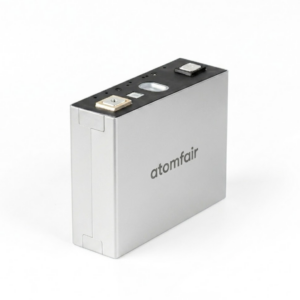
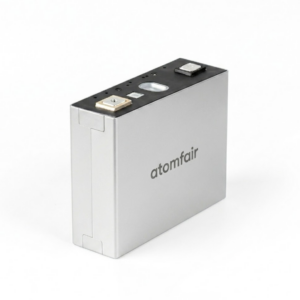
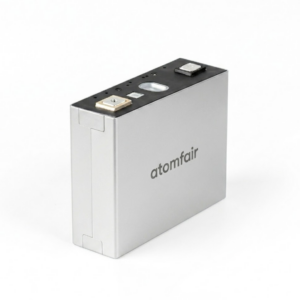
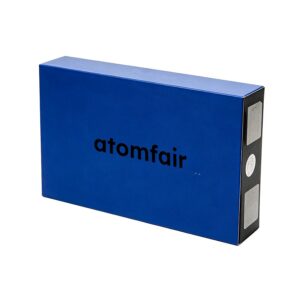
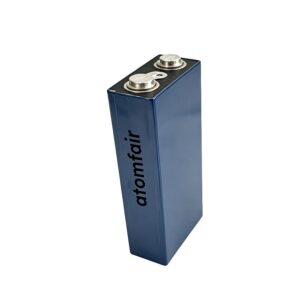
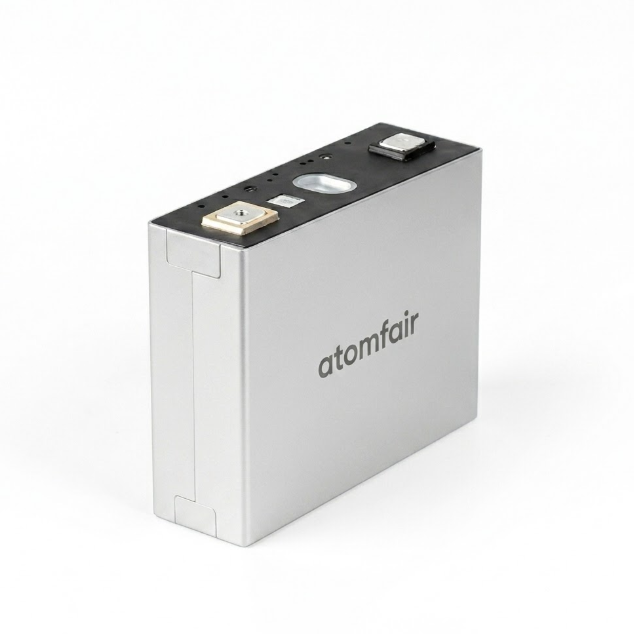
3.20V 280Ah LFP Prismatic Cell | ATOMFAIRCOMMERCIAL GRADE · PRODUCTION
|
|||||||||||||||||||||||||
|
|||||||||||||||||||||||||
|
TAILORED SOLUTIONS FOR RESEARCH
Contact our engineering team for technical support or official institutional quotations.
EMAIL: INQUIRY@ATOMFAIR.COM
|
|||||||||||||||||||||||||
|
MANUFACTURER: ATOMFAIR LLC
BRAND: ATOMFAIR®
|
Store the cell in a humidity-controlled environment to prevent moisture ingress and corrosion. Always use a dedicated BMS with overvoltage, undervoltage, and overcurrent protection to ensure safe operation.
- Humidity Control: Maintain the cell in a humidity-controlled vacuum sealed package until use to prevent moisture-related degradation.
- Voltage Monitoring: Monitor the cell voltage continuously with a BMS to avoid over-discharge or short circuit conditions.
- Temperature Management: Operate the cell within the recommended temperature range to preserve cycle life and prevent thermal runaway.
- Mechanical Integrity: Inspect the cell for physical damage such as dents, swelling, or leaks before each use and discard if compromised.
- Disposal Compliance: Dispose of used cells at an authorized recycling facility in accordance with local regulations.
Inspect the cell for physical damage before installation. Connect the cell to a dedicated BMS and perform an initial conditioning charge under standard ambient conditions.
Required Equipment: Dedicated Battery Management System (BMS) with overvoltage, undervoltage, and overcurrent protection
- Inspect Cell
Inspect the cell for any dents, swelling, or leaks to ensure mechanical integrity before use. - Connect BMS
Connect the cell to a dedicated BMS that provides appropriate protection functions for voltage and current limits. - Condition Cell
Condition the cell under standard ambient conditions before first use as per manufacturer instructions.
How does the 1.0C continuous charge/discharge rate impact the long-term cycle life of the ATOMFAIR 280Ah LFP prismatic cell?
The cell offers stable 1.0C continuous charge and discharge rates, while its cycle life of ≥8000 cycles is tested at 0.5C/0.5C, 100% DOD with 70% retention. Operating continuously at 1.0C may reduce cycle longevity relative to the 0.5C rate, though the cell is designed for reliable 1C performance for predictable power delivery.
What battery management system (BMS) features are necessary for the ATOMFAIR 280Ah LFP cell in an energy storage system?
A dedicated BMS with appropriate protection functions is required, including over-voltage, under-voltage, over-current, and temperature protection. The cell must be operated within the recommended voltage and temperature ranges, and mechanical abuse, over-discharge, or short circuits must be avoided to ensure safe and optimal performance.
What are the recommended storage and conditioning procedures for the ATOMFAIR 280Ah LFP cell before first use?
The cell is shipped in humidity‑controlled vacuum sealed packaging with individual cell isolation in anti‑static foam lined cartons. Before first use, it should be conditioned under standard ambient conditions. Used cells must be disposed of in accordance with local regulations.
The 3.20V 280Ah LFP prismatic cell delivers ≥8000 cycles at 100% DOD with 70% retention and 162Wh/kg energy density, making it well-suited for stationary ESS applications. Safe operation requires a dedicated BMS and strict adherence to voltage/temperature limits to avoid over-discharge or mechanical damage.
Positive
- Ultra-high cycle life for long-duration ESS: Rated for ≥8000 cycles at 0.5C/0.5C, 100% DOD, 70% retention, enabling reliable daily cycling in grid-scale and C&I storage systems.
- High energy density reduces system footprint: 162Wh/kg weight energy density in a ≤5.60kg prismatic cell allows space-efficient pack layout for utility and commercial energy storage projects.
Trade-offs
- Requires external BMS for safe operation: The manufacturer mandates use of a dedicated BMS with appropriate protection functions to manage voltage and temperature, adding system complexity and cost.
- Sensitive to over-discharge and mechanical abuse: The cell must not be over-discharged or mechanically abused; such conditions can cause permanent damage or safety risks, requiring careful handling and monitoring.
Every advanced material, component, equipment, and instrument in our catalog is backed by rigorous testing. We maintain strict internal quality management frameworks and align with CE conformity metrics to deliver transparent, reproducible performance data via our public open-science repository.
To request raw batch performance data, submit formal vendor registration paperwork, or execute a fast-turnaround R&D manufacturing loop, contact us at inquiry@atomfair.com.
Item is dispatched under the Atomfair Shipping & Delivery Framework (Free worldwide shipping on orders over $59 USD excl. heavy equipment). Return is governed by the Atomfair Return & Refund Policy (7-day technical return window).