Description
EC01 Series Ultra-Power Solid-State Cells (500Wh/kg Extreme Density) | ATOMFAIR
Product Overview
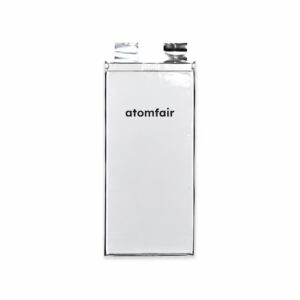
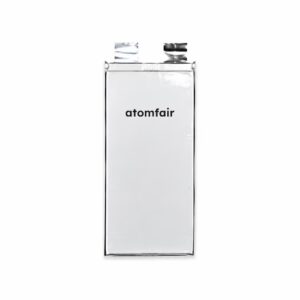
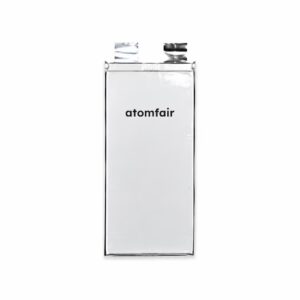
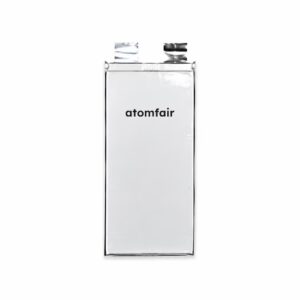
The EC01 series represents the extreme frontiers of solid-state battery technology, specifically designed as an “Energy Fortress” for harsh environments. Boasting an industry-leading energy density of 500Wh/kg, it offers unparalleled mission endurance while maintaining the capability for 3C continuous high-power discharge at temperatures as low as -40°C. This series is the premier choice for mission-critical special equipment, high-altitude UAVs, and aerospace applications where performance cannot be compromised by extreme cold. For bulk inquiries or official volume quotations, please contact us via email at inquiry@atomfair.com.
Technical Specifications
| Parameter | Detailed Specifications (EC0140140T1-15) |
|---|---|
| Nominal Capacity | 15Ah |
| Energy Density | 500Wh/kg |
| Nominal Voltage | 3.83V |
| Voltage Range | 2.5V – 4.3V |
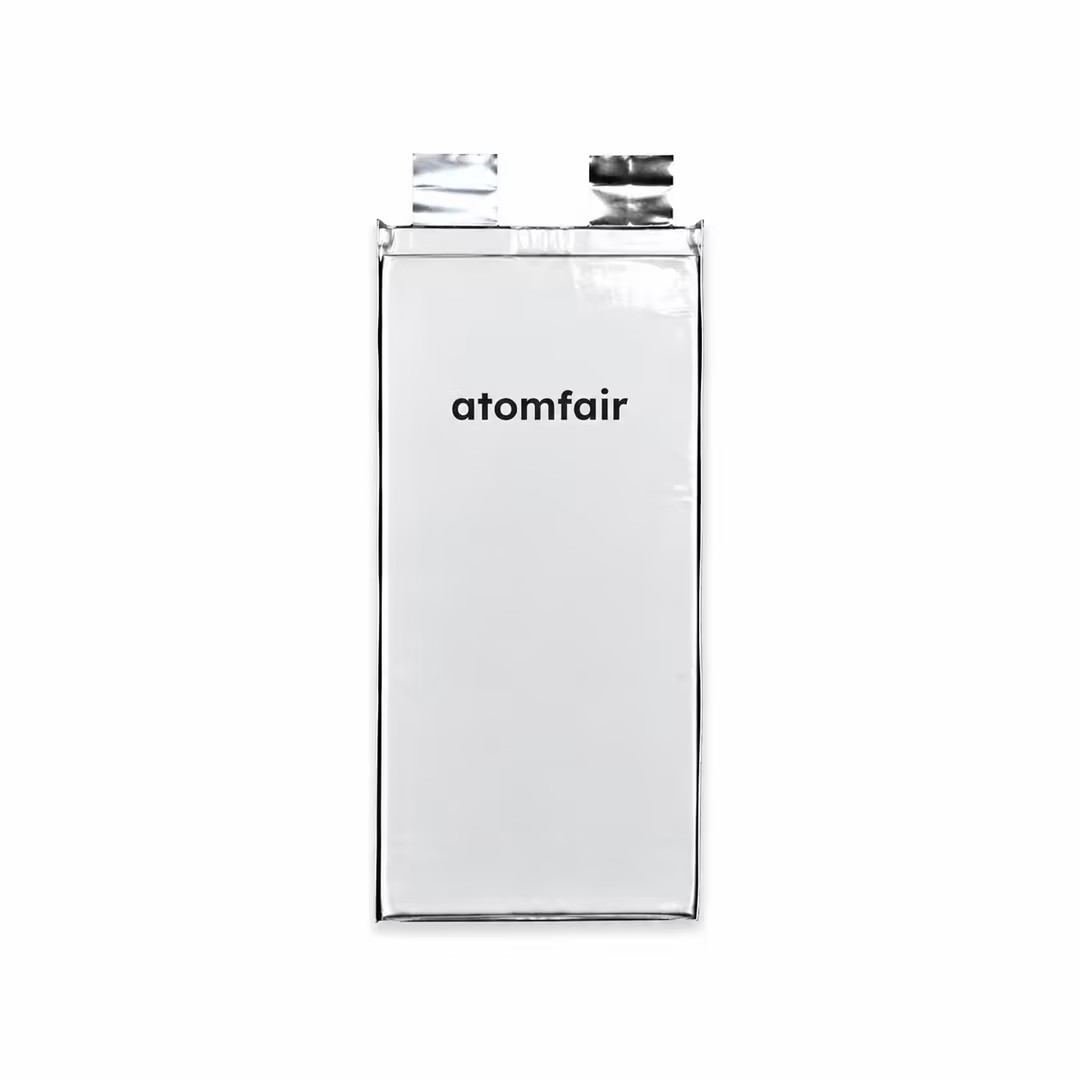
| Cell Size (mm) | 8.5 * 40 * 140 mm |
| Operating Temperature | -40°C to 60°C |
| 3C Discharge Percentage @ -40°C | ≥ 85% |
| 3C Discharge Time @ -40°C | ≥ 12 min |
Core Features & Advantages
Pinnacle Specific Energy
A breakthrough energy density of 500Wh/kg allows for maximum weight reduction while enabling unprecedented mission range for aerial platforms.
Extreme Cold Resilience
Specifically engineered to survive and thrive in environments as low as -40°C, providing a stable power source where traditional batteries fail.
Robust Low-Temp Rate Capability
Maintains a high capacity retention of ≥85% even during 3C continuous discharge in freezing conditions, ensuring mission-critical reliability.
Application Scope
- Tactical Special-Purpose UAVs
- High-Altitude Reconnaissance Systems
- Aerospace Exploration Equipment
- Extreme-Environment Robotics
Accessories & Customization
Low-Temp Optimization: Cell architecture is specifically tuned for electrolyte mobility and high ion conductivity at sub-zero temperatures.
Custom Form Factors: Alternative dimensions and specific tab orientations can be provided for unique mission-critical airframes.
Validation Reports: Detailed low-temperature discharge curve data and safety certifications are available upon verified request.
The EC01 series solid-state cells must be stored and operated within strict voltage and temperature limits to prevent irreversible degradation and safety hazards. Exposure to voltage extremes outside the specified range can cause internal short circuits and thermal runaway.
- Voltage Constraint: Maintain cell voltage within 2.5V to 4.3V during charge, discharge, and storage to avoid damage.
- Temperature Constraint: Operate and store the cell between -40°C and 60°C to preserve electrolyte stability and cycle life.
- Short Circuit Prevention: Use insulated terminals and avoid contact with conductive materials to prevent external short circuits.
- Mechanical Handling: Handle with care; do not puncture, crush, or expose to open flame.
Proper initialization ensures the cell operates safely and achieves its rated performance in extreme environments. Follow these steps to verify cell integrity and prepare for integration.
Required Equipment: Digital multimeter with voltage measurement, Insulated gloves, Battery management system (BMS) compatible with solid-state chemistry
- Inspect cell integrity
Inspect the cell for visible defects, including cracks, dents, or terminal corrosion, before any electrical connection. - Verify open-circuit voltage
Measure the cell's open-circuit voltage using a digital multimeter to confirm it is within the safe range of 2.5V to 4.3V. - Connect to BMS
Attach the cell to a battery management system configured with voltage cutoffs at 2.5V and 4.3V to maintain safe operation. - Verify environmental temperature
Confirm that the ambient temperature is between -40°C and 60°C before initiating charge or discharge cycles.
What is the trade-off between the 500Wh/kg energy density and the 3C continuous discharge capability at -40°C for the EC01 series solid-state cells?
The EC01 series achieves 500Wh/kg energy density while still supporting 3C continuous discharge at -40°C with ≥85% capacity retention, indicating no significant performance trade-off under these conditions. The cell maintains a nominal voltage of 3.83V and a voltage range of 2.5V to 4.3V, with a 3C discharge time of ≥12 minutes at -40°C, demonstrating that the ultra-high energy density does not compromise low-temperature rate capability.
Can the EC0140140T1-15 solid-state cell be integrated into existing UAV battery management systems without modifying voltage or capacity parameters?
The EC0140140T1-15 cell has a nominal voltage of 3.83V and a capacity of 15Ah, which may require BMS reconfiguration if the existing system is designed for different voltage or capacity thresholds. The cell size is 8.5 x 40 x 140 mm, and custom form factors with alternative dimensions and tab orientations are available for unique airframes, but standard integration depends on matching these electrical and mechanical specifications.
What handling and storage infrastructure is required to maintain the EC01 series cell's performance at -40°C?
The EC01 series is engineered for electrolyte mobility and high ion conductivity at sub-zero temperatures, so no special pre-heating or thermal management is required for operation down to -40°C. The cell operates across a temperature range of -40°C to 60°C, and storage should follow standard lithium battery protocols with validation reports available upon request for low-temperature discharge curve data.
The EC01 series solid-state cell delivers 500 Wh/kg energy density and operates from -40°C to 60°C, maintaining ≥85% capacity retention during 3C discharge at -40°C. This performance suits extreme-environment UAVs and aerospace applications, though the 60°C upper temperature limit restricts use in hot environments and cold high-rate discharge incurs a 15% capacity penalty.
Positive
- Ultra-High Energy Density (500 Wh/kg): Achieves 500 Wh/kg specific energy, enabling significant weight reduction and extended mission range for aerial platforms operating under demanding conditions.
- Exceptional Low-Temperature Performance: Engineered for stable operation at -40°C, maintaining ≥85% capacity retention during 3C continuous discharge, ensuring reliability in freezing environments.
Trade-offs
- Capacity Loss at Extreme Cold High Rate: At -40°C with 3C discharge, capacity retention is ≥85% but not 100%, resulting in a 15% reduction in usable energy under these conditions.
- Limited High-Temperature Tolerance (60°C Max): The cell's operating temperature range peaks at 60°C, potentially restricting use in high-ambient-temperature environments without active cooling.
Every advanced material, component, equipment, and instrument in our catalog is backed by rigorous testing. We maintain strict internal quality management frameworks and align with CE conformity metrics to deliver transparent, reproducible performance data via our public open-science repository.
To request raw batch performance data, submit formal vendor registration paperwork, or execute a fast-turnaround R&D manufacturing loop, contact us at inquiry@atomfair.com.
Item is dispatched under the Atomfair Shipping & Delivery Framework (Free worldwide shipping on orders over $59 USD). Return is governed by the Atomfair Return & Refund Policy (7-day technical return window).