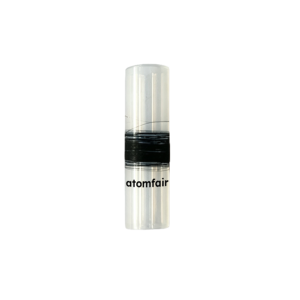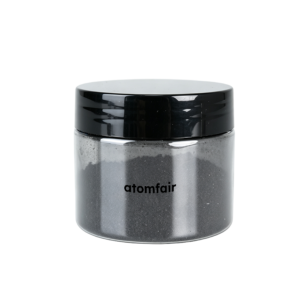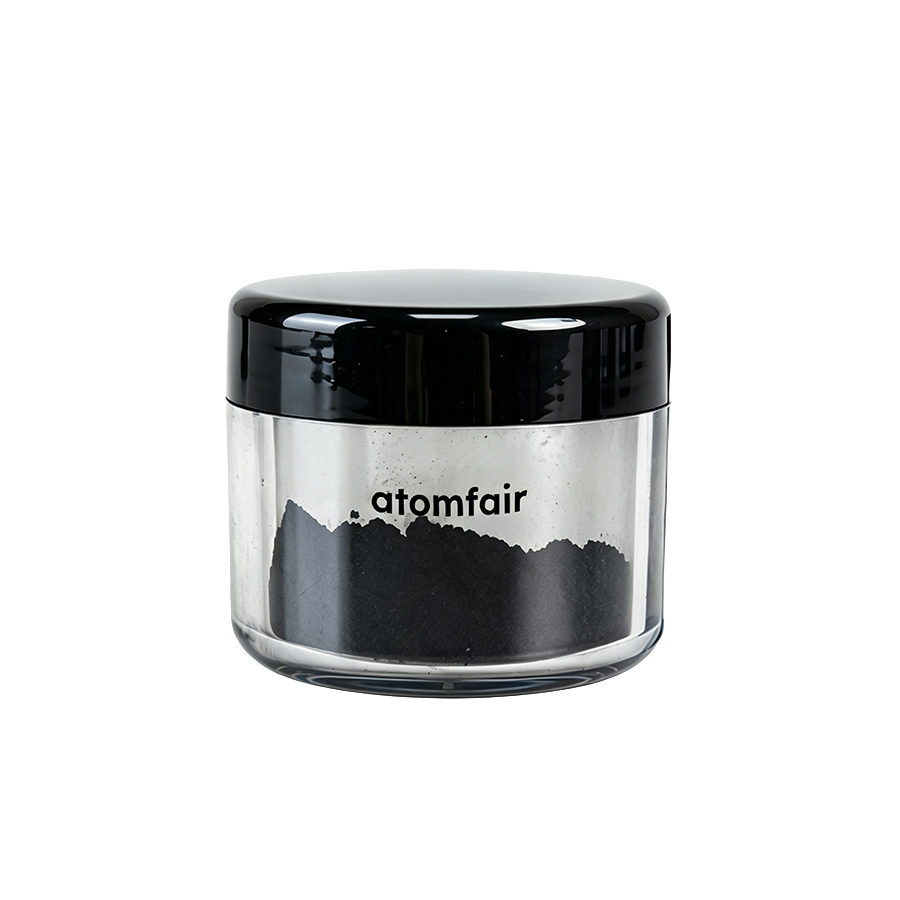
Carboxylated Single-walled carbon nanotubes dispersion inwater, ; 0.2 wt% contentProduct Type: Single-walled carbon nanotube material
Research-grade laboratory product
|
|||||||||||||||
|
|||||||||||||||
|
LABORATORY PROCUREMENT SUPPORT
For model selection, material specification matching, application fit or quotation confirmation, contact our technical sales team.
E-MAIL: inquiry@atomfair.com
|
|||||||||||||||
|
Supplier: Atomfair
Brand: ATOMFAIR®
|
Manufacturer: Atomfair LLC
Brand: ATOMFAIR®
How does the 0.2 wt% SWCNT content of this carboxylated dispersion affect its suitability for thin-film or composite applications?
The 0.2 wt% content is a low concentration that promotes uniform dispersion and reduces viscosity, simplifying handling and coating of thin films. However, for applications requiring higher nanotube loading, such as electrically conductive composites, this dispersion may need to be concentrated or used as a masterbatch. The low concentration is typical for research-grade dispersions where fine control over nanotube distribution is prioritized.
Is this carboxylated SWCNT dispersion compatible with non-aqueous solvents or polymer matrices for nanocomposite preparation?
This dispersion is supplied in water, so it is primarily compatible with aqueous systems. The carboxyl functional groups on the nanotubes can enable covalent binding with amine- or epoxy-containing polymers, but direct mixing with organic solvents may require solvent exchange or surfactant stabilization. For integration into non-aqueous matrices, additional processing steps such as freeze-drying and redispersion in an appropriate solvent are typically needed.
What handling and storage precautions are required for this research-grade aqueous SWCNT dispersion?
As a research-grade nanomaterial, this dispersion should be stored at room temperature and protected from freezing to prevent aggregation or precipitation. Standard personal protective equipment, including gloves, safety glasses, and a lab coat, is recommended. Inhalation of dried aerosolized nanotubes should be avoided, and work should be conducted in a fume hood or with local exhaust ventilation when handling outside sealed containers.
This carboxylated single-walled carbon nanotube dispersion in water at 0.2 wt% content provides a pre-functionalized, aqueous-phase nanomaterial suitable for direct integration into composite, electrode, or conductive film workflows, eliminating the need for post-synthesis functionalization steps.
Positive
- Pre-functionalized aqueous dispersion: Carboxylated surface groups enable direct covalent or electrostatic binding in composite and electrode formulations without additional functionalization steps, reducing processing complexity.
- Low concentration for controlled loading: The 0.2 wt% SWCNT content allows precise, incremental addition to formulations, minimizing aggregation risk and enabling reproducible dispersion quality in lab-scale experiments.
Trade-offs
- Low solid content limits throughput: At only 0.2 wt% SWCNTs, large volumes of dispersion are required to achieve meaningful nanotube mass in coatings or composites, increasing solvent handling and drying time.
- Aqueous solvent restricts compatibility: Water-based dispersion limits direct use in non-polar or moisture-sensitive polymer matrices and requires solvent exchange or surfactant stabilization for organic-phase processing.
Every advanced material, component, equipment, and instrument in our catalog is backed by rigorous testing. We maintain strict internal quality management frameworks and align with CE conformity metrics to deliver transparent, reproducible performance data via our public open-science repository.
To request raw batch performance data, submit formal vendor registration paperwork, or execute a fast-turnaround R&D manufacturing loop, contact us at inquiry@atomfair.com.
Item is dispatched under the Atomfair Shipping & Delivery Framework (Free worldwide shipping on orders over $59 USD excl. heavy equipment). Return is governed by the Atomfair Return & Refund Policy (7-day technical return window).