Description
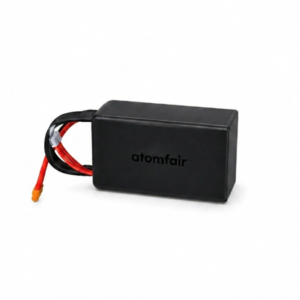
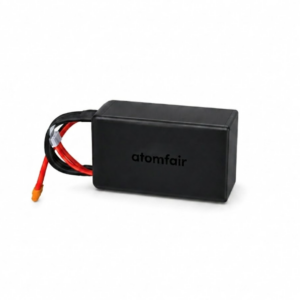
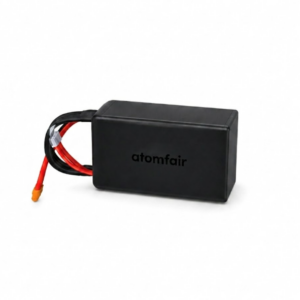
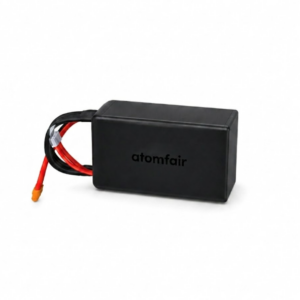
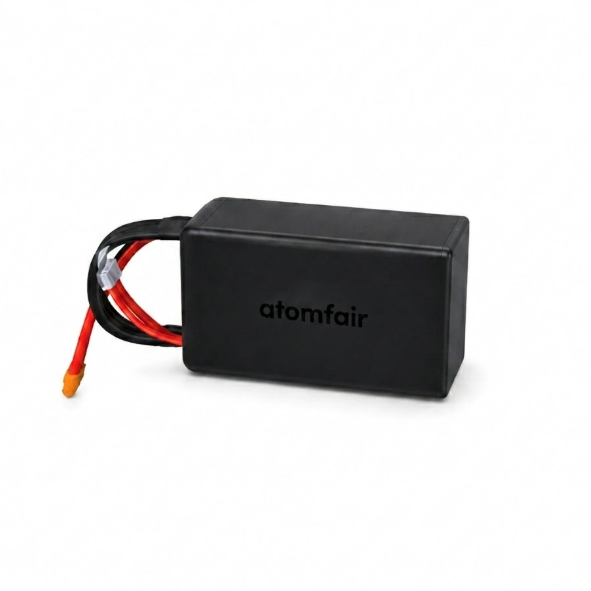
3.95V 290Wh/kg Semi-Solid Battery 11Ah Series | ATOMFAIRCOMMERCIAL GRADE · PRODUCTION
|
||||||||||||||||||||||||||||||||||||||||||||||||||||||||||||||
|
||||||||||||||||||||||||||||||||||||||||||||||||||||||||||||||
|
TAILORED SOLUTIONS FOR RESEARCH
Contact our engineering team for technical support or official institutional quotations.
EMAIL: inquiry@atomfair.com
|
||||||||||||||||||||||||||||||||||||||||||||||||||||||||||||||
|
Manufacturer: Atomfair LLC
Brand: ATOMFAIR®
|
This semi-solid battery series requires strict voltage and temperature management to maintain safety and performance. The pouch cells must be stored in a dry, non-conductive environment and handled with insulated tools.
- Voltage Limits: Maintain each cell's voltage between 2.8V and 4.2V to prevent over-discharge and overcharge damage.
- Temperature Range: Operate and store the battery between 0°C and 45°C to avoid capacity loss or thermal runaway.
- Humidity Control: Store in an environment with relative humidity below 50% to prevent moisture ingress.
- Physical Containment: Use a fireproof container or LiPo bag during charging and storage.
- Handling Precautions: Avoid puncturing, crushing, or exposing the pouch to sharp objects.
This procedure outlines the steps to safely charge and deploy the semi-solid battery pack for use. Follow all steps to prevent damage and ensure longevity.
Required Equipment: Lithium-ion battery charger, Cell balancer, Multimeter, Safety goggles
- Inspection
Inspect the battery pack for any physical damage, swelling, or leakage before handling. - Charger Configuration
Set the charger to a constant current of 11A and a constant voltage of 4.2V per cell. - Cell Balancing
Connect the cell balancer to the balance leads to ensure cell voltages are equalized. - Lead Connection
Attach the main power leads to the charger, confirming correct polarity. - Charging Initiation
Initiate the charging cycle and monitor the pack temperature periodically. - Disconnection
Disconnect the charging cables once the current drops below 0.5A. - Post-Charge Storage
Store the fully charged battery in a fireproof container away from flammable materials.
How does the 330 Wh/kg energy density of this semi-solid battery impact thermal management requirements during 15C peak discharge?
The 330 Wh/kg energy density combined with a 15C peak discharge rate generates significant internal heat, requiring active thermal management in high-duty-cycle applications. The semi-solid electrolyte improves thermal stability and reduces leakage risk compared to liquid electrolytes, but the pouch cell format lacks built-in cooling channels, so external heat sinking or forced air cooling is recommended for sustained peak loads.
Can the 3.95V nominal voltage and 11Ah capacity be directly integrated into existing 6S, 8S, 12S, or 18S drone power systems without modifying the battery management system?
Direct integration requires that the existing BMS supports a nominal voltage of 3.95V per cell and a 1C charge limit, as these cells are not compatible with standard 3.6V or 3.7V Li-ion BMS thresholds. The 11Ah capacity and 7C continuous discharge rate are within typical high-power drone specifications, but the BMS must be configured for the semi-solid cell's voltage window to prevent under- or over-voltage protection trips.
What are the storage and handling requirements for semi-solid electrolyte pouch cells to prevent performance degradation over time?
Store these pouch cells at 40-60% state of charge in a dry, temperature-controlled environment between 15°C and 25°C to minimize self-discharge and electrolyte aging. The semi-solid electrolyte reduces leakage risk compared to liquid variants, but the pouch casing is still susceptible to puncture and swelling; avoid stacking heavy objects on top and use individual protective packaging during transport.
This semi-solid battery series delivers 330 Wh/kg energy density with 1C charge and up to 15C peak discharge in flexible configurations (6S-18S), suitable for weight-sensitive UAV and robotics applications. The semi-solid electrolyte enhances safety but introduces a charge rate ceiling of 1C and dimensional tolerances of ±5% that must be factored into system design.
Positive
- Ultra-high energy density 330 Wh/kg: The 330 Wh/kg energy density enables extremely lightweight battery packs, ideal for UAVs, portable devices, and other weight-constrained applications.
- High rate discharge capability: Supports 7C continuous and 15C peak discharge, providing robust power delivery for demanding dynamic loads in drones and robotics.
Trade-offs
- Limited charge rate (1C max): The maximum charge rate is specified at 1C, which may constrain applications requiring faster recharge cycles in field operations.
- Manufacturing tolerance of ±5%: Dimensions and weight are specified with a ±5% tolerance, requiring allowance for stack-up variation in precision mechanical integration.
Every advanced material, component, equipment, and instrument in our catalog is backed by rigorous testing. We maintain strict internal quality management frameworks and align with CE conformity metrics to deliver transparent, reproducible performance data via our public open-science repository.
To request raw batch performance data, submit formal vendor registration paperwork, or execute a fast-turnaround R&D manufacturing loop, contact us at inquiry@atomfair.com.
Item is dispatched under the Atomfair Shipping & Delivery Framework (Free worldwide shipping on orders over $59 USD). Return is governed by the Atomfair Return & Refund Policy (7-day technical return window).