Double Chamber High-Pressure Electrochemical Cell with Quartz Window – 100+100 mLProduct Type: Variation
Laboratory procurement configuration
|
|||||||||||||||||||||||||
|
|||||||||||||||||||||||||
|
LABORATORY PROCUREMENT SUPPORT
For model selection, technical compatibility or configuration confirmation, contact our technical sales team.
E-MAIL: inquiry@atomfair.com
|
|||||||||||||||||||||||||
|
Manufacturer: Atomfair LLC LLC
Brand: ATOMFAIR®
|
This high-pressure electrochemical cell must be operated within its rated pressure limit of 6 MPa to ensure safe containment. The quartz window is fragile and requires protection from mechanical impact and rapid temperature changes.
- Pressure Containment: The cell's pressure rating of 6 MPa must never be exceeded to avoid catastrophic failure.
- Window Integrity: The quartz window should be inspected for cracks or scratches before each use and handled with care to prevent thermal shock.
- Sealing Requirements: All seals and fittings must be properly tightened to maintain pressure integrity and prevent leaks during operation.
- Accessory Compatibility: All separately purchased electrodes, membranes, and windows must be confirmed for compatibility with the cell's configuration and pressure rating.
- Electrode Setup: The three-electrode system must be correctly configured with working, reference, and counter electrodes to ensure experimental accuracy.
Ensure all components are clean and undamaged before assembly. Follow these steps to safely prepare the cell for high-pressure electrochemical experiments.
Required Equipment: Torque wrench, Pressure regulator, Leak detection spray
- Inspect Components
Inspect the cell body, quartz window, and all seals for cracks, scratches, or contamination prior to assembly. - Install Electrodes
Install the three electrodes (working, reference, and counter) into their designated ports and secure them with the provided fittings. - Seal the Cell
Close the cell and tighten all bolts progressively to the manufacturer's recommended torque using a calibrated torque wrench. - Pressurize the Cell
Connect a pressure source to the inlet valve and slowly pressurize the cell to the desired experimental pressure, ensuring it does not exceed 6 MPa. - Check for Leaks
Check for gas leaks by applying leak detection spray to all seals and fittings; re-tighten if necessary.
Does increasing the chamber volume to 100+100 mL affect the pressure rating or optical window performance compared to the smaller volume version of this high-pressure electrochemical cell?
No, the 100+100 mL configuration maintains the same 6 MPa pressure rating and quartz window with >95% transmittance as the smaller parent model (AF-HCW-2C). The larger volume is designed to keep the same optical and pressure characteristics while accommodating higher electrolyte volumes for extended experiments.
Which electrode configurations are compatible with this double chamber high-pressure cell, and can non-standard electrode sizes be accommodated?
The cell supports a standard three-electrode setup, but electrodes are sold separately. For non-standard electrode sizes or alternative window materials, the manufacturer accepts customization requests submitted via email to inquiry@atomfair.com. It is recommended to confirm electrode, membrane, and window compatibility with the technical sales team before ordering.
What are the recommended handling procedures for the quartz window and pressure components of the double chamber cell?
The quartz window has >95% transmittance and is integrated into a titanium body with 304 SS valves. The cell is designed for 6 MPa operation; standard protective packaging is used for delivery, and custom reinforcement is available. For operational safety, the manufacturer advises contacting technical sales for configuration confirmation and proper usage guidelines.
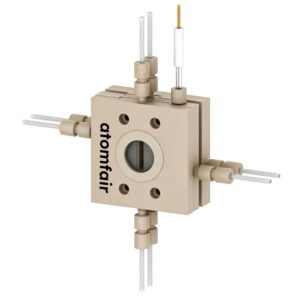
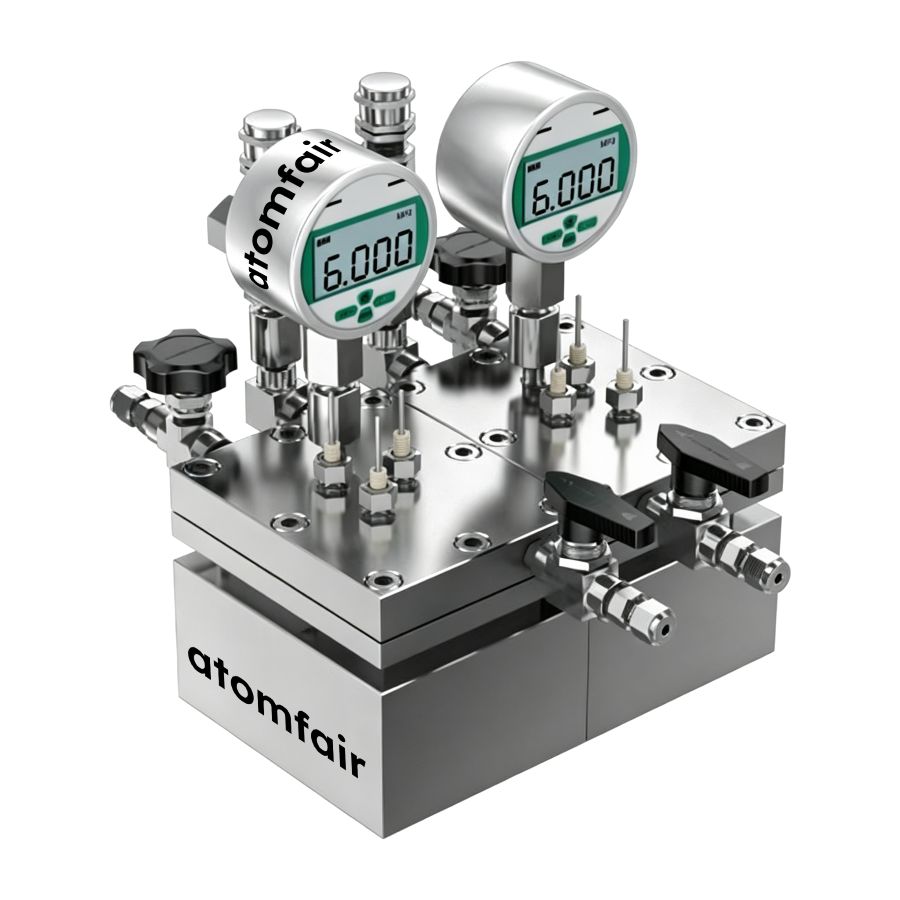
The 100+100 mL double chamber high-pressure electrochemical cell with quartz window offers a larger volume variant of the AF-HCW-2C family, maintaining a 6 MPa pressure rating and Ti body construction. The quartz window (>95% transmittance) enables in situ optical spectroscopy, while the 304 stainless steel valves and three-electrode setup support standard electrochemical measurements. Electrodes are not included and must be ordered separately.
Positive
- High-transmittance quartz window: Quartz glass with >95% transmittance enables reliable in situ optical spectroscopy and photoelectrochemical experiments without significant signal loss.
- Corrosion-resistant Ti body: Titanium chamber body provides excellent chemical resistance against aggressive electrolytes and high-pressure aqueous environments, extending operational lifetime.
Trade-offs
- Electrodes sold separately: The cell does not include electrodes; users must procure compatible working, reference, and counter electrodes independently, adding to initial setup complexity.
- Moderate pressure rating: Rated for 6 MPa (approx. 60 bar), which is suitable for many electrochemical studies but may be insufficient for ultra-high-pressure applications requiring >10 MPa.
Every advanced material, component, equipment, and instrument in our catalog is backed by rigorous testing. We maintain strict internal quality management frameworks and align with CE conformity metrics to deliver transparent, reproducible performance data via our public open-science repository.
To request raw batch performance data, submit formal vendor registration paperwork, or execute a fast-turnaround R&D manufacturing loop, contact us at inquiry@atomfair.com.
Item is dispatched under the Atomfair Shipping & Delivery Framework (Free worldwide shipping on orders over $59 USD excl. heavy equipment). Return is governed by the Atomfair Return & Refund Policy (7-day technical return window).