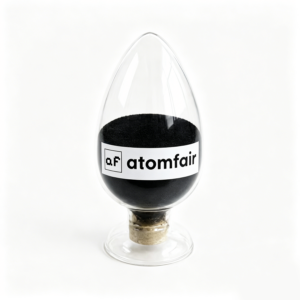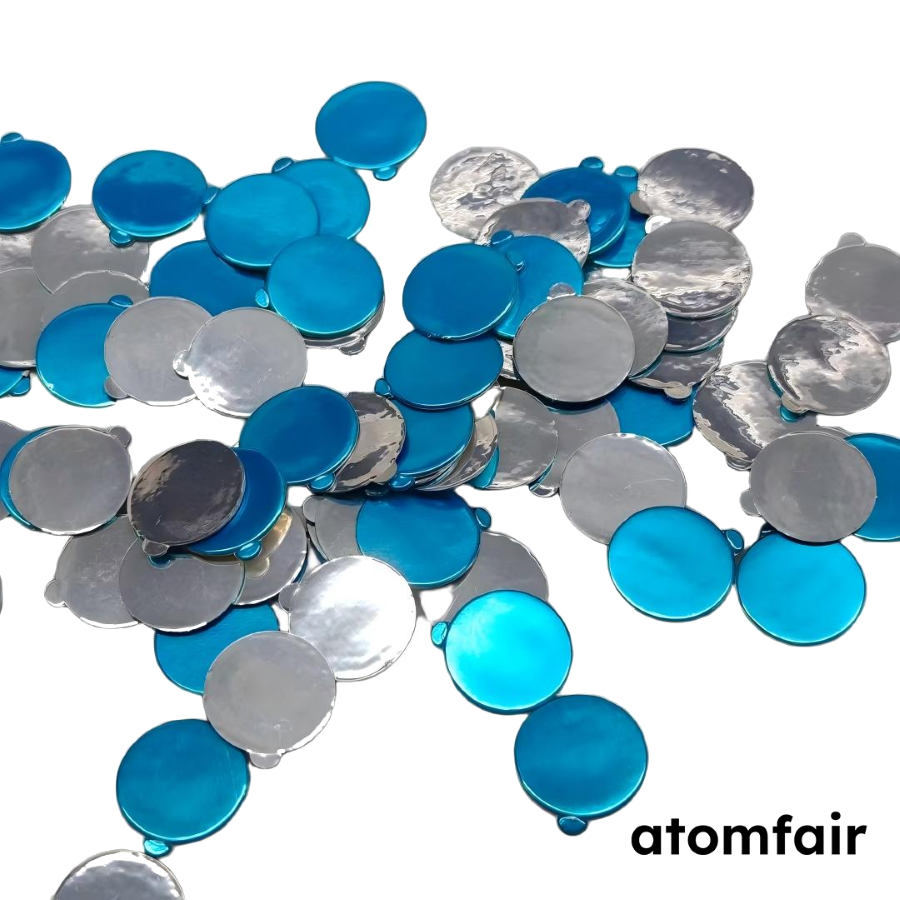
Sodium Metal Ribbon φ15.6×0.45mm Research Grade ATOMFAIR®

$403.00

Institutional Procurement & Supply Compliance: As a verified US supplier, Atomfair accepts formal institutional Purchase Orders (POs), contract billing schedules, and custom procurement loops for university and national laboratories, and corporate R&D departments globally.

Research-grade sodium metal ribbon (15.6 mm width × 0.45 mm thickness) for continuous electrode fabrication. High-purity matrix. Ideal for roll-to-roll testing. Order now.

Description

ATOMFAIR® SODIUM METAL RIBBON (15.6MM WIDTH × 0.45MM)

RESEARCH GRADE MATERIAL

Product Overview

The Atomfair® high-purity sodium metal ribbon/strip is specifically engineered to establish web-to-web consistency and baseline testing control during sodium-ion battery continuous electrode fabrication and roll-to-roll testing. Due to the extreme soft chemistry and plastic flow properties of elemental alkali matrices, minor surface micro-wrinkles and elevated liner adhesion parameters are natural characteristics rather than structural defects. To address technical pain points regarding continuous alkali ribbon handling, we offer three architectural configurations: aluminum-collector stabilized, copper-collector stabilized, and unsupported strip layouts, optimizing processing yield.

Technical Specifications

PARAMETER DETAILS
1. Core Device & Electrochemical Design
Active Material High-purity Sodium (Na) Metal Matrix
Ribbon Width Range 15.6 mm
Ribbon Thickness 0.45 mm
2. Collector Substrate Options
Available Configurations Aluminum (Al) Foil Current Collector / Copper (Cu) Foil Current Collector / Free-standing (Unsupported) Ribbon Matrix
Morphology Trait Micro-wrinkles and high liner peel force are normal material phenomena for ultra-soft research-grade alkali ribbon structures.
3. Packaging & Structural Container Metrics
Standard Packing 400 Strips / Box (or customizable roll cores)
Internal Package Primary hermetic vial under protective layer, bundled inside high-barrier aluminum foil pouch.
4. Compliance & Support Trace
Manufacturing Rules Processed under strict ISO 9001 standard compliance conditions
Alternative Options Explore our related catalog for custom ribbon widths. For urgent technical custom requests or bulk inquiries, please contact our support team.


Key Features & Advantages

  • Continuous Line Purity: Features an uncompromised mechanical ribbon configuration with highly uniform thickness profile to prevent parasitic electronic leakage and edge burrs.
  • Optimized Roll Integration: Specifically engineered to demonstrate superior electrochemical performance, significantly boosting transfer kinetics and scalable cell winding stability.
  • Adaptive Surface Maintenance: Optimized macro-purity allows for effortless removal of trace oxidation via quick mechanical sweeping with a standard laboratory brush, guaranteeing immediate usability.

APPLICATION SCOPE: Sodium-ion electrochemical storage validation, baseline ribbon-electrode testing, and advanced pilot-line continuous winding R&D.
PACKAGING: 400 pieces/box, enclosed within hermetic protective sub-vials and secondary vacuum-sealed aluminum-foil outer wrap.
IMPORTANT NOTICE: Active alkali metal ribbons exhibit high reactivity to ambient atmospheric exposure. The outermost rigid canister contains ambient atmosphere; do not unseal outside airlock systems. The internal aluminum foil pouch is vacuum-packed within an ultra-pure Argon (Ar) environment and MUST ONLY be opened inside a qualified inert gas glovebox. Any exposure to standard air will trigger spontaneous oxidation, nullifying compliance warranties. Micro-wrinkles and higher film peel forces are standard physical traits of the soft phase. In the event of minor surface tarnish or trace oxidation, gently sweeping the ribbon profile with a fine laboratory brush inside the glovebox will restore the active metallic luster instantly. Unsupported free-standing ribbons possess higher surface friction; utilizing a pre-heating plate set >50°C is highly recommended to ease protective liner removal without introducing mechanical tearing. Ensure sub-vial caps are tightly secured immediately after each workflow to suppress secondary contamination.

Frequently Asked Technical Questions

Why is ATOMFAIR® Sodium Metal Ribbon preferred for roll-to-roll testing workflows?

ATOMFAIR® Sodium Metal Ribbon provides uncompromised web-to-web thickness uniformity across long profiles. It serves as a premier alternative to standard sodium-ion battery half-cell foil to boost transfer kinetics and winding stability during continuous electrode fabrication.

How to prevent sodium disc deformation or ribbon tearing?

To successfully solve how to prevent sodium disc deformation or ribbon tearing during liner peeling, this soft alkali metal must be handled strictly according to collector-stabilized substrate selection or pre-heating protocols before thermal processing.

How does ATOMFAIR® Sodium Metal Ribbon compare to traditional alternative options regarding operational stability?

Compared to standard alternatives, the optimized matrix of ATOMFAIR® Sodium Metal Ribbon incorporates specialized chemical doping. This unique architecture dramatically enhances structural resistance against degradation, preserving long-term validation integrity.

What material processing benefits does the microstructure of ATOMFAIR® Sodium Metal Ribbon offer?

Boasting engineered particle structuring and optimized specific surface area, this product offers superior sinterability. The controlled form factor facilitates lower thermal processing thresholds and promotes ideal grain boundary integration during cell fabrication.

How is the phase purity and quality control of this research-grade batch validated?

Every competitive batch undergoes rigid analytical quality validation testing. Total elemental and metallic impurities are strictly regulated below strict industry thresholds to eliminate parasitic electronic leakage and maintain uncompromised data reproducibility.
TAILORED SOLUTIONS FOR RESEARCH
Contact our engineering team for technical support or official institutional quotations.
EMAIL: inquiry@atomfair.com
Manufacturer: Atomfair LLC
Brand: ATOMFAIR®

The sodium metal ribbon exhibits inherent micro-wrinkles and elevated liner adhesion as natural material characteristics rather than structural defects. These properties require careful handling during roll-to-roll electrode fabrication to avoid deformation from plastic flow.

  • Micro-wrinkle tolerance: Surface micro-wrinkles are intrinsic to ultra-soft alkali ribbons and should not be interpreted as defects.
  • Liner adhesion baseline: Elevated liner peel force is a normal phenomenon for research-grade alkali ribbon structures.
  • Configuration selection: Choose between aluminum-stabilized, copper-stabilized, or unsupported layouts to optimize processing yield.

This procedure outlines safe deployment of sodium metal ribbon in continuous electrode fabrication systems due to its extreme softness and reactivity. Proper alignment and tension control prevent deformation while maintaining web-to-web consistency.

Required Equipment: Roll-to-roll system, Unwind shaft

  1. Mount ribbon spool
    Mount the sodium ribbon spool onto the unwind shaft of the roll-to-roll system ensuring secure engagement.
  2. Align ribbon path
    Align the ribbon with the electrode substrate path using guide rollers to maintain consistent web tracking.
  3. Verify surface condition
    Verify that surface micro-wrinkles remain within natural range before initiating continuous lamination.
  4. Initiate lamination
    Initiate continuous lamination at controlled speed while monitoring tension to prevent plastic deformation.

What are the trade-offs between using aluminum-stabilized, copper-stabilized, and unsupported sodium metal ribbon configurations for continuous electrode fabrication?

The aluminum and copper collector configurations provide mechanical reinforcement for high-speed roll-to-roll winding, reducing the risk of tearing, while the unsupported free-standing ribbon eliminates current collector mass for applications requiring a pure sodium anode. The description notes that micro-wrinkles and high liner peel force are normal for ultra-soft alkali ribbons, so unsupported strips demand more careful handling to maintain processing yield.

Is this sodium metal ribbon compatible with sodium-sulfur or sodium-air battery assembly, or is it exclusively designed for sodium-ion coin cells?

The product is specifically engineered for sodium-ion battery continuous electrode fabrication and roll-to-roll testing, as stated in the description. Its uniform thickness profile and high-purity matrix optimize baseline control for this context. Compatibility with other sodium-metal chemistries is not addressed in the source; researchers must independently verify electrolyte and cell architecture compatibility.

How should the sodium metal ribbon be stored and handled to prevent oxidation and maintain immediate usability?

The ribbon is packaged inside a primary hermetic vial under a protective layer, bundled in a high-barrier aluminum foil pouch to minimize air exposure. Upon opening, any surface oxidation can be removed by quick mechanical sweeping with a standard laboratory brush. The source emphasizes that surface micro-wrinkles and elevated liner adhesion are natural characteristics, so handling should avoid excessive force to preserve ribbon integrity.

This high-purity sodium metal ribbon is designed for continuous electrode fabrication in sodium-ion batteries, offering a uniform thickness profile to minimize parasitic leakage and edge burrs, but requires careful handling due to its extreme softness and reactivity with ambient moisture.

Positive

  • Uniform thickness for roll-to-roll processing: The highly uniform thickness profile prevents parasitic electronic leakage and edge burrs, enabling consistent baseline testing control during continuous electrode fabrication.
  • Adaptive surface oxidation removal: Optimized macro-purity allows effortless removal of trace oxidation via quick mechanical sweeping with a standard laboratory brush, ensuring immediate usability without chemical etching.

Trade-offs

  • Surface micro-wrinkles and high liner adhesion: Due to the extreme soft chemistry and plastic flow of alkali metals, minor surface micro-wrinkles and elevated liner peel force are natural characteristics that may complicate automated handling or lamination steps.
  • Requires hermetic packaging for stability: The sodium metal matrix is highly reactive with ambient moisture and oxygen, necessitating primary hermetic vials under high-barrier aluminum foil pouches to maintain purity during storage and transport.

Every advanced material, component, equipment, and instrument in our catalog is backed by rigorous testing. We maintain strict internal quality management frameworks and align with CE conformity metrics to deliver transparent, reproducible performance data via our public open-science repository.

To request raw batch performance data, submit formal vendor registration paperwork, or execute a fast-turnaround R&D manufacturing loop, contact us at inquiry@atomfair.com.

Item is dispatched under the Atomfair Shipping & Delivery Framework (Free worldwide shipping on orders over $59 USD). Return is governed by the Atomfair Return & Refund Policy (7-day technical return window).