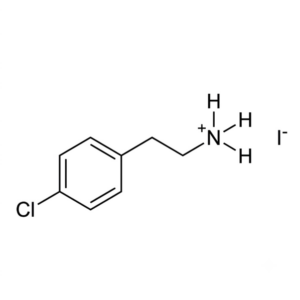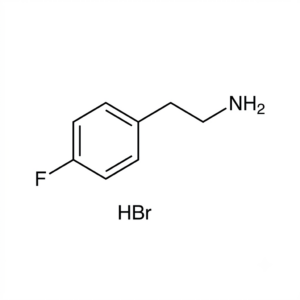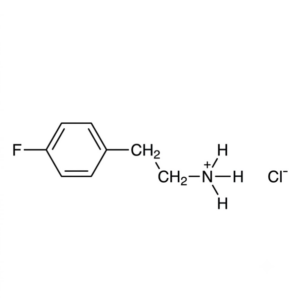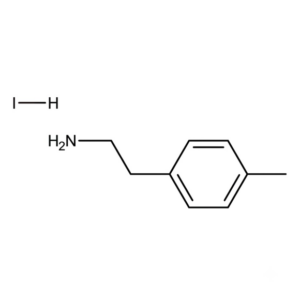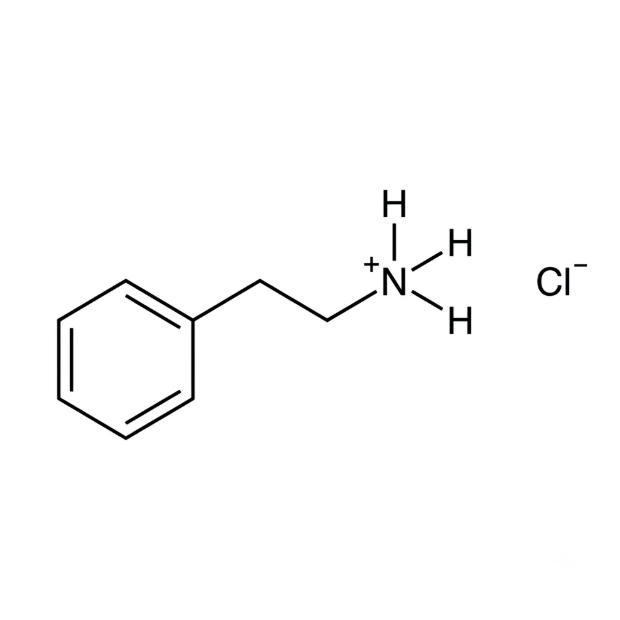
Description
PHENETHYLAMMONIUM CHLORIDE C₈H₁₂CLN 99% PEACL CAS 156-28-5RESEARCH GRADE MATERIAL
|
|||||||||||||||||||||||||||
|
|||||||||||||||||||||||||||
|
TAILORED SOLUTIONS FOR RESEARCH
Contact our engineering team for technical support or official quotations.
EMAIL: inquiry@atomfair.com
|
|||||||||||||||||||||||||||
|
Manufacturer: Atomfair LLC
Brand: ATOMFAIR®
|
This material is hygroscopic and light-sensitive, requiring strict moisture and light protection to prevent deliquescence and hydrolysis. Long-term storage under inert atmosphere is recommended to maintain stoichiometric integrity.
- Moisture Sensitivity: Exposure to atmospheric moisture causes deliquescence and hydrolysis, irreversibly degrading precursor stoichiometry.
- Light Sensitivity: The material degrades upon exposure to light, necessitating light-protected storage.
- Inert Atmosphere Requirement: Powder weighing and solution preparation must be performed within a nitrogen-filled glovebox with H2O<1 ppm and O2<1 ppm.
- Container Handling: The container cap must be tightened immediately after each use to prevent moisture ingress.
- Incompatible Storage: Do not store together with strong oxidizing agents or alkaline reagents.
This compound requires handling under inert atmosphere to avoid moisture-induced degradation. The following steps outline safe transfer, dissolution, and application for thin film fabrication.
Required Equipment: Inert atmosphere glovebox, Light-protective storage container, Anhydrous polar organic solvent (DMF or DMSO)
- Transfer to glovebox
Transfer the sealed container into a nitrogen-filled inert glovebox with H2O<1 ppm and O2<1 ppm before opening. - Weigh the powder
Weigh the required amount of phenethylammonium chloride powder under inert atmosphere using an analytical balance. - Dissolve in solvent
Dissolve the powder in anhydrous DMF or DMSO to prepare a precursor solution at the desired concentration. - Apply to substrate
Apply the precursor solution to a perovskite substrate via spin-coating or precursor co-blending as per the experimental protocol. - Store remaining material
Store the remaining powder and any prepared solutions in a light-protected, inert atmosphere environment to prevent degradation.
Is the performance benefit of PEACl surface passivation worth the stringent glovebox storage and handling requirements?
Yes, the stability and efficiency gains justify the handling rigor. PEACl's phenethyl chain forms a hydrophobic moisture-blocking layer, and the ammonium head group reduces surface defect density and non-radiative recombination, directly enhancing open-circuit voltage and power conversion efficiency in perovskite solar cells. These benefits depend on maintaining precursor integrity via inert glovebox storage (H₂O < 1 ppm, O₂ < 1 ppm), as exposure to moisture causes irreversible deliquescence.
Can PEACl be used directly in standard spin-coating protocols for 3D perovskite solar cells without modifying the precursor solution?
Yes, PEACl integrates seamlessly into standard spin-coating and precursor co-blending deposition workflows. It is freely soluble in polar organic solvents such as DMF and DMSO, which are commonly used in perovskite processing, so no specialized solvent systems or procedural modifications are required.
What specific glovebox conditions are required to prevent degradation of PEACl during storage and handling?
Long-term storage requires an inert-atmosphere glovebox with H₂O < 1 ppm and O₂ < 1 ppm, plus light protection. The container must be sealed immediately after each use to prevent moisture ingress, as PEACl is highly hygroscopic and light-sensitive, leading to deliquescence and irreversible stoichiometric degradation if exposed to ambient air.
This research-grade PEACl provides dual functionality as a 2D perovskite spacer cation and 3D surface passivation agent, with the hydrophobic phenethyl chain and chloride ion providing combined moisture blocking and grain morphology control. However, its hygroscopic and light-sensitive nature mandates strict inert-atmosphere glovebox handling and light-protected storage to prevent irreversible deliquescence and hydrolysis.
Positive
- Dual-Function Versatility: Serves both as the organic spacer cation for 2D/quasi-2D perovskite fabrication and as a surface passivation additive for 3D perovskite films, enabling experimental flexibility across multiple device architectures from a single precursor.
- Hydrophobic Barrier and Morphology Control: The phenethyl chain provides a moisture-blocking hydrophobic layer while the chloride ion regulates crystal growth kinetics, delivering combined environmental protection and optimized grain morphology in a single treatment step.
Trade-offs
- Strict Storage and Handling Requirements: Hygroscopic and light-sensitive; requires immediate transfer to a desiccated, light-protected environment and long-term storage in an inert-atmosphere glovebox (H2O < 1 ppm, O2 < 1 ppm) to prevent irreversible deliquescence and degradation.
- Atmospheric Sensitivity During Use: Exposure to ambient moisture causes deliquescence and hydrolysis, irreversibly altering precursor stoichiometry. All handling—including weighing and solution preparation—must be performed in a nitrogen-filled glovebox to maintain material integrity.
Every advanced material, component, equipment, and instrument in our catalog is backed by rigorous testing. We maintain strict internal quality management frameworks and align with CE conformity metrics to deliver transparent, reproducible performance data via our public open-science repository.
To request raw batch performance data, submit formal vendor registration paperwork, or execute a fast-turnaround R&D manufacturing loop, contact us at inquiry@atomfair.com.
Item is dispatched under the Atomfair Shipping & Delivery Framework (Free worldwide shipping on orders over $59 USD). Return is governed by the Atomfair Return & Refund Policy (7-day technical return window).