Description
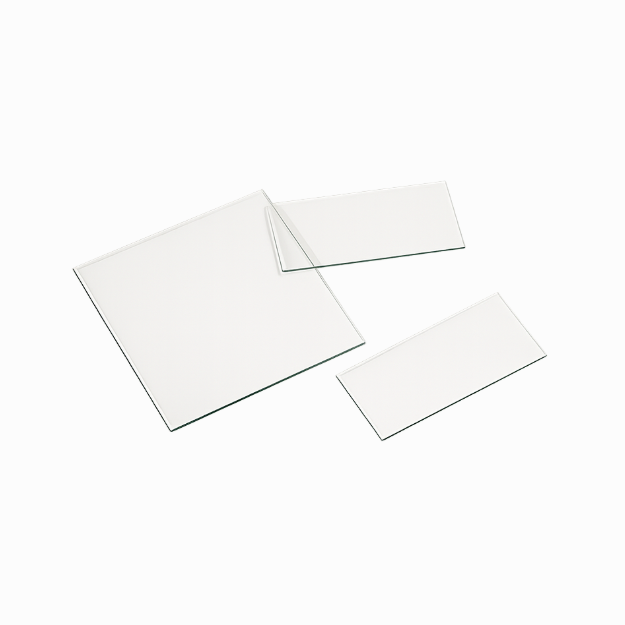
ITO CONDUCTIVE GLASS 7-10 OHM 0.4MM PHOTOCATALYTIC ELECTRODE SUBSTRATERESEARCH GRADE MATERIAL
|
|||||||||||||||||||||||||||||
|
|||||||||||||||||||||||||||||
|
TAILORED SOLUTIONS FOR RESEARCH
Contact our engineering team for technical support or official quotations.
EMAIL: inquiry@atomfair.com
|
|||||||||||||||||||||||||||||
|
Manufacturer: Atomfair LLC
Brand: ATOMFAIR®
|
This ITO conductive glass substrate requires mandatory ultrasonic organic solvent cleaning prior to use to remove surface contamination acquired during manufacturing and transport. Cleaned substrates must be stored in anhydrous ethanol to maintain surface integrity and prevent recontamination.
- Surface Contamination Susceptibility: The ITO coating readily accumulates dust, grease, and organic contaminants during production, packaging, and transport, requiring mandatory cleaning before experimental use.
- Mandatory Cleaning Protocol: The sequential toluene-acetone-ethanol-deionized water ultrasonic cleaning protocol is essential for reproducible experimental outcomes and optimal electrode performance.
- Storage Requirement: Cleaned substrates must be preserved in anhydrous ethanol to prevent recontamination and maintain surface integrity for long-term storage.
- Handling Instruction: Only handle the ITO-coated substrate edges with cleanroom-compatible tweezers to avoid surface contamination from bare fingers.
- Substrate Material Compatibility: Available substrate materials include soda-lime glass, high-purity quartz, single-crystal sapphire, and K9 optical glass to accommodate different experimental wavelengths and thermal budgets.
The validated sequential ultrasonic cleaning protocol removes organic residues and particulates from the ITO surface. After cleaning, substrates should be stored in anhydrous ethanol for long-term preservation.
Required Equipment: Ultrasonic Bath, Toluene, Acetone, Ethanol
- Toluene Sonication
Immerse the substrate in toluene and sonicate for 10-20 minutes to dissolve non-water-soluble grease and oils. - Acetone Sonication
Transfer the substrate to acetone and sonicate for 10-15 minutes to remove residual toluene and remaining organic residues. - Ethanol Sonication
Immerse the substrate in ethanol and sonicate for 10-20 minutes to dissolve residual acetone. - Deionized Water Rinse
Rinse the substrate with deionized water and sonicate for 20-30 minutes to remove ethanol. - Anhydrous Ethanol Storage
Store the cleaned substrate in anhydrous ethanol for long-term preservation until use.
How does the 7–10 Ω/sq sheet resistance of this ITO glass affect photoelectrochemical water splitting efficiency compared to lower-resistance substrates?
The 7–10 Ω/sq range provides a balanced trade-off between lateral charge transport and optical transparency for photocatalytic electrode applications. Lower-resistance ITO (e.g., 1 Ω/sq) would reduce ohmic losses but typically decreases visible-spectrum transparency below 85%, limiting photon flux to the photoactive layer. The specified resistance is optimized for photoelectrochemical cells where both efficient current collection and high light transmission are critical, as supported by the product's dual-function electrode and optical window design.
Can this ITO conductive glass be used directly as a substrate for high-temperature thin-film deposition without delamination?
Direct use at elevated temperatures depends on the substrate material variant. The standard soda-lime glass base has a limited thermal budget, while quartz and sapphire options are available for UV-transmissive and high-temperature epitaxial growth applications respectively. The product explicitly lists quartz and single-crystal sapphire as compatible substrate materials for demanding thermal processes, but the standard 0.4 mm soda-lime glass variant is not recommended for high-temperature deposition without verifying thermal expansion compatibility.
The validated sequential ultrasonic cleaning protocol is: toluene (10–20 min) → acetone (10–15 min) → ethanol (10–20 min) → deionized water (20–30 min). This stepwise solvent cascade exploits mutual miscibility to progressively remove non-water-soluble grease, organic residues, and particulates from production and transport. After cleaning, storage in anhydrous ethanol prevents recontamination from airborne hydrocarbons and moisture, maintaining a pristine surface for experimental use.
This ITO conductive glass substrate with 7–10 Ω/sq sheet resistance on a 0.4 mm glass base is evaluated as a photocatalytic electrode substrate requiring mandatory ultrasonic organic solvent cleaning prior to use to remove production-derived contaminants, with custom resistance and substrate material options available for specialized optoelectronic research.
Positive
- High optical transparency with low sheet resistance: The ITO coating delivers visible-spectrum transparency exceeding 85% and electrical sheet resistance in the 7–10 Ω/sq range, enabling dual-function electrode and optical window applications in photoelectrochemical cells and biosensing platforms.
- Broad substrate material and custom resistance options: Available on soda-lime glass, quartz, sapphire, or K9 optical glass with custom sheet resistance from 1 Ω to 10 kΩ and thickness from 0.05 mm to 10 mm, accommodating diverse experimental wavelength ranges, thermal budgets, and device architectures.
Trade-offs
- Mandatory ultrasonic organic solvent cleaning required: ITO surfaces accumulate dust, grease, and organic contaminants during production, packaging, and transport; a sequential toluene-acetone-ethanol-deionized water ultrasonic cleaning protocol is mandatory before use to ensure reproducible experimental outcomes.
- Surface contamination sensitivity and handling constraints: The ITO-coated surface is susceptible to recontamination from bare fingers; cleanroom-compatible tweezers gripping only substrate edges are required, and cleaned substrates must be stored in anhydrous ethanol to maintain contamination-free condition.
Every advanced material, component, equipment, and instrument in our catalog is backed by rigorous testing. We maintain strict internal quality management frameworks and align with CE conformity metrics to deliver transparent, reproducible performance data via our public open-science repository.
To request raw batch performance data, submit formal vendor registration paperwork, or execute a fast-turnaround R&D manufacturing loop, contact us at inquiry@atomfair.com.
Item is dispatched under the Atomfair Shipping & Delivery Framework (Free worldwide shipping on orders over $59 USD). Return is governed by the Atomfair Return & Refund Policy (7-day technical return window).