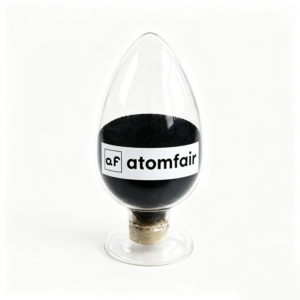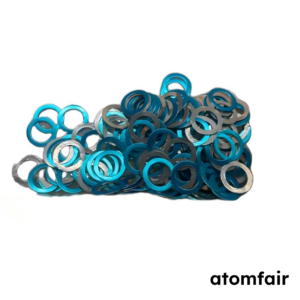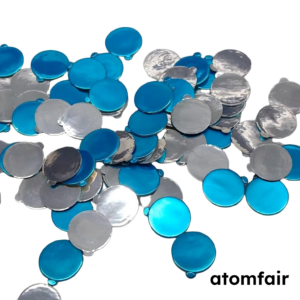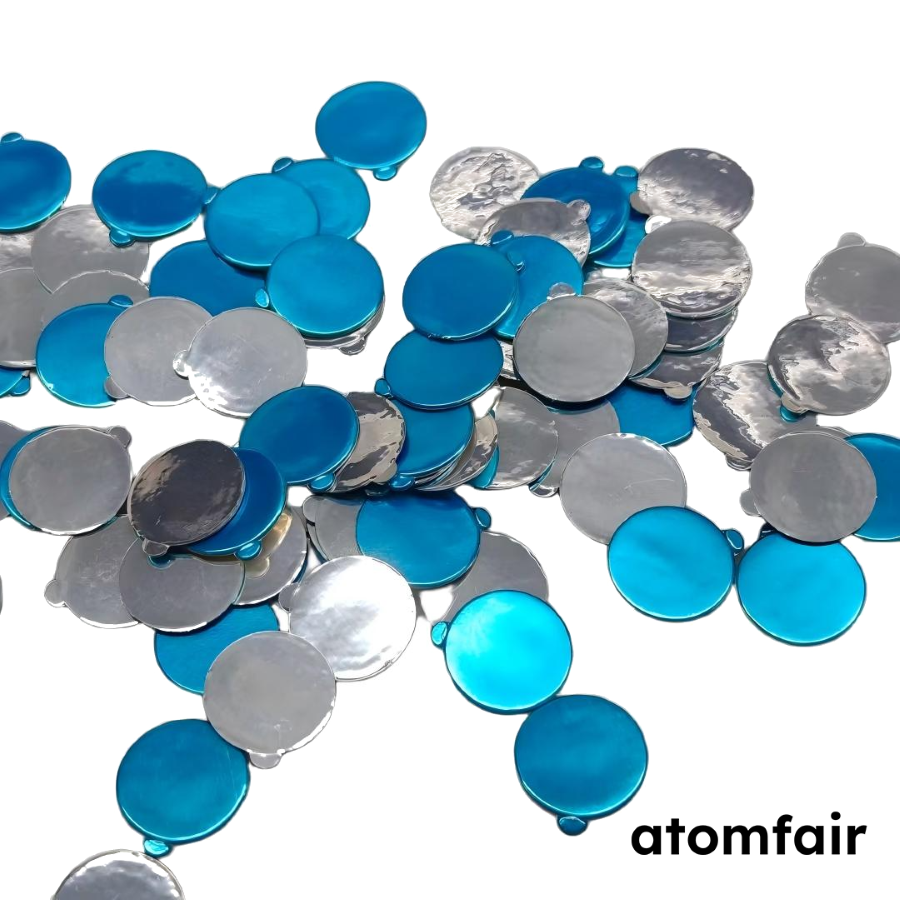
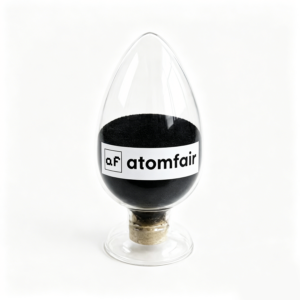
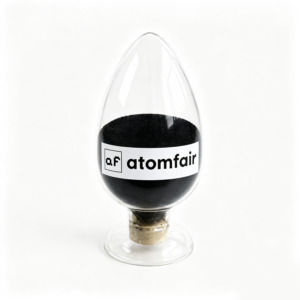
ATOMFAIR Na Sodium Metal Disc φ8×0.45mm Half-Cell Foil

Price range: $406.00 through $412.00

Institutional Procurement & Supply Compliance: As a verified US supplier, Atomfair accepts formal institutional Purchase Orders (POs), contract billing schedules, and custom procurement loops for university and national laboratories, and corporate R&D departments globally.

Buy high purity sodium disc price deals for sodium-ion battery half-cell foil R&D. ISO 9001 standard compliance. Contact inquiry@atomfair.com.

Description

Sodium Metal Discs (Φ8mm × 0.45mm Research Grade)

COMMERCIAL GRADE · PRODUCTION

Product Overview

High-purity alkali baseline analysis and next-generation battery verification blocks require uncompromised interfacial contact parameters, and this specialized sodium ion battery half cell foil array balances market-leading sodium metal disc price metrics with strict structural quality control. Engineered across three standalone layout paths—aluminum-collector stabilized, copper-collector stabilized, or unsupported free-standing matrices—the material resolves technical pain points linked to delicate alkali foil handling and microstructural tearing. This ultra-pure active matrix integrates flawlessly alongside an inorganic solid electrolyte component grid for all-solid-state secondary validation lines. This highly uniform form factor allows institutional research cleanrooms and corporate energy groups to systematically execute scripts on how to prevent sodium disc deformation pathways, establishing pristine charge-transfer kinetics and excellent half-cell capacity retention lines across automated coin cell crimping workflows.

Technical Specifications

ELECTROCHEMICAL & PHYSICAL PARAMETER TECHNICAL SPECIFICATION RATINGS
Active Component Chemistry High-Purity Sodium (Na) Metal Reagent
Disc Geometry Diameter Φ 8 mm Calibrated Target Circle
Disc Thickness Dimension 0.45 mm Solid Structural Layer
Collector Substrate Alternatives Aluminum (Al) Foil Current Collector / Copper (Cu) Foil Current Collector / Free-standing Matrix
Structural Loading Quantity 400 Pieces Per Standard Sealed Canister Pack Box
Internal Protective Enclosure Primary Hermetic Sub-Vial Under Protective Layer nested inside High-Barrier Vacuum Foil Pouch
Manufacturing Tracking Protocol Processed Under Strict ISO 9001 Standard Compliance Testing Regulations
Alternative Catalog Items Explore our extended active inventory for customized metal disc dimensions, polyanionic cathode materials, specialized non-aqueous sodium electrolytes, or automated coin cell crimpers.

Key Features & Advantages

  • Homogeneous Material Purity: Features an uncompromised structural configuration with highly uniform elemental distribution across the alkali matrix to prevent parasitic electronic leakage.
  • Enhanced Operational Efficiency: Specifically engineered to demonstrate superior electrochemical performance, significantly boosting transfer kinetics and half-cell stability.
  • Optimized Microstructure: Standard aluminum foil substrate backing guarantees perfect mechanical flatness, solving long-tail technical pain points regarding delicate film handling and tearing.

APPLICATION SCOPE: Sodium-ion electrochemical storage validation, baseline half-cell testing, and advanced solid-state precursor R&D fields.
PACKAGING LOGISTICS: 400 discs/box, enclosed within hermetic protective sub-vials and secondary vacuum-sealed aluminum-foil outer wrap to prevent moisture side reactions.
OPERATIONAL COMPLIANCE NOTICE: This product is highly reactive to ambient atmospheric exposure. The outermost rigid canister contains ambient atmosphere; do not unseal outside airlock systems. The internal aluminum foil pouch is vacuum-packed within an ultra-pure Argon environment and MUST ONLY be opened inside a qualified inert gas glovebox. Any exposure to standard air will trigger spontaneous oxidation, nullifying compliance warranties. Unsupported free-standing discs possess higher surface friction; utilizing a pre-heating plate set crossing past 50 °C is highly recommended to ease protective liner removal without introducing mechanical tearing. Ensure sub-vial caps are tightly fastened immediately after each micro-sampling workflow to suppress secondary atmospheric contamination.

Frequently Asked Technical Questions

Why is this high-purity sodium metal disc preferred over alternative ribbon foils for half-cell materials indexing?

Manual cutting of raw sodium metal strips inside a glovebox generates highly non-uniform thickness variations, jagged boundary burrs, and high surface wrinkling faults that alter local current density distribution layouts. This geometric irregularity triggers uneven sodium deposition, localized impedance spikes, and accelerated electrolyte consumption during cycle testing. Pre-punched Φ8mm discs deliver tight dimensional tolerances and flat surfaces, ensuring uniform interfacial charge transfer and reproducible half-cell data benchmarks.

What mechanical handling process steps specify how to prevent sodium disc deformation during assembly workflows?

Metallic sodium possesses extreme physical softness and low mechanical shear margins, making thin freestanding foils vulnerable to permanent stretching or edge tearing under tweezers pressure. To suppress this physical deformation pathway completely, selecting a current-collector backed option (Aluminum or Copper foil substrate) is highly recommended. For unsupported freestanding discs, warm the specimen tray on a localized hot-plate set above 50 °C to soften the protective matrix skin liners, allowing clean removal with minimal lateral shear stress.

Why is full inert gas glovebox isolation mandatory for opening internal packaging pouches?

Sodium metal is thermodynamically unstable when exposed to ambient moisture and atmospheric oxygen lines, reacting rapidly to build highly resistive sodium hydroxide, carbonate, and oxide surface contamination films. This corrosion skin completely blocks alkaline ion migration paths, generating severe capacity fade during testing cycle runs. Keep the vacuum-sealed aluminum composite pouches locked inside ultra-pure Argon atmospheres with moisture and oxygen fractions capped tightly beneath 1 ppm.
TAILORED SOLUTIONS FOR RESEARCH
Contact our engineering team for technical support or official institutional quotations.
EMAIL: INQUIRY@ATOMFAIR.COM
Manufacturer: PRODUCTION DIVISION · ADVANCED ENERGY STORAGE DIVISION
Brand: INDUSTRIAL TESTING HARDWARE
Specifications are representative and subject to change without notice. For the latest version and compliance certificates, contact official sales channel.

Sodium metal discs are highly reactive and must be stored and handled under inert atmosphere to prevent hazardous reactions. Thin discs require current collector support to avoid mechanical deformation during handling.

  • Moisture and Oxygen Sensitivity: Sodium metal reacts vigorously with water and oxygen, necessitating storage and handling under an inert gas such as argon to prevent material degradation and safety hazards.
  • Mechanical Support for Thin Discs: For thickness levels ≤0.2 mm, current-collector supported discs are strictly recommended to eliminate localized plastic deformation, as specified in the product handling recommendation.

This procedure outlines the safe handling and deployment of sodium metal discs for half-cell electrochemical testing. All steps must be performed within an inert atmosphere glovebox to ensure safety and material integrity.

Required Equipment: Inert Atmosphere Glovebox

  1. Transfer to Glovebox
    Transfer the sealed container into an inert atmosphere glovebox to protect the sodium metal from exposure to air.
  2. Retrieve Disc
    Open the container using clean tools and retrieve the sodium metal disc with tweezers.
  3. Mount on Substrate
    Place the disc onto the designated current collector substrate, ensuring uniform contact without excessive pressure.
  4. Assemble Half-Cell
    Proceed with half-cell assembly by adding separator and electrolyte in the appropriate sequence.

Can I use the free-standing (unsupported) sodium metal disc for half-cell assembly, or is a current-collector stabilized version required?

For a disc thickness of 0.45 mm, the unsupported matrix is acceptable because the product exceeds the 0.2 mm threshold below which collector-supported discs are strictly recommended to eliminate localized plastic deformation. Both aluminum- and copper-stabilized configurations are available but primarily simplify handling and guarantee mechanical flatness rather than being mandatory at this thickness.

Are these Φ8 mm sodium metal discs compatible with standard CR2032 coin cell hardware for sodium-ion half-cell testing?

Yes, the 8 mm diameter is dimensionally compatible with standard 2032 coin cell components, and the 0.45 mm thickness provides a sufficient sodium reservoir for typical electrochemical validation without creating excessive dead volume or mechanical interference within the cell stack.

What storage and handling precautions are required after opening the hermetic packaging of the sodium metal discs?

After opening the primary hermetic vial and outer aluminum foil pouch, the sodium discs must be transferred immediately to an inert atmosphere such as an argon-filled glovebox to prevent oxidation and moisture contamination. The protective film layer inside the vial offers limited temporary protection but is not designed for extended air exposure.

This high-purity sodium metal disc (Φ8mm×0.45mm) is engineered for consistent half-cell testing in sodium-ion battery research, with collector-supported options to mitigate handling deformation risks.

Positive

  • Homogeneous Material Purity: Uniform elemental distribution across the alkali matrix prevents parasitic electronic leakage, improving half-cell stability and measurement fidelity.
  • Optimized Microstructure with Substrate: Standard aluminum foil substrate backing ensures perfect mechanical flatness, eliminating tear and deformation issues common with ultra-thin sodium foils.

Trade-offs

  • Thickness Handling Constraints: For thickness levels ≤0.2 mm, current-collector supported discs are strictly recommended to avoid localized plastic deformation during cell assembly.
  • Environmental Sensitivity: Sodium metal requires hermetic packaging (vial in high-barrier aluminum pouch) and inert-atmosphere handling to prevent oxidation and moisture degradation.

Every advanced material, component, equipment, and instrument in our catalog is backed by rigorous testing. We maintain strict internal quality management frameworks and align with CE conformity metrics to deliver transparent, reproducible performance data via our public open-science repository.

To request raw batch performance data, submit formal vendor registration paperwork, or execute a fast-turnaround R&D manufacturing loop, contact us at inquiry@atomfair.com.

Item is dispatched under the Atomfair Shipping & Delivery Framework (Free worldwide shipping on orders over $59 USD). Return is governed by the Atomfair Return & Refund Policy (7-day technical return window for completely unopened items).
Additional information

Material

Aluminum Foil, Copper Foil, Anode-free