Description
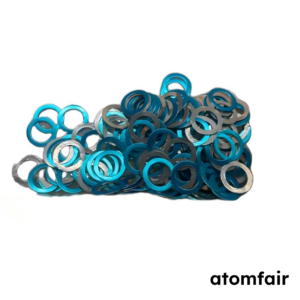
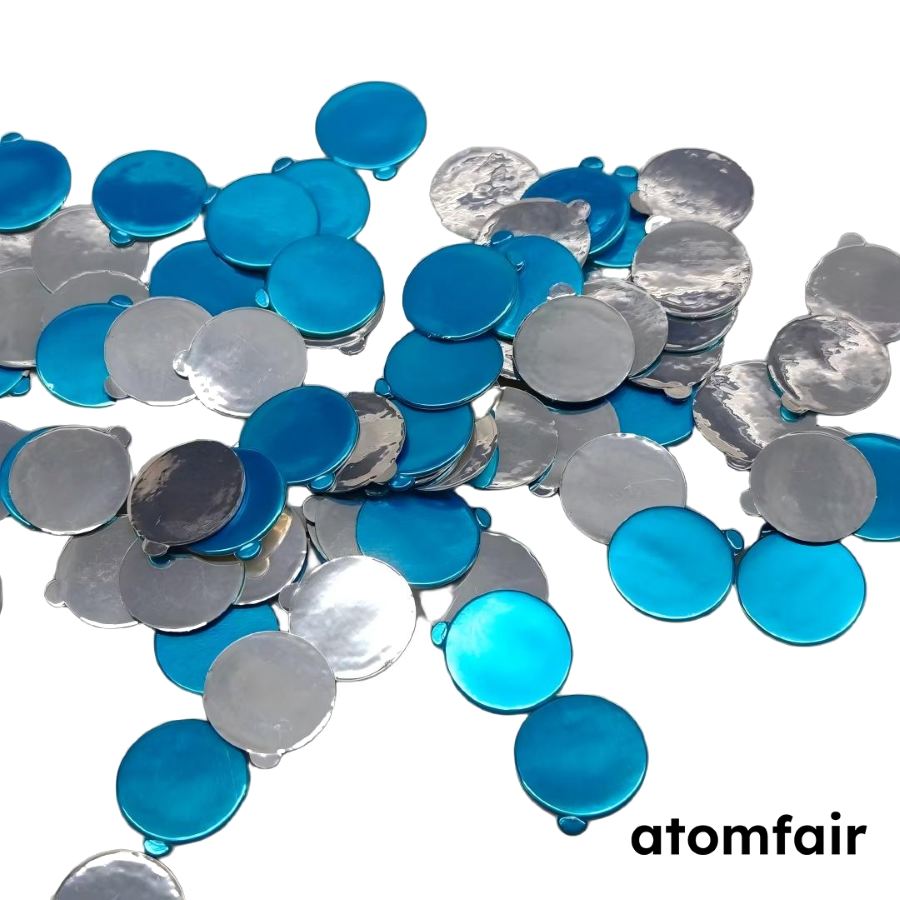
ATOMFAIR® SODIUM METAL DISC (Φ14MM × 0.45MM)RESEARCH GRADE MATERIAL
|
|||||||||||||||||||||||||||||||||||||
|
|||||||||||||||||||||||||||||||||||||
|
TAILORED SOLUTIONS FOR RESEARCH
Contact our engineering team for technical support or official institutional quotations.
EMAIL: inquiry@atomfair.com
|
|||||||||||||||||||||||||||||||||||||
|
Manufacturer: Atomfair LLC
Brand: ATOMFAIR®
|
|||||||||||||||||||||||||||||||||||||
This document outlines environmental and safety constraints for the Atomfair high-purity sodium metal disc. The material is highly reactive with moisture and oxygen and requires inert atmosphere storage and handling to prevent degradation and fire risk.
- Storage Atmosphere: Store the sodium metal disc exclusively under argon or inert gas to prevent oxidation and moisture absorption.
- Mechanical Support for Thin Discs: Discs with thickness at or below 0.2 mm must be mounted on a current collector (aluminum or copper foil) to eliminate localized plastic deformation during handling.
- Moisture Sensitivity: Avoid any exposure to water or humid air because sodium reacts vigorously, generating hydrogen gas and heat.
- Tool and Procedure Requirements: Use non-sparking tools and follow antistatic procedures to minimize ignition risk from static discharge.
- Quality Verification: Discard any disc showing surface discoloration, tarnish, or deformation as these indicate purity degradation and compromised electrochemical performance.
This procedure describes safe handling and assembly of the sodium metal disc into a coin cell for half-cell testing. Follow these steps to ensure material integrity and operator safety.
Required Equipment: Argon-filled glovebox (O2 and H2O < 0.1 ppm), Stainless steel spatula, Coin cell crimping tool, Glass petri dish
- Transfer to glovebox
Transfer the sodium metal disc from its sealed packaging to an argon-filled glovebox with <0.1 ppm oxygen and moisture. - Inspect disc quality
Inspect the disc for any surface discoloration, tarnishing, or mechanical deformation before use. - Position on spacer or current collector
Place the disc onto the stainless steel spacer or current collector using a clean stainless steel spatula. - Crimp coin cell assembly
Crimp the coin cell assembly immediately after disc placement to minimize exposure to glovebox atmosphere and maintain purity.
How does the aluminum current collector substrate affect the electrochemical performance of the sodium metal disc compared to the unsupported configuration?
The aluminum foil substrate guarantees perfect mechanical flatness and prevents localized plastic deformation during handling, which ensures consistent contact with the electrolyte and current collector. This structural support enhances transfer kinetics and half-cell stability, as stated in the product overview, while the unsupported version may introduce cell-to-cell variability due to deformation risks, especially at thicknesses ≤0.2 mm.
Are the Atomfair φ14×0.45 mm sodium metal discs compatible with standard CR2032 coin cell hardware for half-cell testing?
Yes, the φ14 mm diameter is a standard form factor widely used in coin cell assemblies (e.g., CR2032 cases) for sodium-ion battery research. The 0.45 mm thickness is suitable for the spacer/spring stack in typical half-cell configurations, and the aluminum, copper, or free-standing options allow integration with different current collector requirements without modifying the cell hardware.
What are the required storage and handling conditions to prevent oxidation of the high-purity sodium metal discs before use?
The discs are packaged in a primary hermetic vial under a protective film layer, then sealed inside a high-barrier aluminum foil pouch to minimize air and moisture exposure. For extended storage, they should be kept in an inert atmosphere (e.g., argon glovebox) with oxygen and water levels below 0.1 ppm, and opened only immediately before cell assembly to maintain surface purity and avoid passivation.
The Atomfair 14×0.45mm sodium metal disc provides a research-grade platform for consistent half-cell testing in sodium-ion battery development, with homogeneous purity to suppress parasitic reactions and optional current collector support to mitigate handling-induced deformation.
Positive
- Homogeneous Material Purity: The uncompromised structural configuration with uniform elemental distribution across the alkali matrix prevents parasitic electronic leakage, ensuring reliable baseline electrochemical performance.
- Aluminum Substrate Mechanical Flatness: The standard aluminum foil substrate backing guarantees perfect mechanical flatness, eliminating long-tail handling and tearing issues associated with delicate sodium films.
Trade-offs
- Soft Metal Handling Sensitivity: Sodium metal is inherently soft and prone to plastic deformation; even with collector support, careful manipulation is required to preserve disc integrity during cell assembly.
- Hermetic Storage Requirement: The discs are packaged in a hermetic vial with high-barrier foil to exclude air and moisture; once opened, unused pieces must be transferred immediately to an inert atmosphere to prevent oxidation and contamination.
Every advanced material, component, equipment, and instrument in our catalog is backed by rigorous testing. We maintain strict internal quality management frameworks and align with CE conformity metrics to deliver transparent, reproducible performance data via our public open-science repository.
To request raw batch performance data, submit formal vendor registration paperwork, or execute a fast-turnaround R&D manufacturing loop, contact us at inquiry@atomfair.com.
Item is dispatched under the Atomfair Shipping & Delivery Framework (Free worldwide shipping on orders over $59 USD). Return is governed by the Atomfair Return & Refund Policy (7-day technical return window for completely unopened items).