Description
NVP Cathode Sheet (Sodium Vanadium Phosphate) | Dry Process, 30 mg/cm² High Loading | Single Side CoatingRESEARCH GRADE MATERIAL
|
|||||||||||||||||||||||||||||||||||||||||||
|
|||||||||||||||||||||||||||||||||||||||||||
|
TAILORED SOLUTIONS FOR RESEARCH
If you’re interested, have any questions, or have specific customization requirements, please feel free to contact us.
EMAIL: inquiry@atomfair.com
|
|||||||||||||||||||||||||||||||||||||||||||
|
Manufacturer: Atomfair LLC
Brand: ATOMFAIR®
|
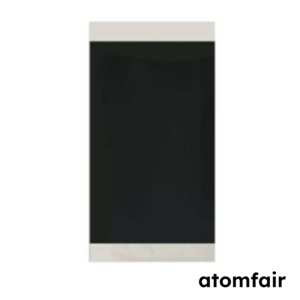
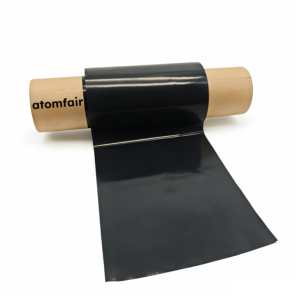
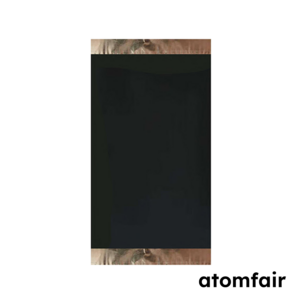
This NVP cathode sheet is designed for sodium-ion battery research with a dry-process coating at 30 mg/cm² areal density. The single-side coating on carbon-coated aluminum foil provides an active material ratio of 94.5%.
- Coating material: The coating material is NVP (Sodium Vanadium Phosphate).
- Active material ratio: The active material ratio is 94.5%.
- Coating density: The coating density is 30 mg/cm².
- Substrate material: The substrate is carbon-coated aluminum foil.
- Substrate thickness: The substrate thickness is 12 μm nominal.
How does the 30 mg/cm² areal loading of the NVP-S06 cathode affect rate capability compared to lower loading electrodes?
The 30 mg/cm² high loading increases areal capacity but may reduce rate capability due to thicker electrode architecture and longer sodium-ion diffusion paths. The dry process with 94.5% active material ratio and carbon-coated aluminum foil substrate mitigates contact resistance, while the nominal capacity of 110 mAh/g provides a baseline for comparing rate performance trade-offs in high-loading NVP cathodes.
What are the dimensional constraints for integrating the NVP-S06 cathode sheet into standard coin cell or pouch cell assemblies?
The coating area of 120×90 mm and substrate size of 90×140 mm with single-sided coating are designed for larger pouch or prismatic cells, not directly compatible with standard 2032 coin cells (typical wafer diameter 15–18 mm). Researchers must punch electrodes from the sheet, accounting for the 12 μm total substrate thickness (12+0.5+0.5 μm carbon-coated aluminum layers), which affects stacking pressure and electrolyte wetting in confined geometries.
What storage and handling conditions are recommended for the NVP-S06 dry-process cathode sheets to prevent degradation or moisture uptake?
Despite the solvent-free dry process enhancing environmental stability, NVP is hygroscopic and must be stored in an argon-filled glovebox with <0.1 ppm H2O and O2. The sheets are supplied as a pack of 5 in sealed packaging; immediate transfer to inert atmosphere is required to preserve the 94.5% active material integrity and avoid capacity loss typical of moisture-exposed sodium-ion cathodes.
This NVP cathode sheet offers a high areal loading of 30 mg/cm² and 94.5% active material ratio via a solvent-free dry process, but requires users to manage single-sided cell design and determine compaction density empirically.
Positive
- High Active Material Ratio (94.5%): The electrode sheet achieves a 94.5% active material ratio, maximizing energy density within the cell for high-capacity sodium-ion battery research.
- Solvent-Free Dry Process Manufacturing: The proprietary dry process eliminates solvent use, ensuring superior binder distribution and enhanced environmental stability compared to conventional wet-slurry methods.
Trade-offs
- Single-Sided Coating Design: The electrode is single-side coated, requiring careful pairing with a compatible anode and limiting flexibility in cell assembly configurations.
- Unspecified Compaction Density: Compaction density is not provided, obligating researchers to empirically determine optimal compression parameters for their specific electrochemical testing.
Every advanced material, component, equipment, and instrument in our catalog is backed by rigorous testing. We maintain strict internal quality management frameworks and align with CE conformity metrics to deliver transparent, reproducible performance data via our public open-science repository.
To request raw batch performance data, submit formal vendor registration paperwork, or execute a fast-turnaround R&D manufacturing loop, contact us at inquiry@atomfair.com.
Item is dispatched under the Atomfair Shipping & Delivery Framework (Free worldwide shipping on orders over $59 USD). Return is governed by the Atomfair Return & Refund Policy (7-day technical return window for completely unopened items).