Description
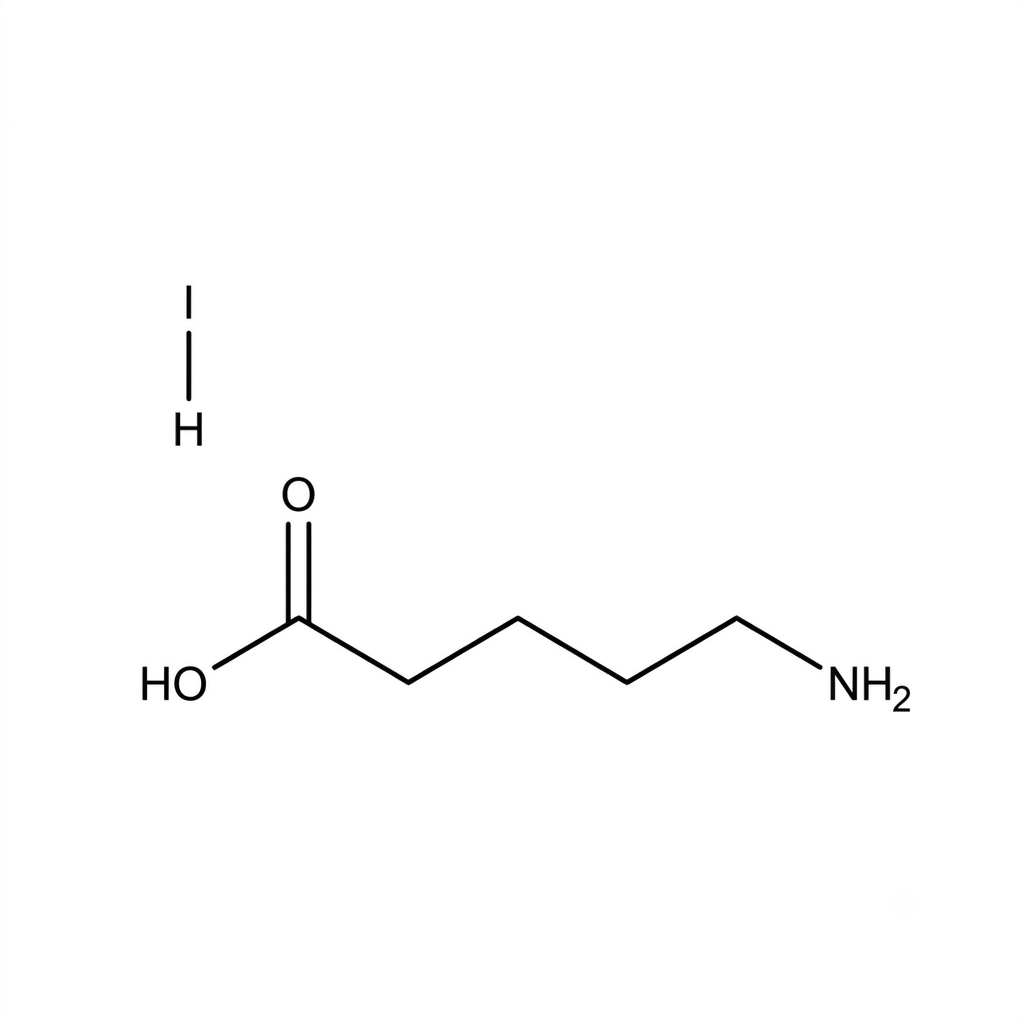
5-AMMONIUMVALERIC ACID IODIDE C₅H₁₂INO₂ 99% 5-AVAI CAS 1705581-28-7RESEARCH GRADE MATERIAL
|
|||||||||||||||||||||||||||||||||
|
|||||||||||||||||||||||||||||||||
|
TAILORED SOLUTIONS FOR RESEARCH
Contact our engineering team for technical support or official quotations.
EMAIL: inquiry@atomfair.com
|
|||||||||||||||||||||||||||||||||
|
Manufacturer: Atomfair LLC
Brand: ATOMFAIR®
|
5-Ammoniumvaleric acid iodide is hygroscopic and light-sensitive, requiring immediate transfer to a desiccated, light-protected environment after opening. Long-term storage under inert atmosphere (N₂ glovebox with H₂O < 1 ppm, O₂ < 1 ppm) is recommended to prevent deliquescence and hydrolysis.
- Moisture Sensitivity: Exposure to atmospheric moisture causes deliquescence and hydrolysis, irreversibly degrading precursor stoichiometry and compromising carboxyl group reactivity.
- Light Sensitivity: The compound must be stored in light-protective packaging to prevent photodegradation.
- Incompatible Materials: Do not store together with strong oxidizing agents or strong acids.
This procedure describes the safe handling and storage of 5-ammoniumvaleric acid iodide to maintain material integrity. All steps must be performed under inert atmosphere conditions to prevent moisture and light exposure.
Required Equipment: Nitrogen-filled glovebox (H₂O < 1 ppm, O₂ < 1 ppm), Light-protective storage container, Protective gloves
- Transfer to Glovebox
Transfer the sealed package immediately into a nitrogen-filled glovebox with H₂O < 1 ppm and O₂ < 1 ppm before opening. - Open Package
Open the light-protective packaging inside the glovebox under low-light conditions to minimize photodegradation risk. - Weigh Powder
Weigh the required amount of white solid powder inside the glovebox using a clean, dry spatula and container. - Seal Container
Tighten the container cap immediately after each use to prevent moisture ingress from ambient air. - Store Long-Term
Store the sealed container in a light-protected, desiccated environment within the glovebox for long-term storage.
How does the dual-functional ammonium and carboxyl architecture of 5-AVAI compare to single-functional passivation agents in terms of performance trade-offs?
The dual-functional architecture enables complementary passivation of both lead dangling bonds via carboxyl coordination and iodine vacancies via ammonium interaction, providing comprehensive defect management in a single molecule. This avoids the trade-off of using separate passivation agents that may compete or require complex optimization. The source emphasizes that this synergy improves carrier lifetime and device stability, but the exact performance improvement relative to single-functional agents depends on the specific perovskite system.
Can 5-AVAI be used in perovskite precursors with solvents other than DMF and DMSO?
The source states that 5-AVAI is freely soluble in DMF, DMSO, and polar organic solvents. While DMF and DMSO are explicitly listed, solubility in other polar solvents such as NMP or GBL may be possible but is not confirmed in the source. For compatibility with non-polar solvents, the compound is unlikely to dissolve. Researchers should test solubility in their specific solvent system before use.
What storage infrastructure is required to prevent degradation of 5-AVAI?
The source specifies strict storage conditions: light-protected, dry, sealed, at room temperature, with long-term storage in a nitrogen glovebox recommended (H₂O < 1 ppm, O₂ < 1 ppm). The compound is hygroscopic and light-sensitive; exposure to atmospheric moisture causes deliquescence and hydrolysis, irreversibly degrading stoichiometry and reactivity. Immediate transfer to a desiccated, light-protected environment after opening is mandatory.
5-AVAI provides dual-functional defect passivation via carboxyl-lead coordination and ammonium-iodine vacancy compensation, but requires strict inert-atmosphere storage to prevent moisture-induced deliquescence and loss of reactivity.
Positive
- Carboxyl-lead coordination passivation: The carboxyl group selectively coordinates with under-coordinated lead sites at perovskite surfaces and grain boundaries, directly passivating lead dangling bonds that are among the most detrimental non-radiative recombination centers.
- Dual-functional ammonium and carboxyl synergy: Simultaneous ammonium and carboxyl groups enable complementary passivation of both cationic (lead) and anionic (iodine vacancy) defects, delivering comprehensive defect management through a single precursor molecule.
Trade-offs
- Hygroscopic and light-sensitive storage: The compound is hygroscopic and light-sensitive; exposure to atmospheric moisture causes deliquescence and hydrolysis, irreversibly degrading precursor stoichiometry and carboxyl group reactivity.
- Requires inert-atmosphere glovebox handling: Long-term storage and powder weighing require a nitrogen-filled glovebox (H₂O < 1 ppm, O₂ < 1 ppm) to maintain material integrity; immediate transfer to desiccated, light-protected environment is necessary after each use.
Every advanced material, component, equipment, and instrument in our catalog is backed by rigorous testing. We maintain strict internal quality management frameworks and align with CE conformity metrics to deliver transparent, reproducible performance data via our public open-science repository.
To request raw batch performance data, submit formal vendor registration paperwork, or execute a fast-turnaround R&D manufacturing loop, contact us at inquiry@atomfair.com.
Item is dispatched under the Atomfair Shipping & Delivery Framework (Free worldwide shipping on orders over $59 USD). Return is governed by the Atomfair Return & Refund Policy (7-day technical return window).