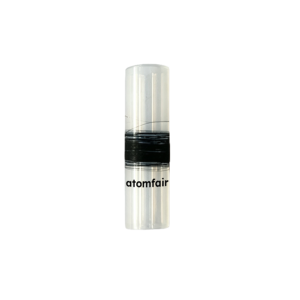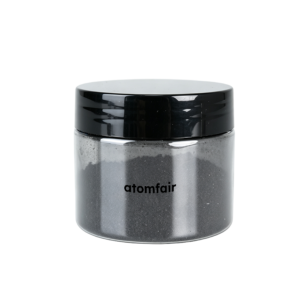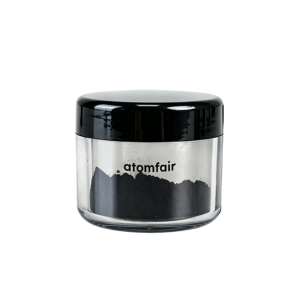
Amino modified MWCNT, OD 8-15 nm,, length 50um, purity >95%Product Type: Multi-walled carbon nanotube material
Research-grade laboratory product
|
|||||||||||||||||||||
|
|||||||||||||||||||||
|
LABORATORY PROCUREMENT SUPPORT
For model selection, material specification matching, application fit or quotation confirmation, contact our technical sales team.
E-MAIL: inquiry@atomfair.com
|
|||||||||||||||||||||
|
Supplier: Atomfair
Brand: ATOMFAIR®
|
Manufacturer: Atomfair LLC
Brand: ATOMFAIR®
This amino-functionalized multi-walled carbon nanotube powder requires controlled dispersion and composite processing to prevent agglomeration and maintain functional group integrity. Environmental sensitivity to moisture and oxidative degradation necessitates storage under inert atmosphere and desiccated conditions.
- Dispersion compatibility: Amino groups may react with acidic or electrophilic matrix components, requiring solvent and polymer compatibility verification before incorporation.
- Agglomeration risk: High aspect ratio and van der Waals interactions promote bundle formation, necessitating ultrasonication or high-shear mixing for uniform dispersion.
- Oxidative stability: Prolonged exposure to ambient oxygen and humidity can degrade surface amino functionality, reducing reactivity in composite or electrode applications.
- Handling precautions: Nanoparticulate dust may cause respiratory irritation; use local exhaust ventilation and personal protective equipment during powder transfer.
This procedure describes the controlled dispersion of amino-functionalized multi-walled carbon nanotubes in a compatible solvent for composite or electrode fabrication. Proper sonication and handling steps ensure uniform suspension without damaging the nanotube structure or functional groups.
Required Equipment: Ultrasonic bath or probe sonicator, Analytical balance, Glass vial or beaker, Inert gas supply (argon or nitrogen)
- Weigh the nanotube powder
Weigh the required amount of amino-modified MWCNT powder using an analytical balance in a low-humidity environment. - Transfer to vessel
Transfer the powder to a clean glass vial or beaker and purge the headspace with inert gas to minimize moisture adsorption. - Add compatible solvent
Add the pre-selected compatible solvent (e.g., dimethylformamide or N-methyl-2-pyrrolidone) to achieve the target concentration. - Sonicate the mixture
Sonicate the mixture in an ultrasonic bath for 30–60 minutes or using a probe sonicator at low amplitude to break agglomerates without damaging the nanotubes. - Verify dispersion quality
Verify dispersion quality by visual inspection for uniform opacity and absence of visible aggregates before use.
What purity level is specified for the amino-modified MWCNT and why is it important for electrode applications?
The purity is >95%. The source notes that the product is suitable for electrode workflows, and high purity minimizes contamination that could affect electrochemical performance.
Which functionalized MWCNT grades are available for matching to specific dispersion or composite workflows?
The source states that pristine, hydroxylated, carboxylated, amino-modified, graphitized, doped, and coated grades can be matched to dispersion, electrode, composite, or conductivity workflows. This amino-modified MWCNT is one of these options.
What procurement details are required to confirm the exact specification of this amino-modified MWCNT before ordering?
The source specifies that the quotation request must include nanotube wall type, functionalization, diameter/length range, package size, and quantity. The product page also notes that bulk quantity requirements should be confirmed.
Amino-modified multi-walled carbon nanotubes (OD 8-15 nm, length 50 μm, purity >95%) provide a functionalized nanomaterial for dispersion, composite, electrode, and conductivity workflows, with the amine group enabling covalent or non-covalent binding in polymer or biological matrices.
Positive
- Amino functionalization for targeted binding: The amine group on the MWCNT surface enables covalent coupling or electrostatic interactions with polymers, biomolecules, or other functional materials, expanding compatibility in composite and sensor applications.
- High purity >95% for consistent results: Purity exceeding 95% minimizes amorphous carbon and metal catalyst residues, reducing batch-to-batch variability in electrochemical or mechanical performance studies.
Trade-offs
- Bulk quantity confirmation required: Procurement notes indicate that bulk quantity requirements must be confirmed before quotation, implying potential lead time or minimum order constraints for large-scale experiments.
- Specification matching needed for workflow fit: The product requires careful matching of outer diameter (8-15 nm), length (50 μm), and functionalization to the intended dispersion or composite protocol, as dimensional variation affects processing behavior and final material properties.
Every advanced material, component, equipment, and instrument in our catalog is backed by rigorous testing. We maintain strict internal quality management frameworks and align with CE conformity metrics to deliver transparent, reproducible performance data via our public open-science repository.
To request raw batch performance data, submit formal vendor registration paperwork, or execute a fast-turnaround R&D manufacturing loop, contact us at inquiry@atomfair.com.
Item is dispatched under the Atomfair Shipping & Delivery Framework (Free worldwide shipping on orders over $59 USD excl. heavy equipment). Return is governed by the Atomfair Return & Refund Policy (7-day technical return window).