Description
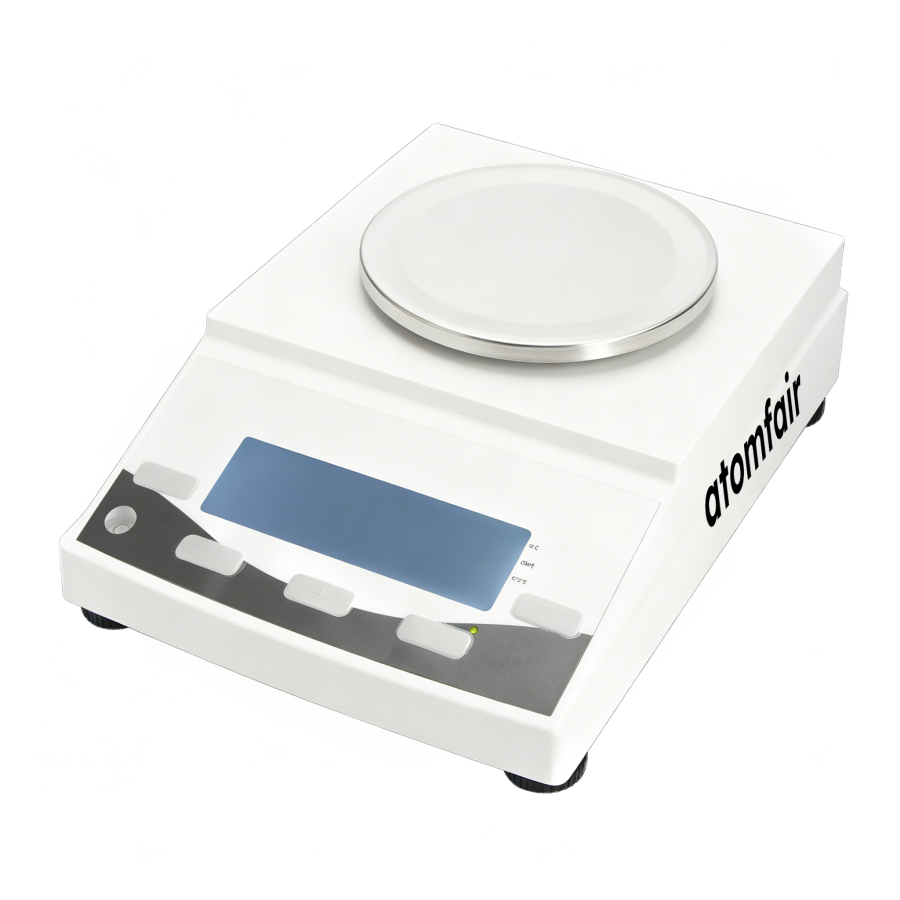
ATOMFAIR® EB300G-0.01G-01 PRECISION ELECTRONIC BALANCELABORATORY GRADE METROLOGY INTERFACE
|
|||||||||||||||||||||||||||||||||||||||||||||||||||||||||||||||||||||||||||||||||
|
|||||||||||||||||||||||||||||||||||||||||||||||||||||||||||||||||||||||||||||||||
|
TAILORED SOLUTIONS FOR RESEARCH
Contact our engineering team for technical support or official institutional quotations.
EMAIL: inquiry@atomfair.com
|
|||||||||||||||||||||||||||||||||||||||||||||||||||||||||||||||||||||||||||||||||
|
Manufacturer: Atomfair LLC
Brand: ATOMFAIR®
|
|||||||||||||||||||||||||||||||||||||||||||||||||||||||||||||||||||||||||||||||||
This balance requires a stable environment free of excessive vibration and temperature fluctuations to maintain specified accuracy. Measurement data integrity depends on verifying instrument stabilization and zero-tracking before each weighing operation.
- Environmental Stability Requirement: Avoid operating the balance in high-vibration or extreme ambient temperature zones to prevent long-term degradation of structural resistance and measurement accuracy.
- Stabilization Protocol: Always verify stabilization metrics and zero-tracking indicators before capturing definitive measurement thresholds.
- Overload Protection: Sudden mechanical overloads or underload scenarios can damage the transducer, though integrated hardware safeguards mitigate such risks.
How does the ±0.02 g linearity error of the EB300G-0.01G-01 affect measurement accuracy for differential weighing in battery electrolyte mass loss studies?
The ±0.02 g linearity error introduces a potential systematic offset across the full 300 g capacity range, which can impact differential measurements where small mass changes (e.g., <0.1 g) are critical. For battery electrolyte loss studies, this means that while repeatability at ±0.01 g supports consistent readings, the linearity specification limits absolute accuracy to within 0.02 g of the true value, requiring careful baseline correction for high-precision gravimetric analysis.
Can the EB300G-0.01G-01 be integrated with a laboratory information management system (LIMS) via its RS232 port for automated data logging in semiconductor material characterization?
Yes, the standard integrated RS232 serial port enables direct data output to external devices, including LIMS or PC-based data acquisition systems, for automated logging of weight measurements. This supports traceable documentation in semiconductor material characterization workflows, though the balance does not include built-in Ethernet or USB connectivity, so an RS232-to-USB adapter may be required for modern interfaces.
What are the specific environmental and handling precautions required to maintain calibration integrity of the EB300G-0.01G-01 in a hydrogen research laboratory?
To prevent long-term degradation of structural resistance, avoid operating in high-vibration or extreme ambient temperature zones. Always verify stabilization metrics before capturing definitive measurement thresholds. The dual-source AC/DC power supply allows flexible placement, but the balance should be used on a stable, level surface away from drafts and corrosive atmospheres common in hydrogen labs to protect the internal calibration matrix and sensor array.
The EB300G-0.01G-01 offers 300 g capacity with 0.01 g readability and ±0.01 g repeatability, providing a reliable baseline for analytical weighing. Its RS232 interface enables data integration, but operation requires stable environmental conditions and mandatory stabilization verification to ensure measurement integrity.
Positive
- High Repeatability for Consistency: With repeatability of ±0.01 g, this balance ensures cell-to-cell reproducibility essential for baseline data control and quality validation workflows.
- Standard RS232 Data Connectivity: Integrated RS232 serial port allows direct data output to external systems, facilitating seamless integration into laboratory informatics infrastructure.
Trade-offs
- Environmental Sensitivity: Operational notice warns that high-vibration or extreme ambient temperature zones can cause long-term structural resistance degradation, requiring controlled laboratory placement.
- Mandatory Stabilization Verification: Users must always verify stabilization metrics before capturing measurements, adding procedural steps that may slow high-throughput workflows.
Every advanced material, component, equipment, and instrument in our catalog is backed by rigorous testing. We maintain strict internal quality management frameworks and align with CE conformity metrics to deliver transparent, reproducible performance data via our public open-science repository.
To request raw batch performance data, submit formal vendor registration paperwork, or execute a fast-turnaround R&D manufacturing loop, contact us at inquiry@atomfair.com.
Item is dispatched under the Atomfair Shipping & Delivery Framework (Free worldwide shipping on orders over $59 USD). Return is governed by the Atomfair Return & Refund Policy (7-day technical return window).