Description
ATOMFAIR NI90 SILICON CARBON 5AH DRY POUCH CELLRESEARCH GRADE MATERIAL
|
||||||||||||||||||||||||||||||||||||||||||||||||||||||
|
||||||||||||||||||||||||||||||||||||||||||||||||||||||
|
|||||
|
TAILORED SOLUTIONS FOR RESEARCH
Contact our engineering team for technical support or official institutional quotations.
EMAIL: inquiry@atomfair.com
|
|||||
| Manufacturer: Atomfair LLC Brand: ATOMFAIR |
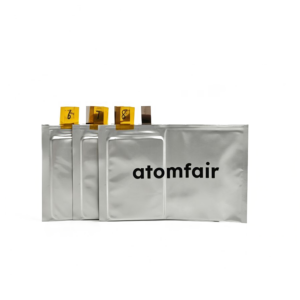
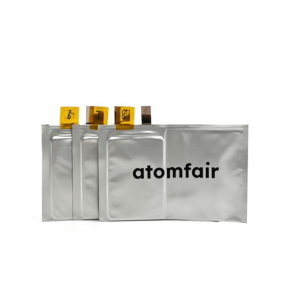
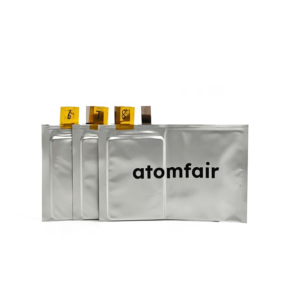
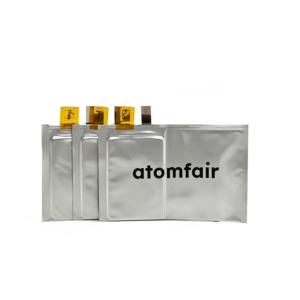
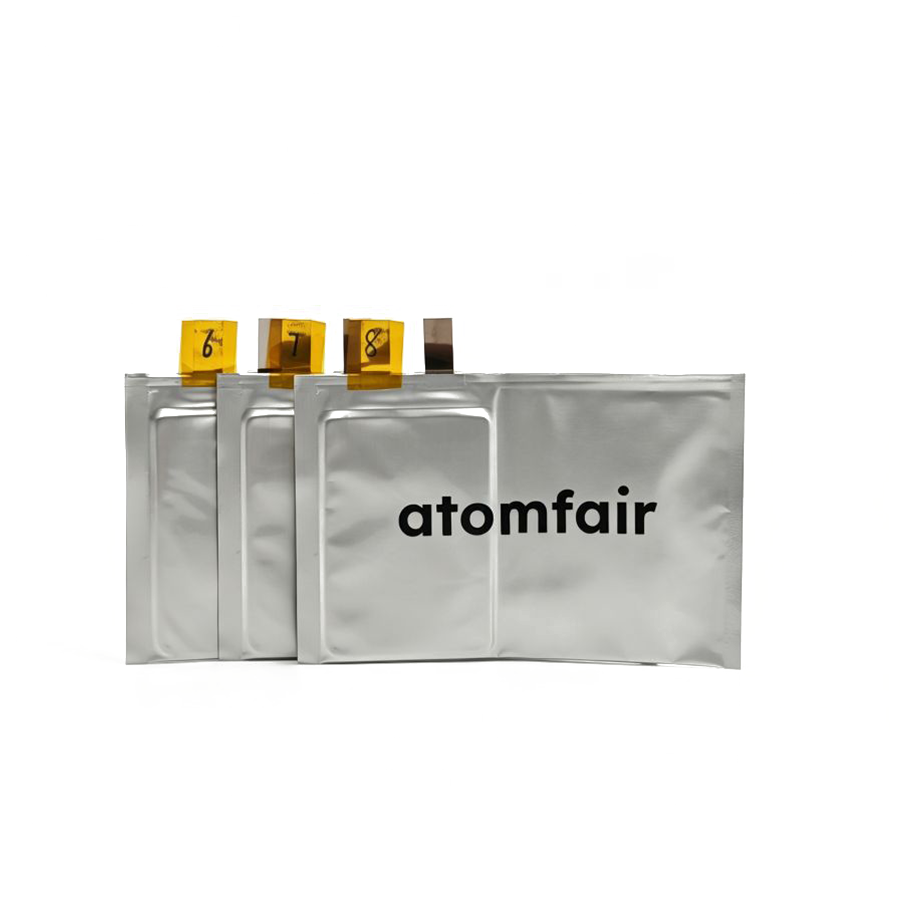
This dry pouch cell combines a high-nickel Ni0.9Mn0.03Co0.07 cathode with a dense silicon-carbon composite anode for solid-state electrolyte evaluation. The unfilled architecture enables researchers to introduce custom electrolyte compositions while preserving baseline interfacial kinetics.
- Cell Architecture: The cell is configured as a dry pouch cell without pre-filled electrolyte.
- Nominal Capacity: The cell offers a nominal capacity of 5 Ah.
- Voltage Range: Operating voltage ranges from 2.3 V to 4.2 V.
- NP Ratio: The negative-to-positive capacity ratio is 1.09.
- Cathode Composition: The cathode consists of 97.2% active Ni0.9Mn0.03Co0.07 material with a specific capacity of 205 mAh/g.
How does the specific capacity mismatch between the Ni90 cathode (205 mAh/g) and the SiC anode (1600 mAh/g) affect the cell design?
The cell uses an NP ratio of 1.09 to ensure the anode’s total capacity slightly exceeds the cathode’s, preventing lithium plating during charging. This ratio is achieved by balancing the coating areal densities: 30 mg/cm² for the cathode and 4.5 mg/cm² for the anode, despite the sevenfold difference in specific capacity.
Can the ATOMFAIR Ni90 SiC dry pouch cell be tested directly on a cycler without injecting electrolyte?
No, this is an electrolyte-free platform and must be filled with a liquid or solid-state electrolyte before any electrochemical testing. The 12 µm PE separator with 2 µm ceramic coating is compatible with both liquid and solid electrolyte integration, but the dry core itself cannot conduct ions without an added electrolyte phase.
What are the required storage conditions for the dry pouch cell before electrolyte filling?
The cell must be stored in a dry, inert atmosphere—typically an argon-filled glovebox—to prevent moisture adsorption by the highly active electrodes (97.2% cathode and 90.3% anode active material). The dry cell has no internal short circuit risk, but ambient exposure can degrade the SiC anode and Ni90 cathode before use.
The ATOMFAIR Ni90 Silicon Carbon 5Ah Dry Pouch Cell is an electrolyte-free platform enabling customized solid-state electrolyte evaluation with a high-capacity SiC anode and high-nickel cathode stack. Its dry configuration demands careful electrolyte filling and sealing, but provides baseline control for interfacial kinetic studies.
Positive
- Ultra-high specific capacity SiC anode: The SiC anode delivers 1600 mAh/g specific capacity, enabling high energy density cell designs for advanced testing.
- Dry pouch design enables tailored electrolyte studies: As an electrolyte-free platform, it allows laboratories to screen custom liquid or solid electrolyte formulations while isolating interfacial kinetic behavior.
Trade-offs
- Requires electrolyte filling and vacuum sealing: The pouch cell is supplied unfilled, necessitating electrolyte injection and vacuum sealing in a controlled environment before electrochemical testing.
Every advanced material, component, equipment, and instrument in our catalog is backed by rigorous testing. We maintain strict internal quality management frameworks and align with CE conformity metrics to deliver transparent, reproducible performance data via our public open-science repository.
To request raw batch performance data, submit formal vendor registration paperwork, or execute a fast-turnaround R&D manufacturing loop, contact us at inquiry@atomfair.com.
Item is dispatched under the Atomfair Shipping & Delivery Framework (Free worldwide shipping on orders over $59 USD). Return is governed by the Atomfair Return & Refund Policy (7-day technical return window for completely unopened items).