High Voltage Nb-Coated LCO Cathode Material Powder

Price range: $285.00 through $368.00

Institutional Procurement & Supply Compliance: As a verified US supplier, Atomfair accepts formal institutional Purchase Orders (POs), contract billing schedules, and custom procurement loops for university and national laboratories, and corporate R&D departments globally.

Buy niobium-coated lithium cobalt oxide price deals for cathode material for lithium-ion battery R&D. RoHS compliant standard. Contact inquiry@atomfair.com.

Description

ATOMFAIR® NIOBIUM-COATED LITHIUM COBALT OXIDE CATHODE POWDER

RESEARCH GRADE MATERIAL

Product Overview

Engineered for advanced energy storage exploration, this premium niobium-coated lithium cobalt oxide powder serves as a high-fidelity benchmarking matrix for state-of-the-art electrochemical cells. By consolidating strict cell-to-cell consistency and establishing precise baseline testing control, this formula successfully drives variable elimination during critical electrolyte validation platform processing. Secure optimal institutional niobium-coated lithium cobalt oxide price points for scaled research and high-performance development architectures.

Technical Specifications

PARAMETER DETAILS
1. Core Device & Electrochemical Design
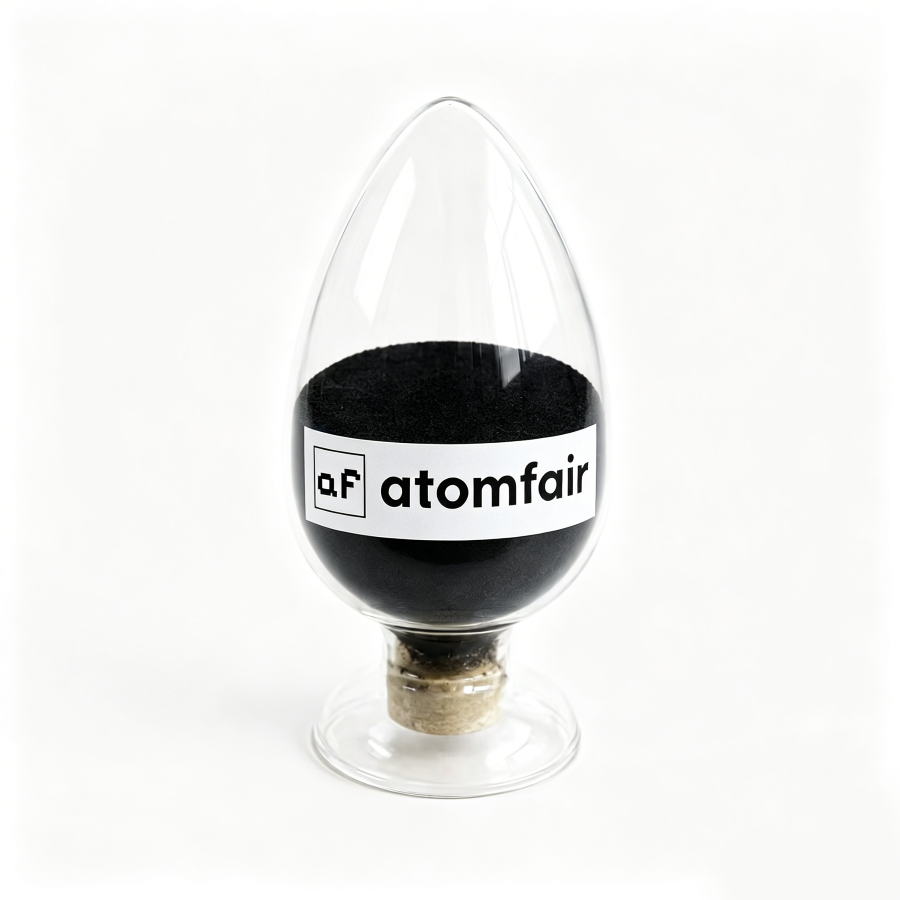
Product Appearance Gray-black powder
Specific Surface Area (BET) 0.261 m²/g
Tap Density 2.569 g/cm³
Water Content (Moisture) 0.02%
pH Value 10.39
Magnetic Impurities (Fe+Ni+Cr+Zn) 49.55 ppb
2. Cathode (Positive Electrode) Parameters
First Discharge Efficiency (0.1C) 97.88% (CR2032 Coin Cell vs. Li, 3.0V–4.3V)
1C Discharge Specific Capacity 155.60 mAh/g (CR2032 Coin Cell vs. Li, 3.0V–4.3V)
Phase Purity Verification Matches standard lithium cobalt oxide phase diagram matrix crystals
3. Anode (Negative Electrode) Parameters
Testing Counter Electrode Configuration Lithium Metal Target Half-Cell Foils
4. Separator & Physical Package Metrics
Particle Size Distribution D10 5.922 μm
Particle Size Distribution D50 11.761 μm
Particle Size Distribution D90 21.787 μm
Core Composition Matrix Co: 59.65% | Nb Coated Layer: 0.1388%
Trace Elemental Profile Fe: 0.0010% | Na: 0.0048% | Cu: 0.0003% | Ca: 0.0015% | Ni: 0.0004%
Manufacturing Rules Processed under strict RoHS compliant standard conditions
Alternative Options Explore our related catalog or custom dimensions. For urgent technical custom requests or bulk inquiries, please contact our support team.


Key Features & Advantages

  • Homogeneous Material Purity: Features an uncompromised structural configuration with highly uniform elemental distribution across the lithium matrix crystals.
  • Enhanced Operational Efficiency: Specifically engineered via Niobium surface treatment to demonstrate superior electrochemical performance, significantly boosting transfer kinetics and capacity preservation.
  • Optimized Sintering/Microstructure: Advanced synthesis allows for lower required operating temperatures and ideal grain boundary integration during testing cell fabrication.

APPLICATION SCOPE: High-voltage lithium-ion secondary battery prototyping, electrochemical validation, half-cell benchmarking, and advanced solid-state cathode interface research.
PACKAGING: Securely sealed in airtight structural containers holding 200g per batch unit to assure total environmental control.
IMPORTANT NOTICE: This product is highly sensitive to ambient exposure. Keep containers tightly sealed or handle exclusively within an anhydrous inert gas environment to prevent phase contamination or moisture degradation before thermal validation.

Frequently Asked Technical Questions

Why is Niobium-Coated Lithium Cobalt Oxide preferred as a cathode material for lithium-ion battery R&D?

Niobium-Coated Lithium Cobalt Oxide functions as a premier cathode material for lithium-ion battery R&D for advanced systems. It delivers surface lattice stabilization via niobium doping, significantly boosting performance metrics and phase purity during laboratory testing workflows.

How to prevent cathode material moisture degradation?

To successfully solve how to prevent cathode material moisture degradation without secondary contamination, this material must be handled strictly according to inert gas glovebox storage protocols before thermal processing.

How does Niobium-Coated Lithium Cobalt Oxide compare to traditional alternative options regarding operational stability?

Compared to standard alternatives, the optimized matrix of Niobium-Coated Lithium Cobalt Oxide incorporates specialized chemical doping. This unique architecture dramatically enhances structural resistance against degradation, preserving long-term validation integrity.

What material processing benefits does the microstructure of Niobium-Coated Lithium Cobalt Oxide offer?

Boasting engineered particle structuring and optimized specific surface area, this product offers superior sinterability. The controlled form factor facilitates lower thermal processing thresholds and promotes ideal grain boundary integration during cell fabrication.

How is the phase purity and quality control of this research-grade batch validated?

Every competitive batch undergoes rigid analytical quality validation testing. Total elemental and metallic impurities are strictly regulated below strict industry thresholds to eliminate parasitic electronic leakage and maintain uncompromised data reproducibility.
TAILORED SOLUTIONS FOR RESEARCH
Contact our engineering team for technical support or official institutional quotations.
EMAIL: inquiry@atomfair.com
Manufacturer: Atomfair LLC
Brand: ATOMFAIR®

High Voltage Nb-Coated LCO Cathode Material Powder | ATOMFAIR – Handling

This research-grade niobium-coated lithium cobalt oxide powder exhibits a measured water content of 0.02% and a pH of 10.39, indicating sensitivity to ambient moisture and alkalinity. Its tap density of 2.569 g/cm³ and specific surface area of 0.261 m²/g impose constraints on slurry formulation and electrode coating uniformity.

  • Moisture Sensitivity: The low water content (0.02%) necessitates storage in a dry, inert atmosphere to prevent moisture uptake and preserve electrochemical stability.
  • pH Compatibility: A pH value of 10.39 requires selection of chemically compatible binders and electrolyte solvents to avoid degradation during slurry preparation.
  • Magnetic Purity Requirement: With magnetic impurities below 50 ppb, handling should minimize exposure to ferrous contaminants to maintain baseline performance in coin cell testing.
  • Tap Density Constraint: The tap density of 2.569 g/cm³ directly affects achievable electrode loading and requires precise adjustment of solid content during coating.
  • Specific Surface Area Consideration: A BET surface area of 0.261 m²/g influences reaction kinetics and demands optimized electrode porosity for consistent rate capability.

What trade-off exists between first-cycle efficiency and 1C specific capacity for this Nb-coated LCO cathode when operated at a 4.3V cutoff vs. lithium metal?

This Nb-coated LCO powder achieves a first-cycle efficiency of 97.88% at 0.1C and a 1C discharge specific capacity of 155.60 mAh/g, both measured in a CR2032 coin cell versus lithium metal between 3.0V and 4.3V. The minimal irreversible capacity loss at the first cycle indicates effective Nb stabilization of the cathode-electrolyte interface, enabling high-voltage operation without a drastic sacrifice in deliverable capacity at higher rates.

What electrolyte formulation or compatibility constraints should be considered when integrating this high-voltage Nb-coated LCO powder into a research coin cell test?

The powder exhibits a pH of 10.39 and a water content of 0.02%, indicating slightly basic and very dry characteristics that may require electrolytes with high oxidative stability and minimal moisture content (e.g., LiPF6 in carbonate solvents dried to <20 ppm H2O). The material is designed for lithium metal half-cell testing, so electrolyte selection must also consider compatibility with both the cathode and the anode foil to avoid side reactions at 4.3V.

What storage and handling conditions are necessary to maintain the low moisture and impurity profile of this Nb-coated LCO cathode powder?

To preserve the powder’s water content below 0.02% and its total magnetic impurity level of 49.55 ppb, it must be stored in an argon-filled glovebox with <0.1 ppm H2O and O2 or in a sealed, vacuum-dried container with desiccant. The slightly alkaline pH of 10.39 suggests avoiding acidic atmospheres, and handling should be performed under inert gas to prevent adsorption of moisture and CO2, which could degrade the niobium coating.

This niobium-coated LCO cathode powder delivers 97.88% first discharge efficiency at 0.1C and extremely low moisture (0.02%) and magnetic impurities (49.55 ppb), making it a reliable benchmarking standard for electrolyte validation. However, its alkaline pH (10.39) requires controlled handling and slurry formulation, and electrochemical data is limited to 3.0–4.3V, restricting high-voltage performance assessment above 4.3V.

Positive

  • High first discharge efficiency: 97.88% efficiency at 0.1C (3.0–4.3V vs. Li) provides a consistent baseline for cell-to-cell comparability in electrolyte validation studies.
  • Low moisture and magnetic impurities: Water content (0.02%) and total magnetic impurities (49.55 ppb) minimize parasitic side reactions, preserving electrochemical data integrity in half-cell testing.

Trade-offs

  • Limited high-voltage validation: Electrochemical characterization covers only 3.0–4.3V; performance at higher potentials (e.g., >4.5V) is not provided, restricting direct assessment of high-voltage stability.
  • Alkaline surface pH (10.39): The measured pH of 10.39 indicates basic surface chemistry, which may require inert atmosphere handling and specialized binder selection to prevent slurry gelation or water uptake.
Additional information

weight

50g, 100g