Description
Atomfair Dry-process PP Battery Separator Roll (For 21700 Cylindrical Lithium-ion Batteries)
Product Overview
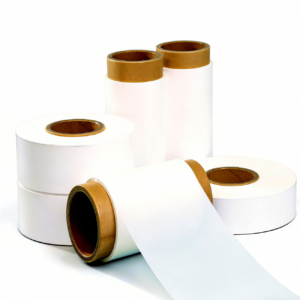
This high-performance dry-process polypropylene (PP) separator roll is exclusively engineered for 21700 cylindrical lithium-ion batteries, available only in roll form to meet the continuous production needs of battery manufacturers and R&D institutions. It serves as the core isolation component for 21700 battery cells, combining excellent mechanical strength, thermal stability, and uniform pore structure to ensure battery safety and cycle performance.
Core Specifications & Dimensions
| Parameter | Technical Value |
|---|---|
| Product Form | Roll (continuous length) |
| Roll Size | 1000m (length) * 65mm (width) |
| Thickness Options | 16um; 25um |
| Outer Packaging Size | 16in * 8in * 8in (L*W*H) |
Key Performance Parameters
| Parameter | Technical Value |
|---|---|
| Air Permeability | 350±100s/100ml |
| Porosity | 42±3% |
| Surface Density | 13.2±1.0g/m? |
| Puncture Strength | ≥450G |
| Tensile Strength | MD ≥1400kgf/cm?; TD ≥1300kgf/cm? |
| Thermal Shrinkage (90?, 2h drying) | MD ≤1.5%; TD ≤0.5% |
Core Functional Advantages
- Superior Mechanical Protection
High puncture strength and balanced MD/TD tensile strength resist damage from electrode burrs and assembly stress during battery winding and cell formation, reducing short-circuit risks in production. - Excellent Thermal Stability
Low thermal shrinkage rate at 90? maintains structural integrity even under mild overheating conditions, preventing direct contact between positive and negative electrodes and enhancing battery safety. - Uniform Ion Conduction Channel
The dry-process manufacturing ensures consistent pore size and distribution, enabling efficient lithium-ion transport between electrodes while blocking electron flow, which is critical for improving battery cycle life and rate performance.
Application Scenarios
This PP separator roll is tailored for 21700 cylindrical lithium-ion battery production and R&D, ideal for the following scenarios:
- Mass production lines of consumer electronics batteries (e.g., power tools, portable energy storage)
- Electric vehicle (EV) battery cell R&D and pilot-scale production
- New energy battery material performance testing and optimization experiments
- Custom battery manufacturing projects requiring high safety and long cycle life
Quality Compliance
- The polypropylene raw material complies with ISO 10993 chemical inertness standards, ensuring no adverse reactions with battery electrolytes.
- Mechanical performance testing is conducted in accordance with ASTM D882 (tensile strength) and ASTM D726 (puncture resistance) protocols.
- Thermal shrinkage testing meets IEC 61960 battery component safety testing requirements, aligning with international battery industry standards.
If you?re interested, have any questions, or have specific customization requirements, please feel free to contact us at inquiry@atomfair.com.