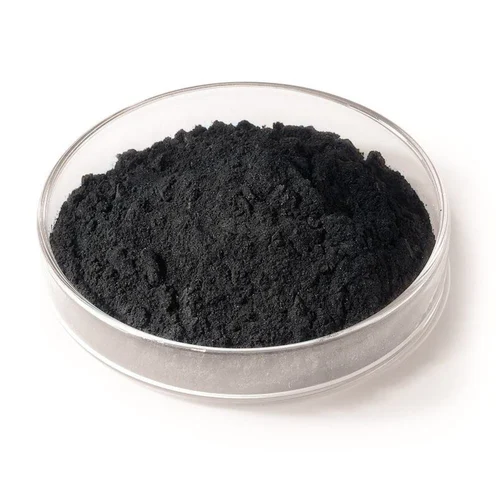
Description
Product Specification Sheet for Sodium Iron Phosphate Composite AFNFPP‑R1
1. Preface
This specification sheet specifies the technical requirements, test methods and related instructions for the appearance, physical properties, chemical composition and electrochemical properties of sodium iron phosphate composite (Model: AFNFPP‑R1). It is applicable to the production inspection, quality control and global trade acceptance of this product. All test standards adopt internationally accepted standards to ensure that the test results are globally comparable and authoritative.
This specification sheet is formulated in strict accordance with international standard specifications and combined with the application requirements of sodium iron phosphate composite in the energy storage and power battery fields. Matters not covered herein may be implemented with reference to relevant international standards and mutual agreements between both parties.
2. Appearance and Physical Properties
All test items in this chapter are carried out in accordance with the corresponding international standards to ensure the standardization of the test process and the accuracy of the results. The specific indicators are shown in the following table:
|
Item
|
Index
|
Test Standard
|
|
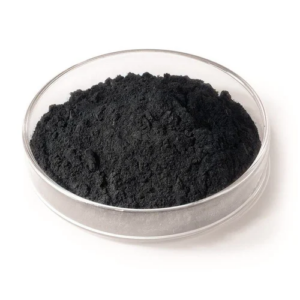
Appearance
|
Black powder, uniform color, no caking
|
Visual inspection (in line with ISO 8171-2019 General Specification for Visual Inspection)
|
|
D10 (μm)
|
≤1.5
|
ISO 13320:2020 (Particle size analysis — Laser diffraction method)
|
|
D50 (μm)
|
≤5.0
|
ISO 13320:2020 (Particle size analysis — Laser diffraction method)
|
|
D90 (μm)
|
≤10.0
|
ISO 13320:2020 (Particle size analysis — Laser diffraction method)
|
|
D99 (μm)
|
≤15.0
|
ISO 13320:2020 (Particle size analysis — Laser diffraction method)
|
|
Apparent Density (g/cm³)
|
0.60±0.15
|
ISO 3923-1:2019 (Metal powders — Determination of apparent density — Part 1: Funnel method)
|
|
Tapped Density (g/cm³)
|
1.10±0.15
|
ISO 3953:2011 (Metal powders — Determination of tapped density)
|
|
Compaction Density (g/cm³)
|
3.9
|
ASTM D698-24 (Standard Test Methods for Laboratory Compaction Characteristics of Soil Using Standard Effort (12 400 ft-lbf/ft³ (600 kN-m/m³)))
|
|
Specific Surface Area (m²/g)
|
≤12.0
|
ISO 9277:2022 (Determination of the specific surface area of solids by gas adsorption — BET method)
|
|
pH
|
≤11.0
|
ISO 787-9:2019 (Pigments and extenders — Determination of pH value of aqueous suspensions)
|
3. Chemical Composition
The indicators in this chapter strictly control the product purity. The test methods adopt internationally accepted standards and precision instruments to ensure the accuracy and authority of chemical composition detection. The details are shown in the following table:
|
Item
|
Index
|
Test Standard / Instrument
|
|
Carbon (C)
|
2.00±0.20 %
|
ISO 15350:2000 (Carbon materials — Determination of total carbon content)
|
|
Moisture
|
≤1000 ppm
|
ISO 17892-1:2014 (Geotechnical investigation and testing — Laboratory testing of soil — Part 1: Determination of water content)
|
|
Magnetic Substances
|
≤1.5 ppm
|
ISO 12195:2019 (Magnetic materials — General principles of testing)
|
|
Sodium (Na)
|
14.5±1.0 %
|
ISO 22036:2024 (Environmental solid matrices — Determination of elements by inductively coupled plasma optical emission spectrometry (ICP-OES)); Agilent ICP5800 OES
|
|
Iron (Fe)
|
25.0±2.0 %
|
ISO 22036:2024 (Environmental solid matrices — Determination of elements by inductively coupled plasma optical emission spectrometry (ICP-OES)); Agilent ICP5800 OES
|
|
Phosphorus (P)
|
19.0±1.5 %
|
ISO 22036:2024 (Environmental solid matrices — Determination of elements by inductively coupled plasma optical emission spectrometry (ICP-OES)); Agilent ICP5800 OES
|
4. Electrochemical Properties (CR2016 Button Half-Cell)
The electrochemical performance tests in this chapter are based on internationally accepted half-cell test specifications to ensure the global comparability of test conditions and test results. The specific indicators and test requirements are shown in the following table:
|
Item
|
Index
|
Test Conditions
|
|
0.2C Initial Charge Specific Capacity
|
≥108.0 mAh/g
|
Neware Battery Tester; The test follows international half-cell test specifications, in an inert atmosphere of a glove box (moisture and oxygen content ≤0.1ppm), with a pole piece ratio of 8:1:1 and uniform coating thickness.
|
|
0.2C Initial Discharge Specific Capacity
|
≥95.0 mAh/g
|
Neware Battery Tester; The test follows international half-cell test specifications, in an inert atmosphere of a glove box (moisture and oxygen content ≤0.1ppm), with a pole piece ratio of 8:1:1 and uniform coating thickness.
|
|
0.2C Initial Discharge Efficiency
|
≥87 %
|
Neware Battery Tester; The test follows international half-cell test specifications, in an inert atmosphere of a glove box (moisture and oxygen content ≤0.1ppm), with a pole piece ratio of 8:1:1 and uniform coating thickness.
|
5. Test Instructions
-
All test items shall be carried out in accordance with the corresponding international standards, and the test instruments shall be calibrated regularly to ensure that the accuracy meets the standard requirements.
-
Visual inspection shall be carried out under natural light or standard light source to avoid light affecting the judgment; For physical performance tests such as particle size, density and specific surface area, 3 parallel tests shall be conducted, and the average value shall be taken as the final result with a relative deviation of ≤2%.
-
In the chemical composition test, the operation of the ICP-OES instrument shall comply with the requirements of ISO 22036:2024 standard, and the sample pretreatment shall be standardized to ensure no impurity interference; The moisture and magnetic substance tests shall strictly control the environmental conditions to avoid test errors.
-
The electrochemical performance test shall be carried out in a standard laboratory environment (temperature 25±2℃, humidity 45±5%), and the assembly of the button half-cell shall follow the international half-cell assembly specifications to ensure the authenticity and reliability of the test data.