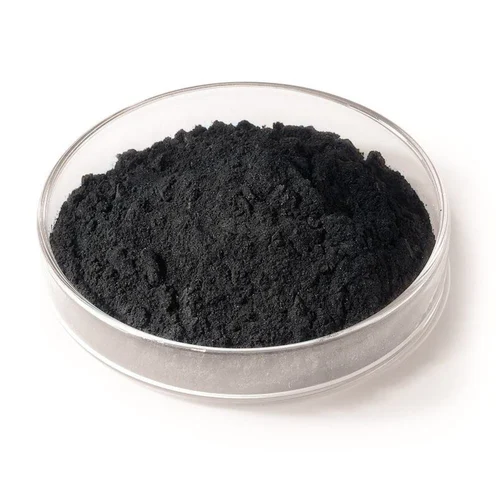
Description
Product Information of Composite Sodium Iron Phosphate (AFNFPP‑A1)
1. Product Overview
Product Name: Composite Sodium Iron Phosphate (AFNFPP‑A1)
Application Fields: Widely used in small power fields, household energy storage systems, industrial and commercial energy storage projects, and large-scale wind and solar energy storage power stations. It is suitable for multi-scenario energy storage and power needs with stable and reliable performance.
2. Appearance and Physical Indicators
|
Item
|
Specification
|
International Test Standard
|
Remarks
|
|---|---|---|---|
|
Appearance
|
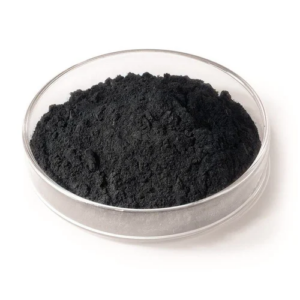
Black powder, uniform color, no agglomeration
|
Visual Inspection (General Test Method)
|
None
|
|
D10 (μm)
|
≤1.5
|
ISO 13320:2009
|
Particle Size Distribution – Laser Diffraction Method
|
|
D50 (μm)
|
≤5.0
|
ISO 13320:2009
|
Same as the above particle size test standard
|
|
D90 (μm)
|
≤10.0
|
ISO 13320:2009
|
Same as the above particle size test standard
|
|
D99 (μm)
|
≤15.0
|
ISO 13320:2009
|
Same as the above particle size test standard
|
|
Apparent Density (g/cm³)
|
0.55±0.15
|
ISO 3923-1:2008
|
Determination of Apparent Density of Metal Powders – Part 1: Funnel Method
|
|
Tapped Density (g/cm³)
|
0.95±0.15
|
ISO 3953:2011
|
Determination of Tapped Density of Metal Powders
|
|
Compaction Density (g/cm³)
|
2.00±0.10
|
IEC 62607-4-7:2018
|
Suitable for lithium-ion battery material testing, referring to relevant international standard specifications
|
|
Specific Surface Area (m²/g)
|
≤12.0
|
ISO 9277:2010
|
Determination of Specific Surface Area of Solid Substances by Gas Adsorption BET Method
|
|
pH
|
≤11.0
|
ISO 6353-1:1982
|
Chemical Analysis Reagents – Part 1: General Test Methods
|
|
Moisture (ppm)
|
≤1000
|
ISO 760:1978
|
Karl Fischer Method (General Method)
|
|
Magnetic Substances (ppm)
|
≤1.5
|
IEC 62607-4-7:2018
|
Determination of Magnetic Impurities in Anode Nanomaterials for Nano Energy Storage Materials, suitable for lithium-ion battery cathode material testing
|
3. Chemical Composition
|
Component
|
Content
|
International Test Method
|
Remarks
|
|---|---|---|---|
|
C (Carbon)
|
1.60±0.20%
|
ISO 15350:2000
|
Iron and Steel – Determination of Total Carbon and Sulfur Content – Infrared Absorption Method After High-Frequency Induction Furnace Combustion
|
|
Na (Sodium)
|
14.5±1.0%
|
ISO 22036:2024
|
Inductively Coupled Plasma Optical Emission Spectrometry (ICP-OES), suitable for element determination in solid matrices
|
|
Fe (Iron)
|
25.0±2.0%
|
ISO 22036:2024
|
Same as the above ICP-OES test method
|
|
P (Phosphorus)
|
19.0±1.5%
|
ISO 22036:2024
|
Same as the above ICP-OES test method
|
4. Electrochemical Performance
Test Conditions: CR2016 Button Half-Cell, 0.2C Discharge Rate
|
Performance Item
|
Specification
|
International Test Standard
|
Test Equipment
|
|---|---|---|---|
|
Initial Charge Specific Capacity
|
≥108.0 mAh/g
|
IEC 60086-4:2019
|
Neware Battery Tester
|
|
Initial Discharge Specific Capacity
|
≥95.0 mAh/g
|
IEC 60086-4:2019
|
Neware Battery Tester
|
|
Initial Discharge Efficiency
|
≥87%
|
IEC 60086-4:2019
|
Neware Battery Tester
|
Note: All tests are strictly carried out in accordance with the corresponding international standards to ensure the accuracy and reliability of product specifications, meeting the application standards of the global energy storage and power fields.