Description
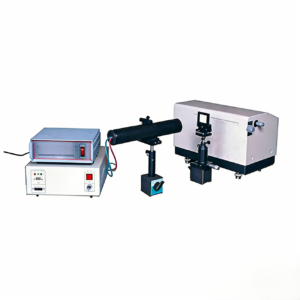
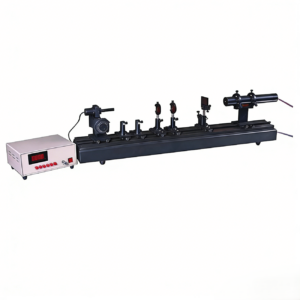
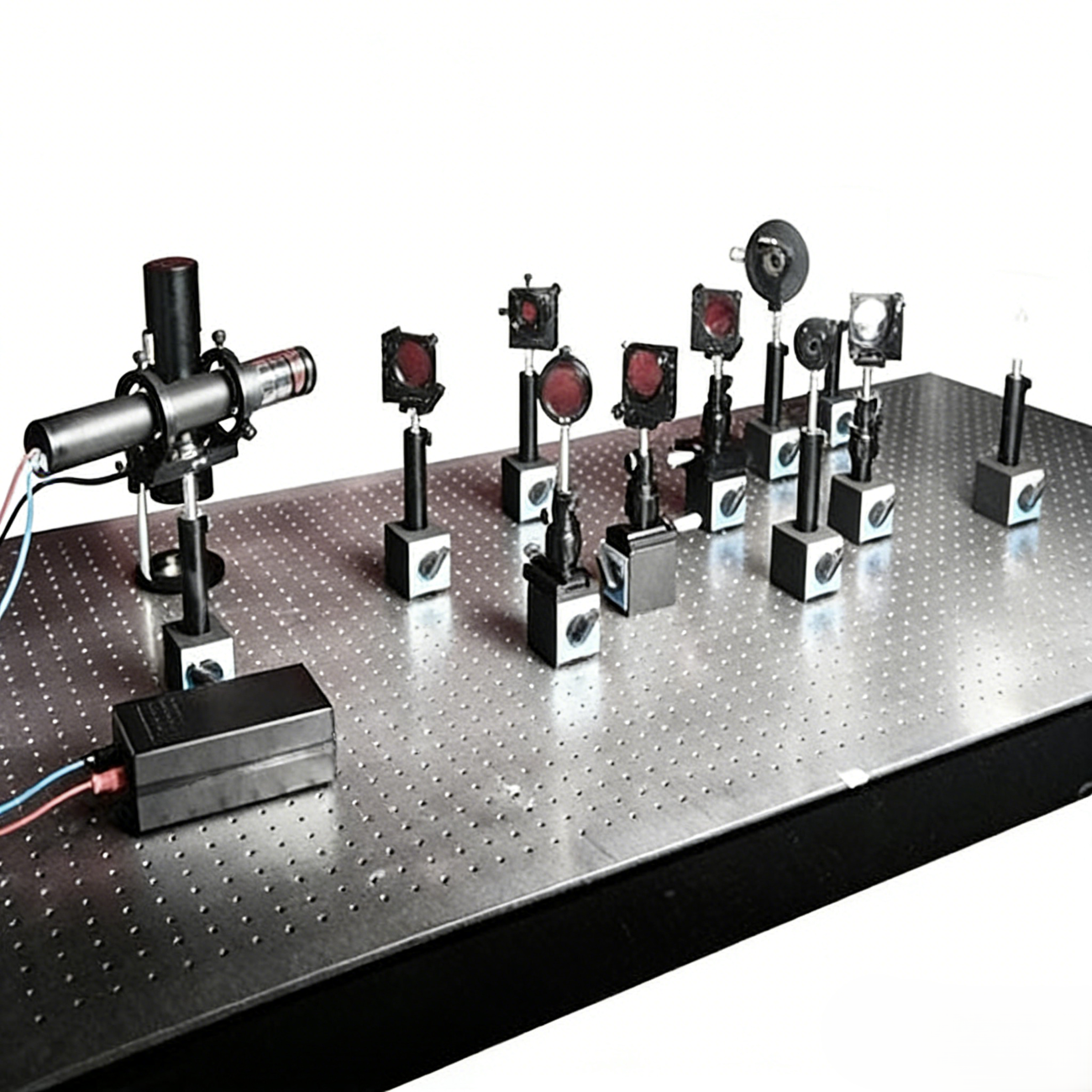
Atomfair OptiLab 369 Self-Assembled Optical Comprehensive Experiment Platform
Product Overview
The Atomfair OptiLab 369 Self-Assembled Optical Comprehensive Experiment Platform is specifically designed for physics experiment courses in institutions of higher education. It covers core basic experimental fields such as geometric optics, physical optics, and information optics. The experimental projects support free selection and combination, allowing teachers to flexibly match experimental content according to teaching needs and adapt to diverse teaching scenarios. The platform adopts an openable and closable magnetic base design, which facilitates the adjustment and fixation of experimental devices, ensuring convenient and efficient operation.
Key Features
- Comprehensive Experimental Coverage: Encompasses 29 classic optical experiments, covering geometric optics, physical optics, and information optics, meeting the requirements of basic and advanced optical experiment teaching.
- Flexible Combination: Experimental projects can be freely selected and combined, enabling teachers to customize experimental courses based on specific teaching objectives and student levels.
- High-Precision Components: All optical components, light sources, and adjustment frames adhere to international standards, ensuring stable experimental results and reliable performance.
- Easy Operation: Equipped with openable and closable magnetic bases for easy adjustment and fixation of experimental devices, reducing the difficulty of experimental setup.
Optional Experimental Projects (29 Items)
- Measuring the focal length of a thin convex lens by the auto-collimation method
- Measuring the focal length of a thin convex lens by the Bessel method (double imaging method)
- Measuring the focal length of an eyepiece by the object-image magnification method
- Measuring the focal length of a thin concave lens by the object-image distance method
- Determination of the nodes and focal length of a lens combination
- Self-assembled projector
- Measuring the magnification of a self-assembled telescope
- Self-assembled telescope with an erecting prism
- Measuring the magnification of a self-assembled microscope
- Young’s double-slit experiment
- Fresnel double prism interference
- Fresnel double mirror interference
- Lloyd’s mirror interference
- Newton’s rings
- Determination of air refractive index by the interference method
- Fraunhofer single-slit diffraction
- Fraunhofer circular aperture diffraction
- Fresnel single-slit and circular aperture diffraction
- Fresnel diffraction at a straight edge
- Grating diffraction
- Grating monochromator
- Generation and inspection of polarized light
- Holography
- Fabrication of holographic gratings
- Abbe imaging principle and spatial filtering
- 0 modulation
- Observation of 6 types of aberrations of lenses
- Building a Mach-Zehnder interferometer optical path
- Building a Sagnac interferometer optical path
Core Configuration & International Standard Specifications
1. Optical Components
- Material: BK7 optical glass
- Focal length deviation: ±2% (complies with international optical component precision standards)
- Diameter deviation: +0.0/-0.1mm (international universal dimensional tolerance standard)
- Effective aperture: >80%
- Eccentricity: 3′ (arcminutes, international angular measurement standard)
- Surface quality: 60/40 (complies with MIL-PRF-13830B international surface quality standard)
- Surface accuracy: λ/4@632.8nm (based on helium-neon laser wavelength, international optical surface accuracy measurement standard)
2. Light Sources
- He-Ne Laser: TEM00 mode, power 1.5~2.0mW, powered by a DC stabilized current power supply to ensure power stability and prevent spot flicker, operating current 4.2mA (complies with international laser product safety and performance standards)
- Tungsten Bromide Lamp: Adjustable brightness, maximum power 35W, spectral range 300nm~2500nm (covers ultraviolet to near-infrared bands, complies with international light source spectral standards)
3. Adjustment Frames
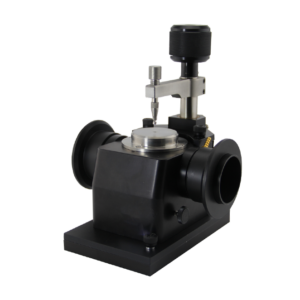
- Material: High-strength hard aluminum alloy, featuring high strength, heat resistance, and low internal stress (complies with international aerospace-grade aluminum alloy material standards)
- Surface treatment: Matte finish, low reflectivity
- Adjustment precision: High-stability knobs with a pitch of 0.25mm (international precision mechanical adjustment standard, ensuring high-precision adjustment)
Application Scenarios
- Designed for physics experiment courses in colleges and universities, suitable for teaching basic and advanced optical experiments.
- Ideal for laboratory research projects related to optics, supporting students’ innovative experiments and scientific research training.
- Applicable for vocational and technical colleges offering optoelectronic technology, physics education, and related majors, for practical skill training.
Package Includes
- Optical components (lenses, prisms, gratings, etc.) meeting the above specifications
- He-Ne laser and tungsten bromide lamp (with power supplies)
- High-precision adjustment frames with magnetic bases
- Experimental accessories (slits, holders, optical rails, etc.)
- User manual (with experimental principles, setup steps, and operation guidelines)
If you’re interested, have any questions, or have specific customization requirements, please feel free to contact us at inquiry@atomfair.com.