Description
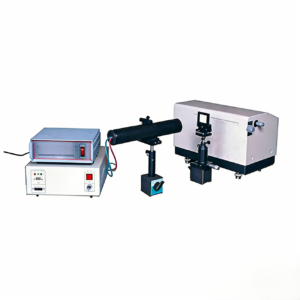
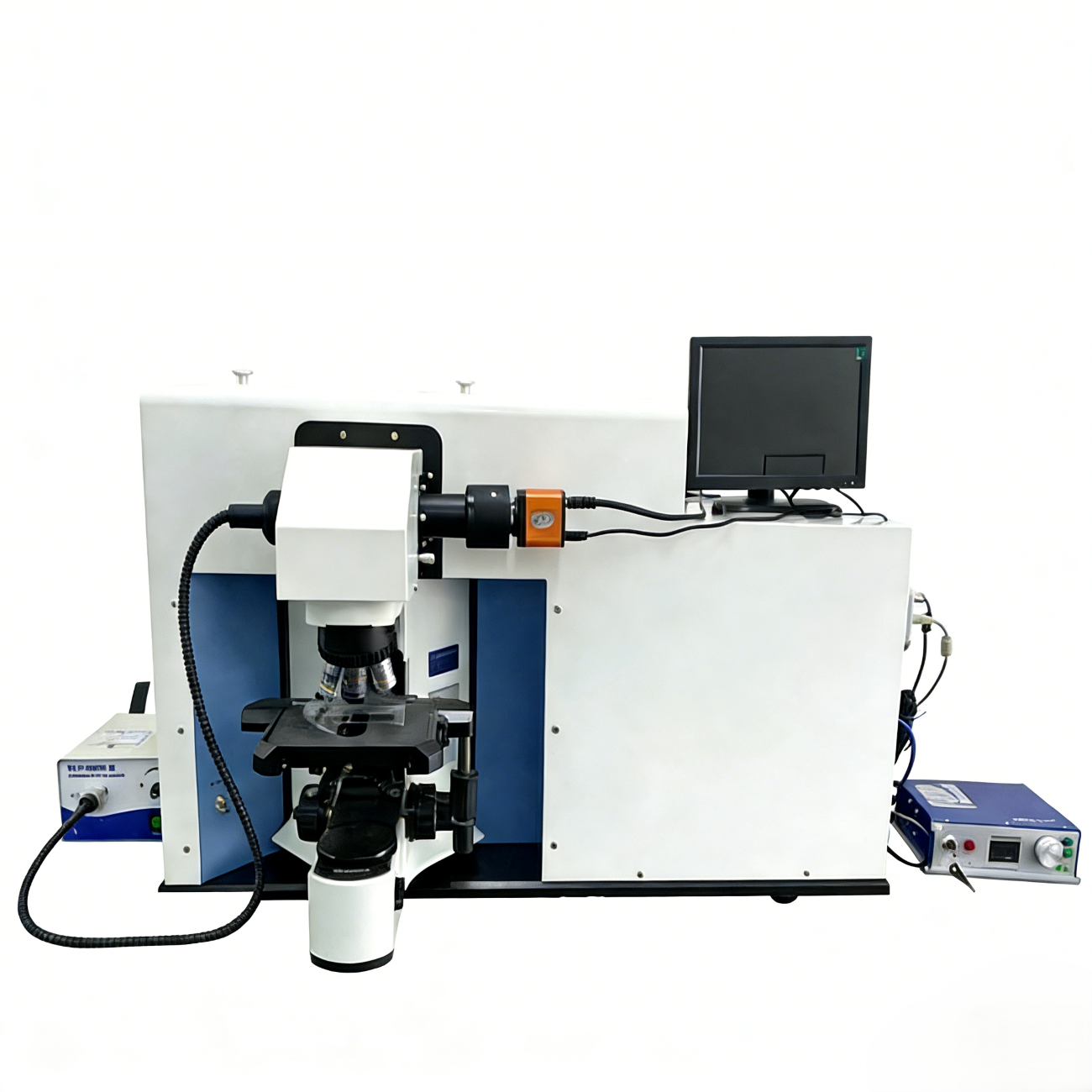
Atomfair-MRS632 Confocal Micro-Raman Spectrometer
Product Overview
The Atomfair-MRS632 is a research-grade Raman testing instrument equipped with a 3D automatic platform. Adopting a true confocal micro-optical path design, it can quickly and accurately obtain high-resolution spectral images. The instrument features an optimized optical path structure, achieving diffraction-limited spatial resolution while ensuring high light throughput and excellent sensitivity. Combined with an independently developed dedicated operating system, it offers a convenient, efficient, and user-friendly operation process, making it suitable for scientific research and testing scenarios across multiple fields.
Core Product Features
True Confocal Imaging Function: Boasting high spatial resolution, paired with a 3D automatic platform, it enables point-by-point scanning of samples in point, line, surface, and depth directions, clearly presenting the spatial distribution characteristics of the sample’s chemical structure, composition, and physical conditions.
Outstanding Performance: All optical components are optimized, ensuring both spatial and spectral resolution reach the diffraction limit. The high spectral resolution can accurately capture detailed sample information, such as crystallinity integrity, polycrystalline and amorphous identification, stress effects, size effects, etc., simplifying the analysis process.
Ultra-High Sensitivity: Capable of stably observing the fourth-order peak of silicon, it can accurately detect low-content components and weak spectral signals.
Excellent Low-Wavenumber Performance: Covers low-wavenumber spectral ranges that are difficult for ordinary spectrometers to detect, unlocking more sample characteristic information and expanding detection dimensions.
High-Sensitivity Detection System: Equipped with a low-noise, high-sensitivity receiver, it can obtain ideal experimental results in a short time, improving detection efficiency.
Intelligent Variable Pinhole: Software-controlled automatic adjustment of the confocal pinhole eliminates the need for manual operation, adapting to different detection requirements and ensuring detection flexibility and accuracy.
Powerful Software Support: Specifically designed for Raman spectral analysis, it not only supports conventional spectral collection, processing, and analysis but also features Mapping fast automatic scanning function. An optional professional Raman database is available for rapid sample identification and in-depth analysis.
Flexible Configuration Options: Adopting a modular design, it allows customers to select different components and models based on actual needs, meeting personalized requirements while achieving high cost-effectiveness. Multiple lasers and gratings are optional to adapt to various sample tests and experimental result optimization.
Function Expansion Capability: Supports the combination of Raman and Atomic Force Microscopy (AFM), and can be expanded with Tip-Enhanced Raman Spectroscopy (TERS) function, further improving detection accuracy and application scope.
Key Technical Specifications (International Standards)
| Parameter Name | Specifications |
| Measurement Mode | Qualitative/Semi-quantitative Detection |
| Laser (Excitation Wavelength) | 532nm (633nm, 785nm Expandable) |
| Spectral Range | 50~7000cm⁻¹ |
| Spectral Resolution | ≤1cm⁻¹ |
| Wavelength Accuracy | ≤±1cm⁻¹ |
| Sensitivity | Observable Fourth-Order Peak of Silicon |
| Spatial Resolution | x/y Axis: 0.01μm; z Axis: 0.002μm (Related to the Fine-Tuning Gear Reduction Ratio of the Microscope) |
| Mapping Stroke | 3 Inches × 2 Inches |
| CCD Spectral Detector Size | 26.6×3.2mm |
| Effective Pixels | 1650×200 |
| Pixel Size | 16×16μm |
| Confocal Pinhole | 50μm, 150μm, 200μm, 400μm |
Applicable Sample Types
Surface-Enhanced Raman Spectroscopy (SERS)-Related Samples: Such as Rhodamine 6G (also known as Rose Bengal 6G, Rhodamine 590, Basic Yellowish Red), with the molecular formula C₂₈H₃₁N₂O₃Cl. It appears as a red or yellowish-brown powder, soluble in water to form a scarlet solution with green fluorescence, and soluble in alcohol to form a red solution with yellow fluorescence or a yellowish-red solution with green fluorescence. It is highly hazardous to humans and other organisms.
Superconducting Materials: Such as Yttrium Barium Copper Oxide (YBCO), the first material with a superconducting temperature above 77K. Its superconducting transition temperature is higher than the boiling point of liquid nitrogen (77K), and it can be cooled with relatively inexpensive liquid nitrogen (traditional superconductors require cooling with liquid helium at 4.2K or liquid hydrogen at 20K). It is suitable for use as magnets in nuclear magnetic resonance imaging, maglev facilities, and Josephson junctions. Its structure is a perovskite defect-type layered structure, containing alternating CuO-CuO₂-CuO₂-CuO layers. The CuO₂ layers can be deformed and wrinkled, yttrium atoms are present between the CuO₂ layers, and the BaO layer is located between the CuO and CuO₂ layers.
Semiconductor Materials:
Gallium Nitride (GaN): A compound of nitrogen and gallium, it is a direct bandgap semiconductor with a wurtzite-like structure and high hardness. With an energy gap width of 3.4 electron volts, it is suitable for high-power, high-speed optoelectronic components and has been widely used in light-emitting diodes since 1990.
Gallium Arsenide (GaAs): A compound of gallium and arsenic, it is a III-V direct bandgap semiconductor with a zinc blende crystal structure. It is used in the manufacture of microwave frequency integrated circuits, monolithic microwave integrated circuits, infrared light-emitting diodes, laser diodes, solar cells, optical windows, and other devices. GaAs is often used as a substrate material for the epitaxial growth of other III-V semiconductors, including indium gallium arsenide and aluminum gallium arsenide.
Polymer Materials:
Polystyrene (PS): An amorphous polymer, the side groups of its macromolecular chains are benzene rings, and the random arrangement of these large-volume side groups determines the physical and chemical properties of polystyrene. The symmetric breathing vibration of cyclic compounds is often the strongest Raman band. Therefore, the main characteristic peaks of the Raman spectrum of polystyrene (PS) are 618cm⁻¹, 1000cm⁻¹ (ring breathing), 1029cm⁻¹, 1199cm⁻¹, 1601cm⁻¹ (C=C benzene ring), etc.
Nylon (PA): The infrared spectra of different types of nylon are very similar, but the backbones composed of different methylene sequences show strong bands in the Raman spectrum, enabling rapid differentiation.
Advantages of Raman Spectroscopy (Compared with Infrared Spectroscopy)
Complementary Information: Due to differences in spectral principles, the information provided by the two spectra varies. Groups with high symmetry and low polarity (such as C-C, C=C, S-S) have weak infrared absorption but strong bands in Raman spectra, making them suitable for Raman detection. Infrared spectroscopy is mostly used to determine the side groups and end groups of polymers, while Raman spectroscopy is more suitable for studying the backbone structure of polymers, forming a complementary relationship.
Convenient Sample Preparation: In most cases, samples do not require pretreatment and can be directly tested in any form of polymer material, even in transparent containers, which is particularly convenient for the detection of liquid samples.
Suitable for Aqueous Solution Research: Water has extremely strong infrared absorption, while its Raman scattering is weak, with only a weak spectral peak near 1640cm⁻¹. Therefore, Raman spectroscopy is particularly suitable for the study of aqueous solution systems.
Typical Cooperation Users
Hubei Minzu University, Shangrao Normal University, Guizhou University, Guangxi Normal University for Nationalities, Hebei Laser Research Institute, Shandong University Weihai Industry Research Institute, Northeast Institute of Geography and Agroecology, Chinese Academy of Sciences, Hangzhou Liangzhu Ancient City Ruins World Heritage Monitoring and Management Center, etc.
If you’re interested, have any questions, or have specific customization requirements, please feel free to contact us at inquiry@atomfair.com.